There comes a moment for almost every experienced runner, cyclist, or active adult when the numbers on the watch stop cooperating. You hit the same familiar trails, log the same reliable weekly mileage, and put in the work with the same quiet consistency you’ve maintained for decades. Yet, somehow, the pace feels a little steeper, the recovery takes a little longer, and your personal bests feel firmly parked in the rear-view mirror.
It’s easy to write this off as the inevitable tax of getting older. We’re repeatedly told that after a certain age, cardiorespiratory fitness simply slides down an unyielding, one-way slope. Except the trajectory of that slope isn’t as fixed as we once thought.
A landmark five-year trial tracking 500 active adults in their 70s—the Generation 100 Study—has delivered a compelling piece of evidence: the rate at which your aerobic ceiling drops as you age isn’t set in stone. It’s remarkably trainable. And the ultimate lever you hold to protect that engine isn’t how many passive hours you accumulate on the road—it’s the raw intensity of the effort you’re willing to bring to it. Pushing hard after 70 isn’t just possible; it is the single most powerful tool we have to rewrite the rules of aging.
Whether you’re looking to protect your engine for decades of mountain hikes or simply want to know if unlocking higher heart rate zones is still safe and worthwhile later in life, the latest science offers a clear, data-backed roadmap.
Quick Take
- Intensity Preserves Fitness: A five-year study of adults aged 70–77 (Generation 100 Study, Midttun et al., 2026) revealed that high-intensity training (HIT) dramatically slows aerobic decline compared to moderate-intensity training (MIT). Men on HIT lost just 3.1% of their VO2peak, compared with 7.7% on MIT; women on HIT held completely steady (0.0% change), while those on MIT lost 4.6%.
- Quality Over Quantity: Every 1-MET increase in habitual exercise intensity was associated with a significantly smaller five-year VO2peak decline. How hard you work predicts fitness preservation better than weekly minutes alone.
- Moderate Work Still Counts: Moderate exercise still buffers against age-related decline compared to inactivity—higher intensity simply protects more of your hard-earned capacity.
If you’re curious about where this measurement originated, you can explore the history of VO2max.
Why Does VO2max Decline as You Age?
To understand how to slow this drop down, it helps to look under the hood at why our aerobic ceiling shifts over time in the first place. Think of your VO2max as the total output of a complex delivery system: your heart pumps oxygenated blood out, your vascular network distributes it, and your working muscles extract and use it. As the decades roll by, both sides of this pipeline encounter natural physiological drag (Hawkins & Wiswell, 2003).
On the central side, your maximum heart rate (HRmax) gradually drops, and the heart’s pump—its stroke volume—doesn’t push out quite as much blood per beat. On the peripheral side, within the muscles themselves, we naturally lose a bit of muscle mass and some mitochondrial density, which is the cellular machinery that actually processes oxygen into energy. If you want to dive deeper into these internal changes, you can read more about how endurance adapts as you age.
What Is a Normal Rate of VO2max Decline Per Decade?
For a healthy, sedentary adult, the textbook baseline for VO2max decline is roughly 10% per decade after age 30 (Hawkins & Wiswell, 2003). But that loss isn’t a straight, linear line.
As landmark research from the Baltimore Longitudinal Study of Aging demonstrated, the rate of decline accelerates as we age (Fleg et al., 2005). While the drop might be a modest 3% to 6% per decade in your 20s and 30s, it can steepen to more than 20% per decade once you pass age 70.
Naturally, staying consistently active pushes you into a much better bracket, keeping your baseline fitness higher at every stage of life. If you’re curious about how your numbers currently compare to overall population averages, check out our guide to what counts as a good VO2max.
What a 5-Year Study Reveals About Exercise Intensity After 70
Fortunately, understanding that acceleration gives us a clear target to aim for—and fresh research shows we have far more leverage over the outcome than previously thought.
Enter the Generation 100 Study, one of the most comprehensive fitness trials ever conducted in older adults. A recent post hoc analysis by Midttun et al. (2026) followed 500 active participants aged 70 to 77 for five years to examine how different exercise habits influenced their VO2peak trajectories. It’s worth noting that because this specific analysis evaluated self-reported intensity habits over time, it shows strong, real-world longitudinal associations rather than direct randomized causation. But the numbers it uncovered are hard to ignore.
The data revealed a striking divide based on how hard participants pushed the pace. Over five years:
- Men engaging in high-intensity training (HIT) lost just 3.1% of their VO2peak, compared to a 7.7% drop in those sticking to moderate-intensity training (MIT). That’s a net benefit of 1.31 mL/kg/min preserved in the higher-intensity group.
- Women using HIT performed even better, maintaining their baseline with 0.0% loss over five years, whereas women in the MIT group experienced a 4.6% decline—yielding a 1.33 mL/kg/min advantage for those working harder.
If you’re interested in how these numbers map against broader baseline averages, take a look at our breakdown of VO2max benchmarks for women.
Beyond group averages, researchers examined the specific dose-response curve for intensity using METs (Metabolic Equivalents). They found that every 1-MET increase in habitual exercise intensity preserved an extra 1.11 mL/kg/min of VO2peak in men and 0.64 mL/kg/min in women over the five-year span.
Why Intensity Matters More Than Duration for Aging Athletes
Interestingly, total weekly exercise minutes showed a much weaker, less consistent link to fitness preservation than intensity did. Simply putting in more time at a casual pace wasn’t enough to protect against age-related decline.
Physiologically, this comes down to how your body recruits muscle tissue and generates cellular energy. As outlined by San-Millán & Brooks (2018), low-to-moderate exercise relies mostly on slow-twitch muscle fibers and baseline aerobic pathways. Pushing into higher intensity zones forces your nervous system to recruit high-threshold, fast-twitch motor units that otherwise sit idle.
This higher demand sends a powerful signal directly to your cells, stimulating mitochondrial oxidative capacity and reinforcing your heart’s stroke volume in ways that casual, volume-focused training simply cannot trigger. Ultimately, while duration builds your aerobic foundation, it is intensity that defends your ceiling—making high-threshold work the true driver of fitness preservation as you age. If you’re weighing how to balance your weekly training stress, our guide on choosing the right exercise intensity breaks down the trade-offs in detail.
Translating the Science: How to Dose Intensity Safely
Knowing the science is one thing, but applying it out on the road, track, or trail is where the real work begins. Pushing your engine harder as an aging athlete isn’t about recklessly thrashing yourself—it’s about applying a targeted, intelligent stimulus that keeps your high-end aerobic system alive. Regardless of your decade, incorporating a structured dose of high-intensity training into your week provides profound physiological benefits that volume alone simply cannot replicate.
The secret lies in treating intensity as a precise tool rather than an all-out ordeal. When done thoughtfully, higher-effort sessions are remarkably effective and well-tolerated by experienced athletes. The key is respecting progressive overload: if you haven’t touched higher heart rate zones in months, jumping straight into all-out intervals is a recipe for unnecessary fatigue or injury.
Instead, ease into it gradually. Allow your tendons, joints, and cardiovascular system time to adapt by introducing brief, controlled efforts before expanding the total duration. As we age, tissue repair and glycogen replenishment naturally take a little longer, making recovery an active, vital part of the training equation. Giving yourself adequate rest between hard efforts ensures you absorb the full physiological boost without breaking down—keeping your engine sharp, resilient, and responsive for years to come. For more on building a balanced, sustainable routine, read our guide on staying active for long-term functional health.
Beyond Zone 2: Mapping Rate of Perceived Exertion to Heart Rate
While low-intensity zone 2 work has rightfully gained popularity for building your baseline endurance, relying on it exclusively means leaving your highest aerobic gears untouched. High-intensity work isn’t meant to replace those steady, foundational miles—it’s the vital complement that defends your top-end ceiling.
To put the Generation 100 Study’s findings into practice, you can map the Borg scale of perceived exertion directly to your heart rate zones and the simple ‘talk test’:
- Borg 15+ (Vigorous / High Intensity): Corresponds to roughly 85% to 90%+ of your HRmax (Polar Zones 4–5). At this level, breathing is heavy, and you should only be able to speak in single, clipped words.
- Borg 11–14 (Moderate Intensity): Corresponds to roughly 60%–80% of your HRmax (Polar Zones 2–3). Your breathing is elevated, but you can comfortably hold a conversation in full sentences.
Practical Dosing and Baseline Monitoring
You don’t need to spend every workout redlining your heart rate. In fact, adding just one or two targeted high-intensity interval sessions per week alongside your regular moderate base work is usually the sweet spot for driving adaptations without overloading your recovery.
To track how your fitness responds over time, establishing an accurate baseline is essential. If you want to check your fitness without putting your body through a maximum-effort trial, the Polar Walking Test offers a quick, submaximal assessment of your VO2max. If you prefer an accurate baseline while resting, the Polar Fitness Test measures your aerobic capacity in minutes with no exertion.
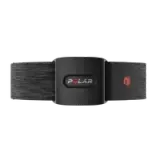
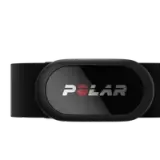
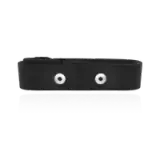
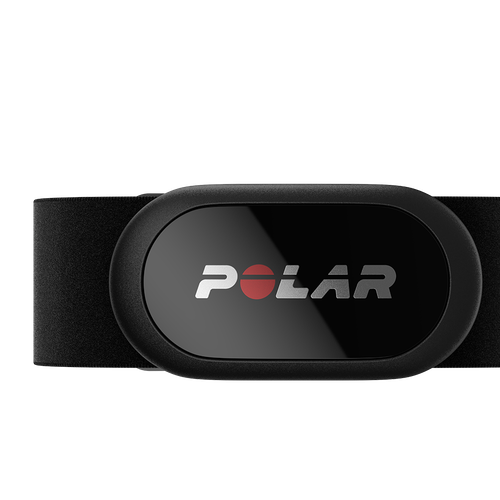
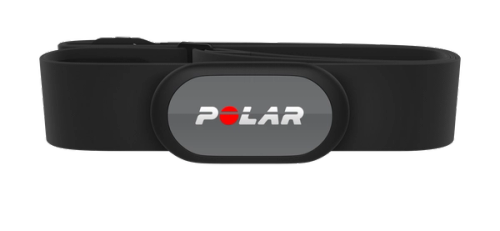
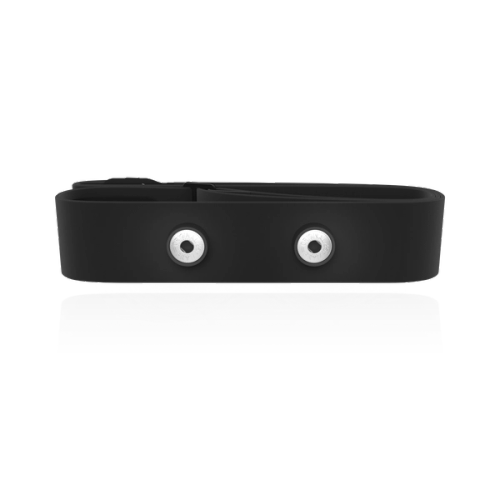
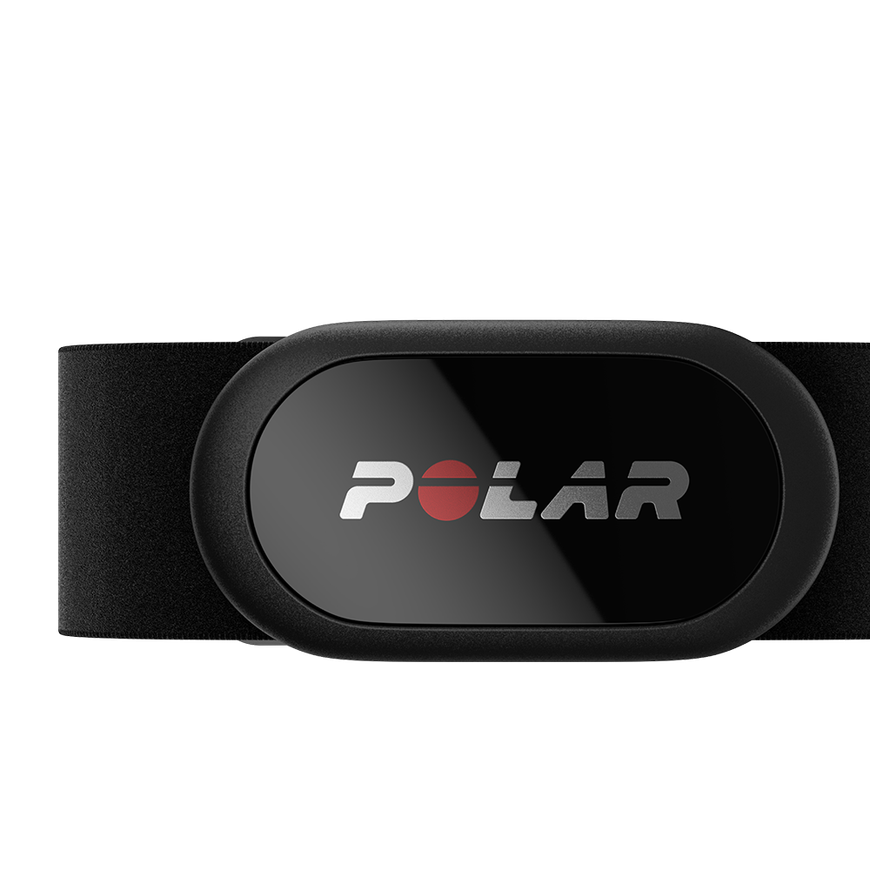
Pairing these tests with a Polar H10 heart rate sensor ensures precise, real-time tracking during your workouts, letting you hit your target intensity zones with complete confidence. For practical ways to structure these sessions, explore our resources on combining HIIT and steady-state work and our complete guide to structured VO2max training.
undefined
Polar H10
Heart Rate Sensor
When it comes to accuracy and connectivity, Polar H10 heart rate sensor is the go-to choice. Monitor your heart rate with maximum precision and connect your heart rate to a great variety of training devices with Bluetooth® and ANT+.
Frequently Asked Questions About VO2max and Aging
When it comes to fine-tuning your training later in life, it’s completely normal to have a few practical questions about what to expect. Here are clear answers to the most common queries active adults ask about keeping their aerobic engine strong.
How much VO2max do you lose per decade?
On average, sedentary adults lose about 10% of their VO2max per decade after age 30 (Hawkins & Wiswell, 2003). However, this drop isn’t linear—longitudinal data show that the rate of decline accelerates as you get older, increasing from roughly 3% to 6% per decade in early adulthood to over 20% per decade after age 70 (Fleg et al., 2005). Regular exercise helps keep your overall baseline significantly higher at every age.
Can you actually improve VO2max after age 70?
Yes, absolutely. Your body retains its ability to adapt to cardiovascular training well into your 70s and 80s. While starting from a high athletic baseline may mean dramatic increases are harder to come by, simply holding your baseline steady—such as the 0.0% decline seen in women doing high-intensity training in the Generation 100 Study (Midttun et al., 2026)—is a massive functional victory that protects your vitality and independence for years to come.
Is high-intensity exercise safe for older adults?
When approached with proper progression, high-intensity training is both safe and highly effective for healthy older adults. The key is avoiding sudden spikes in volume or intensity. Start by incorporating short intervals into your routine, allow extra recovery time between hard sessions, and always listen to your body. If you have underlying cardiovascular conditions, joint concerns, or have been away from vigorous exercise for a while, it’s always wise to check in with your physician before starting.
What counts as ‘moderate’ vs. ‘vigorous’ intensity without a chest strap?
If you aren’t tracking heart rate directly, the simplest gauge is the ‘talk test’ combined with perceived exertion:
- Moderate Intensity: You can speak in full sentences, but you couldn’t sing. Breathing is deep and steady, feeling like a 4 to 6 out of 10 effort.
- Vigorous Intensity: You can only manage a few short words between breaths. Effort feels like an 8 or 9 out of 10, pushing you well out of your comfort zone.
Age Is Just a Number—Your Intensity Is a Choice
While a gradual drop in aerobic capacity is a natural part of getting older, the rate of that decline is far more under your control than traditional wisdom suggests. Getting older doesn’t mean you have to surrender your hard-won fitness to the passage of time. As the latest research clearly demonstrates, bringing a little extra intensity to your training provides the vital stimulus your heart and muscles need to stay sharp, resilient, and responsive well into your 70s and beyond.
It’s not about working yourself to exhaustion every day—it’s about training smarter, honoring your recovery, and giving your engine a regular reason to push its limits.
Ready to put these insights into practice? Start by establishing your baseline with the Polar Fitness Test or Walking Test, and explore our step-by-step guides to structure your interval sessions safely and effectively. Your best miles are still ahead.
Enjoying this article? Subscribe to the Polar Newsletter and get notified when new articles are out.
Subscribe



 POLAR Street X
New
 Polar Vantage M3
 Polar Grit X2 Pro Titan
 Polar Grit X2 Pro
 Polar Grit X2
 Polar Vantage V3
 Polar Ignite 3
 Polar Pacer
Grit X Series
Vantage Series
Pacer Series
Ignite Series