For performance-oriented runners and endurance athletes, the quest for a new PR often feels like a battle against an invisible restriction. You've put in the miles and built a solid aerobic 'floor' through consistent base training, but eventually, your progress plateaus. Say hello to VO2max training, because this is where it becomes the essential gear shift in your program.
What is VO2max training? It refers to high-intensity aerobic intervals performed at 90% to 100% of your maximum heart rate. These efforts are designed to challenge your heart's stroke volume (the amount of blood your heart pumps with every beat) and your muscles' ability to utilize oxygen, effectively increasing the maximum amount of oxygen your body can use during intense exercise. While base training ensures you can go the distance, VO2max training is what raises your physiological 'ceiling,' expanding your absolute potential so that your race pace starts to feel like a cruise rather than a struggle.
By focusing on these 'ceiling-raising' sessions, you aren't just getting faster; you're making every other pace more efficient. In this guide, we will break down the science of these high-intensity efforts and provide the exact workout blocks you need to transform your engine from the inside out.
The 80/20 Rule: Building the Pyramid
To raise your ceiling, you first need to stabilize the floor. In the world of elite endurance science, this is known as polarized training. The most effective way to improve your VO2max isn't by grinding out every run at a 'moderately hard' pace; it's by strictly separating your intensity into two distinct poles.
The 80%: Mitochondrial Machinery
The vast majority of your training — roughly 80% — should be performed at a low intensity, primarily in heart rate zone 2. At this pace, you should be able to hold a full conversation without gasping.
While this may feel too easy for many ambitious runners, this low-intensity volume is doing the heavy lifting at a cellular level. It triggers peripheral adaptations, such as increased mitochondrial density and capillary growth. These changes allow your muscles to actually use the oxygen your heart is pumping to them. Without this massive base of aerobic efficiency, your body cannot support the demands of high-intensity work.
The 20%: The VO2max Spark
The remaining 20% of your week is reserved for high-intensity efforts in zone 5. This is where you push toward your maximal aerobic power to trigger central adaptations — literally strengthening the heart muscle and increasing its stroke volume.
Why the Middle is a Trap
The biggest mistake athletes make is spending too much time in the 'grey zone' (zones 3 and 4). This moderate intensity is hard enough to cause significant fatigue but not intense enough to maximize VO2max gains.
As Seiler and Kjerland (2006) demonstrated in their study of elite endurance athletes, the world's best performers rarely trained at 'middle intensities.' They found that top-tier athletes consistently followed this polarized 80/20 distribution. By keeping the 80% easy, they ensured their nervous systems were fresh enough to hit the 20% with the absolute intensity required to move the needle.
Think of your training as a pyramid. The height of your peak (VO2max) is strictly limited by the width of your base (Zone 2). If you skip the 80% base and only focus on the 'hard' work, you aren't building a pyramid — you're building a tower that will eventually tip over into burnout and overtraining.
Finding Your Redline: Zone 5 & Polar
To train effectively at the top end of your capacity, you have to know exactly where your 'redline' sits — an intensity so high that your body is in oxygen debt, marking the threshold where you are about to 'blow up.' Many runners fall into the trap of using the generic '220 minus age' formula to estimate their maximum heart rate, which can be off by 10 to 15 beats per minute. When you are targeting VO2max training gains, that margin of error is the difference between a productive session and wasted effort.
Practical Step: The Polar Running Performance Test
Instead of guessing, the most effective way to establish your training zones is through a field test. The Polar Running Performance Test is designed to take you through a ramped protocol that gradually increases your speed until you reach your maximal aerobic power.
The result? A personalized, data-backed Maximum Heart Rate (HR max), which defines your individual zone 5. Knowing your true ceiling ensures your intervals are intense enough to reach stroke volume peaks without inadvertently dropping into a lower-intensity 'grey zone.'
The Metric: Tracking Your Evolution with Running Index
Improving your VO2max is a long-term project, and from a day-to-day perspective, your data can sometimes feel stagnant. This is where Polar Running Index becomes your most valuable coaching tool.
While VO2max measures your engine's absolute size, the Running Index tracks your efficiency — how much oxygen you consume at a specific speed.
- The Lower Heart Rate Win: If you notice your Running Index increasing while your heart rate stays the same at a set pace, your training is working.
- Economy Gains: As Barnes and Kilding (2014) highlight, improvements in running economy are just as critical as the VO2max number itself. The Running Index combines these two factors to provide a single score that indicates whether you are becoming a more 'fuel-efficient' athlete.
Respecting the Data
The intensity of zone 5 work places a massive load on your central nervous system. To avoid the stagnation mentioned in the Seiler and Kjerland (2006) research, use your data to 'green light' your sessions. If your recovery metrics are down, it's a sign that your body isn't ready for the redline. By respecting these limits, you ensure that when you do hit the track, you have the capacity to perform the work that actually triggers adaptation.

Improving Your VO2max
As we've established, building a massive aerobic base through low-intensity zone 2 training is essential, but moving the needle on your VO2max requires high-intensity stimulus. To raise the ceiling of your performance, you need to challenge your heart's stroke volume and your muscles' ability to utilize oxygen under stress.
The following modular workout blocks are designed as high-intensity interval training (HIIT) sessions. For best results, incorporate one of these blocks once or twice a week, ensuring you are fully recovered between sessions. Choose the block that best fits your current fitness level and psychological readiness — whether that's the raw power of hill repeats or the rhythmic speed of short intervals.
Block A: The Classic 4x4 Intervals
This is the gold standard for cardiorespiratory improvement. By sustaining an effort just below your redline, you maximize the time spent at a high percentage of your aerobic capacity.
- The Protocol: 4 minutes at 90–95% HR max, followed by 3 minutes of active recovery (light jogging or walking). Repeat 4 times.
- The Science: This protocol is designed to increase stroke volume. By forcing the heart to operate at near-maximal capacity for an extended duration, you strengthen the cardiac muscle and improve its efficiency.
- Expert Tip: Use the '30-Minute Rule' as a reality check: if you can't finish the final 4-minute block, you started too fast. If you feel like you could go for 10 minutes, you aren't deep enough into zone 5.
Block B: Norwegian 4x4 (High Volume)
Popularized by researchers at the Norwegian University of Science and Technology, this variation emphasizes high-volume aerobic power and longevity.
- The Protocol: 4 minutes of 'hard but sustainable' intensity, aiming for a consistent heart rate in the upper end of zone 4 or lower zone 5. Use a 3-minute active recovery between reps.
- The Science: Research highlights that high-intensity intervals are critical predictors of longevity. This protocol builds metabolic durability, ensuring that everyday movements occupy a smaller percentage of your total energy.
- The Goal: Consistency. The fourth interval should look and feel exactly like the first.
Block C: Hill Repeats (Mechanical Power)
Use gravity as a natural resistance tool to build your leg muscles while you redline your cardiovascular system.
- The Protocol: 6–10 × 60-second uphill sprints at maximal effort. Recovery is a slow walk back to the starting point to let your heart rate return to normal.
- The Science: Hill training builds explosive power and improves running economy. By working against gravity, you recruit more muscle fibers and increase the mechanical tension on your legs.
- The Payoff: This triggers peripheral adaptations, such as increased capillary density, which allows your muscles to clear metabolic byproducts more effectively during a race.
Block D: 30/30 Short Intervals (High-Intensity Micro-Loading)
For some athletes, the psychological barrier of a 4-minute block is the hardest part. Short intervals let you spend significant time at a high percentage of your VO2max by breaking the work into manageable, high-intensity bites.
- The Protocol: 30 seconds of high-intensity effort (95% HR max or a hard sprint) followed by 30 seconds of very light active recovery. Repeat for 10–15 minutes, or perform 2 sets of 8 minutes with a 3-minute break between sets.
- The Science: Because recovery is so brief, your oxygen consumption remains elevated even during rest periods. This keeps your cardiovascular system primed and allows you to spend more total time at your aerobic ceiling with less accumulated muscle fatigue than a single long interval.
- The Vibe: This is a rhythm workout. Instead of dreading the clock, focus on maintaining a sharp, powerful stride during the 30-second bursts. It's an ideal entry point for those new to zone 5 training.
Respect the Recovery
The paradox of VO2max training is that while the work happens in the gym, on the hill, or on the track, the actual gains — the expansion of your heart's stroke volume and the sharpening of your metabolic efficiency — happen while you sleep. Because high-intensity intervals and hill repeats place a massive demand on your Autonomic Nervous System (ANS), the most important tool in your arsenal isn't just your stopwatch; it's your recovery data.
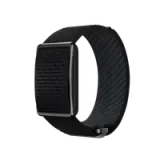
To ensure you are actually building your engine rather than burning it out, use Nightly Recharge™. It uses two metrics, ANS Charge and Sleep Charge, to provide a window into how well your body has 'reset' after a high-load session. If your ANS hasn't returned to a baseline state, your body won't be able to effectively process the VO2max stimulus, turning a high-reward workout into a high-risk one.
So, what is the golden rule of high intensity? If your recovery score is low, swap your VO2max session for an easy active recovery day. Training in the 'red zone' requires a green light from your body. Pushing through deep fatigue doesn't raise your ceiling; it simply increases your cortisol levels and extends your recovery timeline. Respecting the data ensures that when you do go hard, you have the mechanical power to make every rep count.
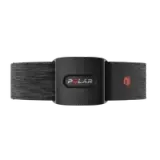
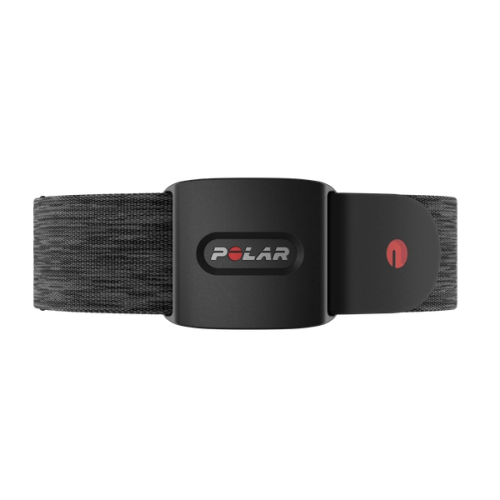
Ready to find your ceiling? Don't guess where your limits lie. Pair your next session with the Polar H10 and run the Running Performance Test to set your heart rate zones with surgical precision.
References
Seiler, K. S., & Kjerland, G. Ø. (2006). Quantifying training intensity distribution in elite endurance athletes: is there evidence for an "optimal" distribution? Scandinavian Journal of Medicine & Science in Sports, 16(1), 49–56. https://doi.org/10.1111/j.1600-0838.2004.00418.x
Barnes, K. R., & Kilding, A. E. (2015). Running economy: measurement, norms, and determining factors. Sports Medicine — Open, 1(8). https://doi.org/10.1186/s40798-015-0007-y
Enjoying this article? Subscribe to the Polar Newsletter and get notified when new articles are out.
Subscribe



 POLAR Street X
New
POLAR Street X
New
 Polar Vantage M3
 Polar Grit X2 Pro Titan
 Polar Grit X2 Pro
 Polar Grit X2
 Polar Vantage V3
 Polar Ignite 3
 Polar Pacer Pro
 Polar Pacer
 Polar Unite
Grit X Series
Vantage Series
Pacer Series
Ignite Series
Polar Unite
Grit X Series
Vantage Series
Pacer Series
Ignite Series