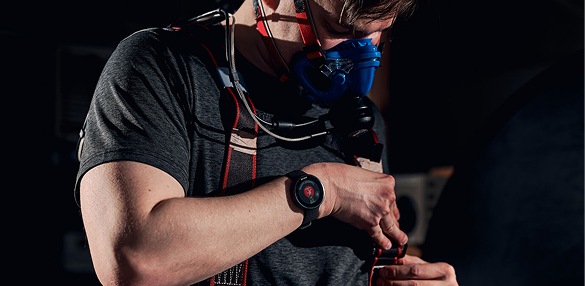
If there's one single metric that acts as a definitive scorecard for your physical fitness, it is VO2max. While heart rate tells you how hard you're working in the moment, VO2max quantifies your body's absolute capacity to intake, transport, and utilize oxygen. It isn't a static number; it's a dynamic reflection of your lifestyle, shifting throughout your life in response to age, environment, and — most importantly — the work you put in.
As we age, our aerobic capacity naturally begins to decline, but regular exercise serves as the most powerful tool to flatten that curve and maintain vitality. By viewing VO2max not just as an athletic benchmark, but as a critical vital sign, you gain a clear window into your long-term metabolic health. Whether you're building your base or maintaining your edge, this number represents the size of your physiological engine and your potential for a long, active life.
VO2max: The Quick Guide
- What it is: The maximum volume of oxygen your body can process per minute, per kilogram of body weight.
- Why it matters: It's the 'gold standard' of cardiorespiratory fitness (CRF) and a powerful predictor of long-term metabolic health.
- How to measure it: While lab-based treadmill tests are the most precise, the Polar Fitness Test provides a highly accurate estimate without a laboratory.
- How to improve it: Focus on a 'polarized' training approach — combining steady, low-intensity Zone 2 sessions with targeted high-intensity intervals.
Why VO2max is the Ultimate Metric: From Performance to Longevity
So, what makes this such a magic metric, whether you're pursuing a PB or a long, healthy life? The key lies in measuring your overall functional capacity. Understanding this number gives you insight into both your current athletic limits and your long-term health trajectory.
For the Performance-Driven: Raising Your Ceiling
In competitive sports, your VO2max determines your current aerobic ceiling — the size of your engine. While your efficiency (how well you use energy) and your threshold (how long you can sustain it) are vital, your VO2max sets the ultimate limit on what your body can currently achieve during high-intensity efforts.
- Aerobic Ceiling: A higher VO2max allows you to work at a higher intensity while staying purely aerobic, delaying the 'burn' of lactate accumulation.
- Faster Recovery: Athletes with superior oxygen uptake recover more quickly between intervals, allowing for higher-quality training sessions and more frequent workloads.
- Strategic Pacing: Knowing your maximum capacity helps you calibrate your heart rate zones with surgical precision, ensuring, for example, that you don't overdo it during the first half of a race.
For the Health-Conscious: The Vital Sign for Longevity
For decades, VO2max was viewed through the narrow lens of athletic prowess. However, recent clinical shifts now recognize CRF as a powerful predictor of all-cause mortality. Improving your VO2max isn't just about shaving seconds off your marathon time; it's about expanding your 'functional window' — the ability to stay active and independent well into your later years.
- The Survival Gap: Simply improving your VO2max category from 'low' to 'below average' is associated with a significantly greater reduction in mortality risk than almost any other lifestyle intervention.
- Mitochondrial Health: A high VO2max signals efficient mitochondria — the power plants of your cells — which are essential for metabolic health and preventing age-related decline.

The Physiological Changes of Improving VO2max
To improve your VO2max, you aren't just getting fitter in a vague sense; you're generating a series of profound biological upgrades to your internal delivery and processing systems. Think of it as a two-stage infrastructure project: first, you improve the pump and the pipes (Central Adaptations), and then you optimize the overall distribution efficiency (Peripheral Adaptations).
Central Adaptations: Strengthening the Pump
When you engage in consistent aerobic training, your heart undergoes structural changes known as cardiac remodeling. One of the most significant shifts is an increase in stroke volume — the amount of blood the heart can eject in a single beat. As the left ventricle becomes more elastic and slightly larger, it can fill with more blood and pump it out more forcefully. Over time, as your stroke volume increases, your total maximal cardiac output rises. This ensures a higher volume of oxygenated blood reaches your working muscles during peak exertion.
Peripheral Adaptations: Expanding the Network
Once the oxygenated blood leaves the heart, your body needs an efficient way to distribute and use it. This is where the local adaptations within the muscle tissue become critical. Keep in mind that while your heart adapts relatively quickly, these cellular changes are a 'slow-burn' process — it often takes 4–6 weeks of consistent stimulus before these microscopic networks truly begin to expand.
- Capillary Density: Training stimulates angiogenesis — the creation of new microscopic blood vessels (capillaries) around your muscle fibers. This shortens the distance oxygen has to travel from your blood into the muscle cells, ensuring faster delivery even when demand is high.
- Mitochondrial Biogenesis: Inside your muscles, the mitochondria increase in both size and number. This enhances your mitochondrial efficiency, allowing you to convert that delivered oxygen into energy (ATP) more rapidly. This signals better metabolic health and is a key reason why a high VO2max is linked to longevity.
- Increased Myoglobin: Your muscles also produce more myoglobin, the protein responsible for grabbing oxygen from the blood and carrying it to the mitochondria for immediate use.
The Result: A Higher Aerobic Ceiling
These adaptations work in harmony to raise your ceiling. By improving the heart's ability to pump blood and the muscles' ability to extract oxygen, you increase your Maximal Aerobic Power (MAP).
This doesn't just make you faster at your peak; it expands the gap between your cruising speed and your redline. When your VO2max improves, every sub-maximal pace — from climbing stairs to running a 10K — occupies a smaller percentage of your total energy. Essentially, you've built a bigger engine, making your previous top speed feel like a comfortable cruise.

How to Measure VO2max
Understanding your VO2max is the first step; measuring it accurately is the second. Historically, getting an accurate reading required a clinical setting, a specialized mask, and a treadmill pushed to the limit. Today, wearable technology has bridged the gap, allowing you to track your progress from your living room, office, or morning commute.
The Power of the Polar Ecosystem
While a lab test provides a high-fidelity snapshot of your fitness on a single day, Polar technology offers a moving picture of your progress. Wearables cannot measure the actual volume of oxygen you inhale and exhale through your nose and mouth as a clinical assessment can. However, by tracking the relationship between your heart's effort and your body's output, they provide a reliable, science-backed estimate that lets you monitor your aerobic fitness over time.
To get the most out of the ecosystem, you can choose the metric that best aligns with your training style:
- Polar Fitness Test: Ideal for those focused on general health and longevity. It is a 'no-sweat' 5-minute resting test that analyzes your heart rate and heart rate variability. It's the simplest way to see if your long-term lifestyle changes are moving the needle on your internal fitness.
- Polar Running Index: For the performance-driven athlete, this is the preferred tool. Calculated automatically after every run, it evaluates your efficiency by comparing your heart rate to your pace. This provides a running-specific estimate of your VO2max, helping you see whether you are becoming more economical — meaning you can run faster with less cardiovascular strain — over a specific training block.
Expert Tip: For the most accurate results, ensure your physical settings (age, weight, and resting heart rate) are updated regularly in the Polar Flow app. Because VO2max is calculated relative to body mass, even a small change in your weight can shift your score.
What is a 'Good' VO2max?
A VO2max score is a relative number, which means what is 'elite' for a 60-year-old might be 'average' for a 20-year-old. To understand where you stand, you need to compare your results against age and gender-matched benchmarks.
VO2max Charts: Men vs. Women
After you complete a Polar Fitness Test, the app doesn't just give you a number; it places you on a color-coded scale. This tells you instantly if you are trending toward 'Elite' or if there's room to improve your cardiovascular base.
The classification is based on a literature review of 62 studies where VO2max was measured directly in healthy adult subjects in the USA, Canada, and 7 European countries (Shvartz & Reibold, 1990).
Why the Gap Between Genders?
Biological differences in body composition (typically higher muscle mass in men) and hemoglobin levels (which carry oxygen in the blood) mean that men generally have higher absolute VO2max values, though women often see similar proportional health benefits from training.
Common Myths & FAQs
It's easy to treat VO2max as a mystery number, but understanding what happens behind the scenes can help you trust the data on your wrist. Here are the most frequent questions and misconceptions about this metric.
Can you improve VO2max with walking?
Yes, but it depends on your current fitness baseline. For a sedentary individual or a beginner, a consistent, brisk walking routine provides sufficient cardiovascular stimulus to increase stroke volume and improve aerobic capacity. However, because VO2max measures maximal intensity, once your body adapts to walking, you will eventually need to introduce more vigorous intervals — such as power walking up hills or light jogging — to continue 'raising the ceiling' of your fitness.
Is VO2max genetic?
Think of genetics as the architect of your potential, determining roughly 30% to 50% of your baseline VO2max and how quickly you respond to training. However, the remaining percentage is entirely within your control. Almost everyone can significantly improve their score through consistent endurance training and high-intensity intervals, regardless of their starting point.
Why does my VO2max drop after a long break?
VO2max is a 'use it or lose it' metric. When you take a long break from training, your blood plasma volume decreases relatively quickly, often within just two weeks. This reduces the amount of blood your heart can pump with each beat (stroke volume). While this drop in your score can be frustrating to see in Polar Flow, the good news is that your structural adaptations — like capillary density and mitochondrial health — stick around much longer and help you regain your previous levels quickly once you resume training.
Is a high VO2max only for elite athletes?
While elite marathoners often have VO2max scores in the 70s or 80s, this metric is arguably more important for the average person as they age. In the medical community, VO2max is increasingly viewed as a vital sign for longevity. A higher score means your daily activities — like carrying groceries or climbing three flights of stairs — require a smaller percentage of your total energy, leaving you with more 'reserve' for living an active, independent life.
Why is my VO2max score different on different days?
Since wearables estimate VO2max based on the relationship between your heart rate and your pace/output, external factors can create 'noise' in your data. High heat, humidity, dehydration, or even a stressful day at work can cause your heart rate to be higher than usual at a specific pace. This can lead to a lower estimated score for that specific session. This is why it is best to look at your Running Index or Fitness Test trends over weeks and months rather than obsessing over a single data point.
References
Shvartz, E., & Reibold, R. C. (1990). Aerobic fitness norms for males and females aged 6 to 75 years: a review. Aviation, Space, and Environmental Medicine, 61(1), 3–11.
undefined
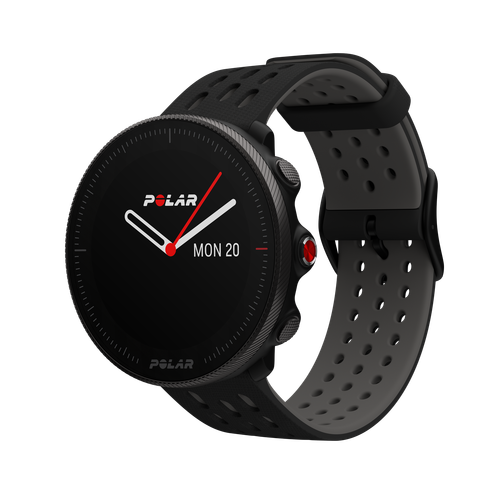
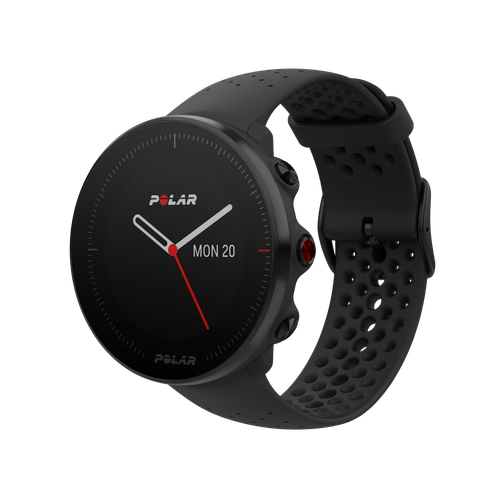
Polar Vantage M3
Smart Multi-Sport Watch
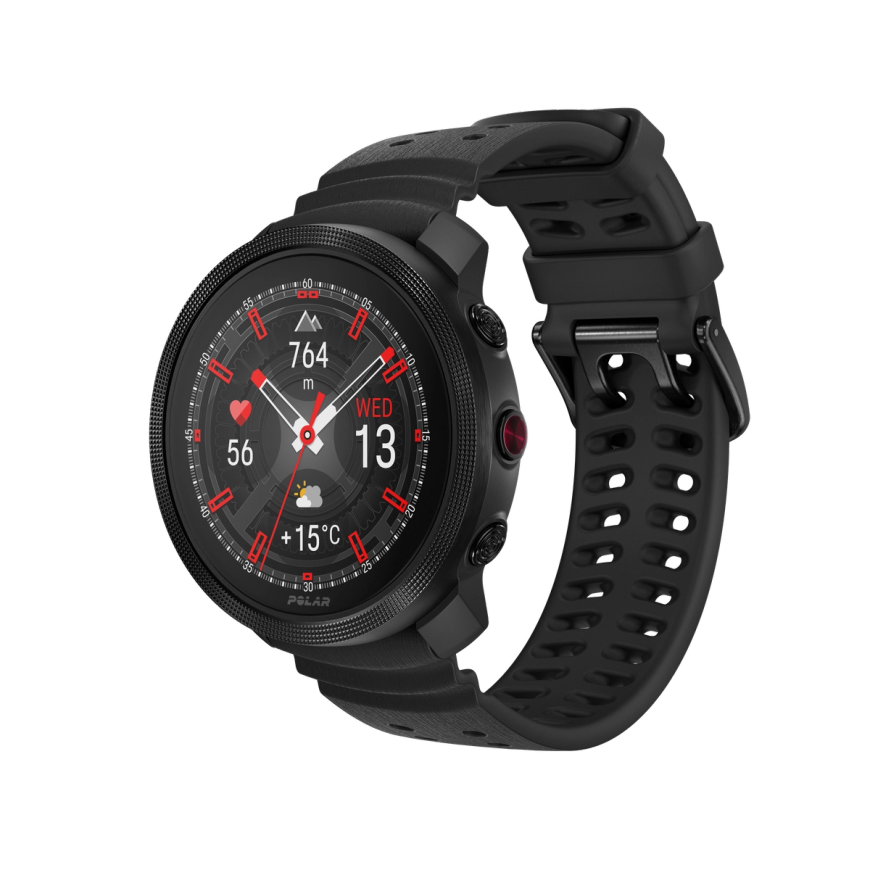
Polar Vantage M3 is a smart multi-sport watch for multi-sport athletes that’s compact yet powerful, stylish yet strong, and designed to bring extraordinary training, sleep and recovery tools into everyday life.
Enjoying this article? Subscribe to the Polar Newsletter and get notified when new articles are out.
Subscribe



 POLAR Street X
New
POLAR Street X
New
 Polar Vantage M3
 Polar Grit X2 Pro Titan
 Polar Grit X2 Pro
 Polar Grit X2
 Polar Vantage V3
 Polar Ignite 3
 Polar Pacer Pro
 Polar Pacer
 Polar Unite
Grit X Series
Vantage Series
Pacer Series
Ignite Series
Polar Unite
Grit X Series
Vantage Series
Pacer Series
Ignite Series