Running in the pool
You’re mid-training-block, mileage is peaking, and suddenly your tibia or calf gives you that familiar, unwelcome twinge. Your physical therapist hands you a foam belt and points toward the local lap pool. For most of us, water running feels like a sentence handed down in an injury clinic—a soggy, spirit-crushing substitute for real training. But treating aqua jogging as a last-resort fallback misses what it can do for your overall fitness.
Whether you’re a high-mileage runner aiming to protect your joints, an athlete seeking low-impact conditioning, or simply seeking an optimal workout for a more active, resilient life, the pool delivers powerful cardiorespiratory benefits without the physical wear and tear of land-based exercise.
In this guide, we’ll break down what water running actually is, what peer-reviewed research indicates about its benefits, and how to program pool workouts directly into your race build. We’ll also dive into the exact physiology behind why pool effort feels so different. That’s where Polar’s deep heart rate expertise comes in: underwater hydrodynamics fundamentally shift your cardiovascular mechanics, rendering standard land heart rate zones obsolete the moment your shoulders submerge.
Quick Take: Why the Pool Isn’t Just for Injured Runners
- Preserves Core Race Fitness: Controlled trials show that water running maintains VO2max, running economy, and lactate threshold for up to six weeks without a single stride on land.
- A Tool for Healthy Runners: Use it to log extra aerobic volume, reduce impact during a high-mileage week, or build heat acclimation without added wear and tear.
- Expect Lower Heart Rates: Hydrostatic pressure drops heart rate 10–15 bpm lower in water at matched effort—gauge pool intensity by RPE or stride cadence rather than land HR zones.
- Zero Ground Reaction Force: Aqua jogging maintains cardiovascular engine strength during stress fracture rehab, but because there’s zero impact, it won’t rebuild bone density.
What is Water Running?
Water running—often called pool running or aqua jogging—is exactly what it sounds like: executing a running stride while suspended or submerged in water. It’s an umbrella term for a low- or zero-impact cross-training modality that lets you work your cardiovascular system using the exact biomechanical patterns of running, without the pounding forces of asphalt. While it shares pool space with swimming workouts for runners, water running mimics the upright mechanics of your land stride rather than the horizontal strokes of swimming.
Deep water running vs. shallow water running: What’s the difference?
Before you jump into the lane, it helps to know that not all pool workouts are created equal. When you step into the pool, water depth completely shifts how your muscles, joints, and cardiovascular system experience the effort.
- Deep Water Running (Suspended): In deep water, your feet never touch the bottom of the pool. Wearing a flotation belt keeps you vertically suspended in deep water so you can execute a true running stride in zero-gravity conditions. Because there is zero ground impact, this is the gold standard for pure cardiovascular conditioning and joint-friendly recovery.
- Shallow Water Running (Impact-Reduced): In chest- or waist-deep water, your feet make contact with the pool floor. While water buoyancy still reduces your body weight by roughly 50–75%, you retain a small amount of ground reaction force. This makes shallow water running a great stepping stone when you’re ready to reintroduce mild impact to your bones and tendons.
The bottom line? Depth isn’t a beginner-versus-advanced split—it’s a deliberate training variable. Choose deep water when you need zero impact and true running mechanics, and shallow water only when you’re intentionally introducing partial loading under medical guidance.
Why Healthy Runners Should Use Aqua Jogging for Cross-Training
You don’t need a medical boot or a doctor’s referral to get into the pool. In fact, if you only submerge when you’re broken, you’re missing out on one of the most effective performance tools available for healthy race prep.
Think of aqua jogging as a secret weapon for volume. When you’re deep in a marathon build, and your legs feel like lead, adding another 5 miles on pavement might push your connective tissue over the edge. Swapping that extra run for a deep-water pool session lets you absorb more cardiovascular volume without adding a single ounce of ground impact. It’s also an exceptional tool for heat acclimation on humid summer afternoons, or for flushing out residual fatigue during a high-mileage recovery week.
Even better, it acts as an insurance policy for minor niggles. When a tight Achilles or grumpy IT band starts whispering, a pool workout keeps your momentum going while giving soft tissue room to calm down—well before a minor ache turns into a season-ending injury.
Mastering cross-training basics is all about balancing stress and recovery. By leveraging cross-training for runners in the pool, you can safely stack aerobic fitness. And with tools like Polar Training Load Pro, your pool sessions are automatically tracked alongside your land miles, ensuring every drop of effort counts toward your overall training status without leaving your total load in the dark.
But… Does Aqua Running Actually Maintain Running Fitness?
If you’re skeptical about whether log-rolling in a buoyancy belt can actually keep you fit for race day, that’s fair. Runners are inherently practical: if a cross-training tool doesn’t protect our aerobic engine, it’s a waste of time. Fortunately, the exercise physiology literature is surprisingly clear on this point. Aqua running doesn’t just pass the time—it directly preserves performance.
In a classic study by Wilber et al. (1996), trained competitive runners replaced land running entirely with deep-water running for six weeks. At the end of the trial, the athletes showed zero significant drops in VO2max, ventilatory threshold, or running economy.
If you’re wondering whether those physiological markers translate to actual race results, Eyestone et al. (1993) put that exact question to the test. After six weeks of replacing land training with either pool running or cycling, the runners logged two-mile time trials. The result? The pool running group maintained their two-mile performance times identical to those of those who stayed on land.
More recently, a 2022 systematic review by Kwok et al. synthesized data from 11 trials (n = 287) and confirmed that deep-water running yields cardiorespiratory gains fully comparable to those of traditional land-based training.
To be completely honest about the evidence base, there are limits to what these studies tell us. Most controlled trials rely on relatively small sample sizes (n = 16–32) focused on already-trained athletes. Aqua running won’t magically double your aerobic capacity if you aren’t doing the work, but the science consistently proves one core truth: when life or injury forces you off the pavement, pool running keeps your hard-earned race fitness intact.
Why Effort Feels Different in the Pool
If you jump into the pool expecting your standard land heart rate zones to line up with your effort, you’re in for a confusing session. Your heart simply doesn’t beat at the same frequency underwater—and human physiology explains why.
First, there’s hydrostatic pressure. The water exerts constant, uniform pressure against your body, squeezing blood out of your lower extremities and back toward your heart. This sudden increase in venous return increases the amount of blood pumped per beat (stroke volume), allowing your heart to deliver the same amount of oxygen at a noticeably lower heart rate.
Second, water is a powerful thermal conductor. It dissipates body heat far faster than air, blunting the cardiac drift (a steady rise in heart rate) that usually happens during warm land runs. Cuesta-Vargas et al. (2009) documented this exact phenomenon, recording a maximal heart rate that was 14.9 bpm lower during deep-water running compared with treadmill running at peak effort.
Finally, as Reilly, Dowzer & Cable (2003) highlighted in their comprehensive review, blood lactate dynamics shift underwater. Because your leg muscles must constantly push against water resistance, blood lactate builds up more quickly in the pool at a given oxygen intake (VO2). In short: your legs will burn, and your lungs will work hard, but your heart rate monitor will read surprisingly low.
Given these hydrodynamics, forcing standard land-based heart rate zones or endurance training zones onto pool running is a mistake. There is no validated mathematical formula to convert land bpm to pool bpm. Instead, judge your pool workouts using Rating of Perceived Exertion (RPE) or leg cadence (strides per minute per leg). Let your effort guide you, not an arbitrary land HR target.
How to Aqua Jog: Form, Technique, and Gear Setup
Getting the most out of deep water running comes down to two things: mimicking true land mechanics and getting your heart rate tracking right.
Start with your posture. The biggest mistake runners make in the pool is leaning forward at the chest like they’re powering up a hill. Resist that urge. Maintain a tall, vertical spine with your core engaged, head neutral, and shoulders relaxed. Drive your knees upward—not out—and use a piston-like leg action with a quick cadence turnover (aim for 55–60 strides per minute per leg). Drive your arms from the shoulders with a 90° bend at the elbow, punching straight through the water rather than sweeping across your torso.
When it comes to gear, a contoured flotation belt is non-negotiable for deep water running. It keeps you suspended vertically without requiring you to dog-paddle just to keep your chin above water.
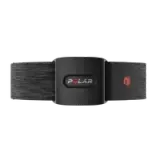
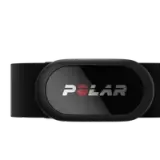
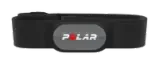
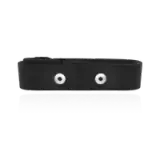
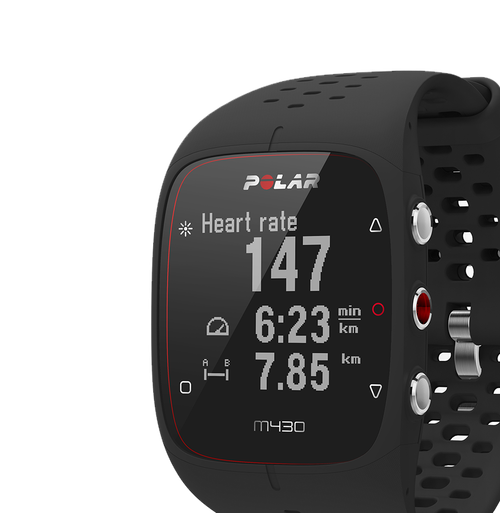
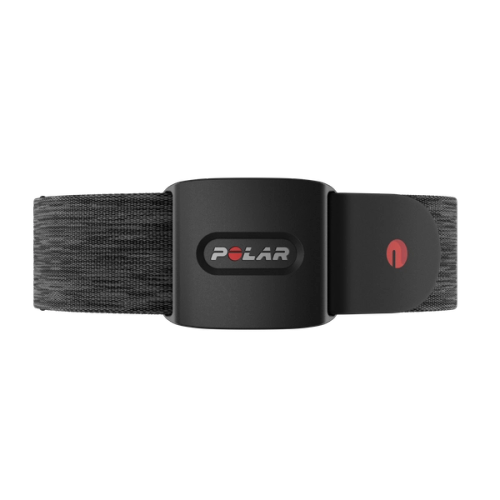
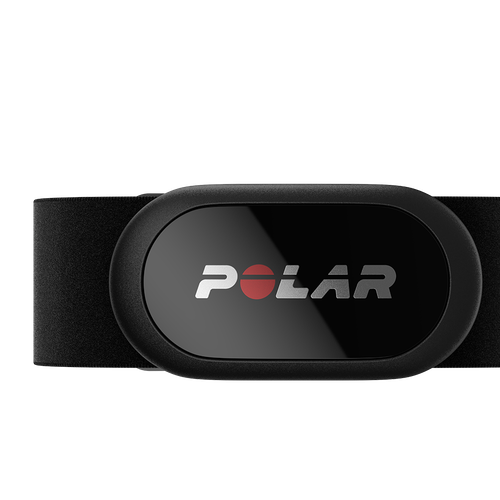
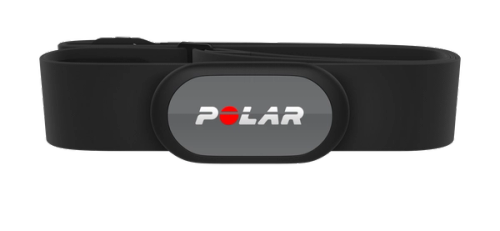
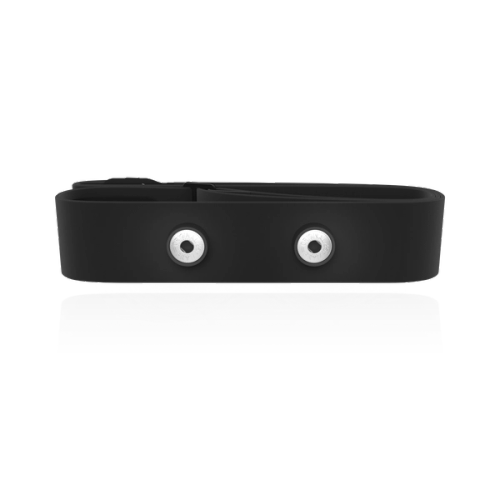
As for tracking your effort, don’t rely on your watch’s wrist-based optical sensor underwater. Water moving between the sensor and your skin, along with light refraction and cooler skin temperatures, can cause optical HR readings to drop or spike wildly underwater. For accurate pulse tracking while aqua jogging, pair your device with an ECG chest strap, such as the Polar H10. It uses direct electrical signals that aren’t disrupted by fluid movement, giving you precise, real-time feedback on every pool session.
undefined
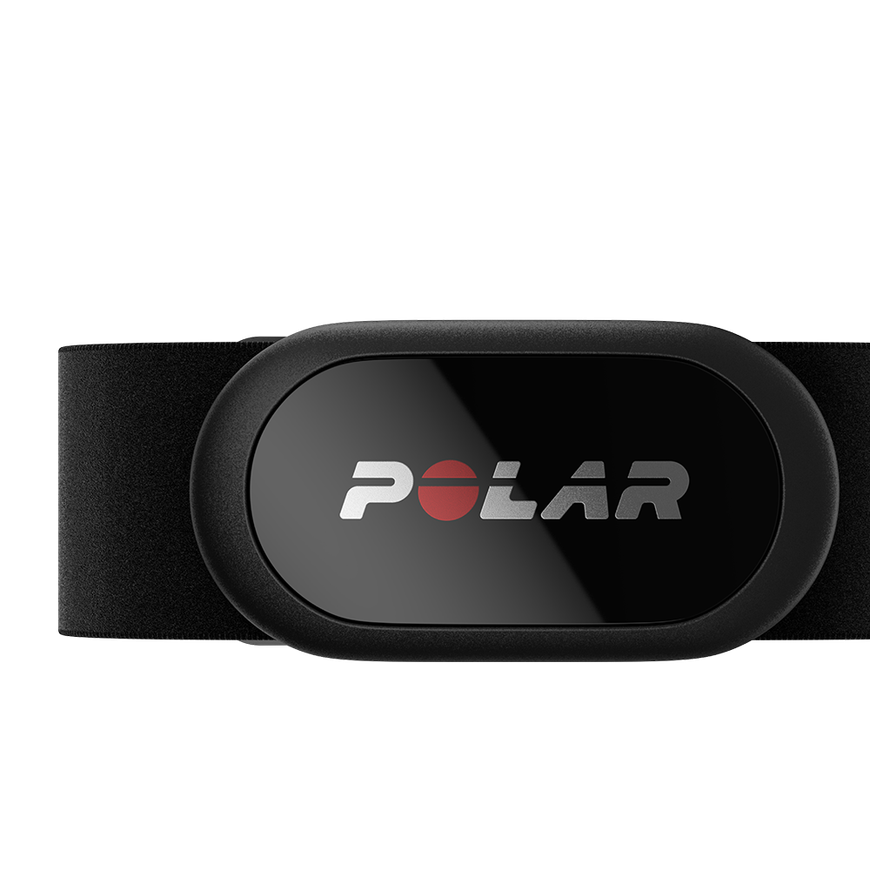
Polar H10
Heart Rate Sensor
When it comes to accuracy and connectivity, Polar H10 heart rate sensor is the go-to choice. Monitor your heart rate with maximum precision and connect your heart rate to a great variety of training devices with Bluetooth® and ANT+.
3 Sample Deep Water Running Workouts for Race Training
Ready to jump in? These three structured deep water running sessions mirror typical land workouts. Use RPE on a 1–10 scale or leg cadence (strides per minute per leg) to guide your effort, rather than chasing land pace or heart rate numbers.
Workout 1: The Aerobic Base Builder (Steady Volume)
- Goal: Replicate a steady, low-impact base run or supplementary endurance session.
- Format: 45–60 minutes of continuous deep water running at a steady, conversational rhythm.
- Target Intensity: RPE 3–4/10 (Cadence: 50–55 rpm). Focus on maintaining a tall, vertical posture and rhythm throughout. Great for adding volume during peak race builds or off-season training.
Workout 2: The Pool Tempo (Interval Equivalent)
- Goal: Simulate a threshold or tempo workout to build aerobic power.
- Format: 10-minute warm-up → 10 x 3-minute hard interval effort with 1 minute of easy float recovery → 10-minute cool-down.
- Target Intensity: Hard intervals at RPE 7–8/10 (Cadence: >60 rpm with a quick knee lift); recovery intervals at RPE 2/10.
Workout 3: The Active Recovery Flush
- Goal: Stimulate blood circulation and promote recovery without loading tired joints.
- Format: 30 minutes of relaxed, continuous pool movement.
- Target Intensity: RPE 2/10. Keep the movement fluid and light—use this session as a zero-impact alternative to an easy recovery run after a brutal long run.
Can Water Running Replace Land Running During Injury Recovery?
When a stress fracture or tendon issue sidelines you from land running, deep water running is arguably the most effective tool available for maintaining cardiovascular engine strength.
The real-world evidence for rehabilitation is compelling. Burns & Lauder (2001) tracked 181 military personnel placed on strict non-weightbearing profiles due to lower-extremity injuries. Through a structured deep-water running program, the soldiers maintained their aerobic performance capacity on return-to-duty physical testing—proving that DWR works outside controlled lab environments.
However, understanding the physiological limits of pool rehab is critical for a safe comeback:
- Zero Bone Density Stimulus: Because deep water running provides zero ground reaction force, it offers no osteogenic (bone-loading) stimulus. It serves as an exceptional cardio bridge during a stress fracture, but it does not rebuild bone density. Rebuilding structural bone integrity requires progressive, graded land loading under clinical guidance.
- Shift in Neuromuscular Activation: Electromyography (EMG) studies show that activation of distal leg muscles—specifically the gastrocnemius, soleus, and tibialis anterior—differs in water compared to land due to fluid drag instead of foot-strike impact.
Deep-water running is an outstanding cardiovascular bridge while navigating soft-tissue injury recovery or coping with sports injuries. Just remember that it maintains your heart and lungs, but doesn’t replace the progressive loading your bones and tendons need before you race on land again.
Common Aqua Jogging Mistakes to Avoid
Even experienced runners make simple mistakes when they transition their training to the pool. Watch out for these common errors:
- Chasing Land Heart Rate Zones: Trying to force your heart rate up to match land figures usually leads to over-exertion or frustration. Trust RPE and leg cadence instead.
- Leaning Forward at the Waist: Slouching or leaning forward like you’re charging uphill disrupts your balance, creates improper fluid drag, and places unnecessary strain on your lower back. Stay tall and vertical.
- Skipping a Progressive Return-to-Land Protocol: DWR protects your aerobic engine during an injury, but it doesn’t prepare your connective tissue for impact. Always bridge back to land running gradually.
- Relying on Wrist Optical HR: Water flow and depth cause optical wrist sensors to misread underwater. Use an ECG chest strap for accurate tracking.
- Losing Concentration: Water running sessions require concentration on maintaining intensity more than if you were going for an easy run on land.
Frequently Asked Questions
How many beats per minute lower is heart rate in water?
In controlled studies, heart rate in deep water typically runs 8 to 17 bpm lower than on land at an equivalent effort level (with Cuesta-Vargas et al. reporting a 14.9 bpm lower maximal heart rate). This shift is driven by hydrostatic pressure and thermal cooling.
Do I need a flotation belt for water running?
Yes. A flotation belt is essential for deep-water running because it keeps you suspended vertically in a neutral posture. Without one, you’ll waste energy treading water rather than focusing on clean running form.
Can I train for a marathon with aqua jogging while healthy?
Absolutely. Healthy runners frequently use deep water running to add extra aerobic volume, replace a low-impact recovery session, or reduce joint load during high-mileage marathon builds without sacrificing cardiorespiratory fitness.
Does water running help rebuild bone after a stress fracture?
No. Deep-water running eliminates the ground reaction force entirely. While this keeps your cardiovascular system fit during rehab, rebuilding bone density requires progressive, impact-bearing weight loads on land.
How often should runners add water running to a training week?
Healthy runners looking for supplementary volume or low-impact recovery can add 1–2 sessions per week. Injured runners on non-weightbearing profiles can perform 3–5 structured pool workouts per week to maintain race fitness.
Take the Plunge
Aqua jogging isn’t a consolation prize for the injured—it’s a clinically backed, high-performance training tool. Whether you’re looking to stack extra aerobic volume without beating up your joints, preserve your engine through a minor niggle, or protect your legs during a peak race build, the pool has a place in your plan. Try swapping one recovery run for a 45-minute deep water session this week. Focus on tall form, gauge your effort by RPE or cadence, and see how fresh your legs feel for your next key workout.
Enjoying this article? Subscribe to the Polar Newsletter and get notified when new articles are out.
Subscribe



 POLAR Street X
New
 Polar Vantage M3
 Polar Grit X2 Pro Titan
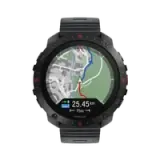 Polar Grit X2 Pro
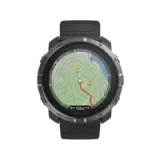 Polar Grit X2
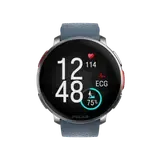 Polar Vantage V3
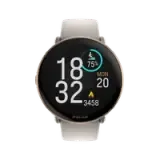 Polar Ignite 3
 Polar Pacer
Grit X Series
Vantage Series
Pacer Series
Ignite Series