It’s part of your daily routine: you wake up, tap your watch and check your morning HRV score. It’s easy to treat that single heart rate variability number like a daily scoreboard—a green light means crush your workout, a drop means panic. But here’s the reality: a single HRV number means something completely different depending on when you take it.
If you want to make your data actionable, timing is everything. In this guide, you’ll learn how to turn a pre-workout reading into a practical training decision, why checking your HRV right after a hard session is close to useless, and why overnight trends hold the real answer to your recovery.
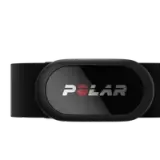
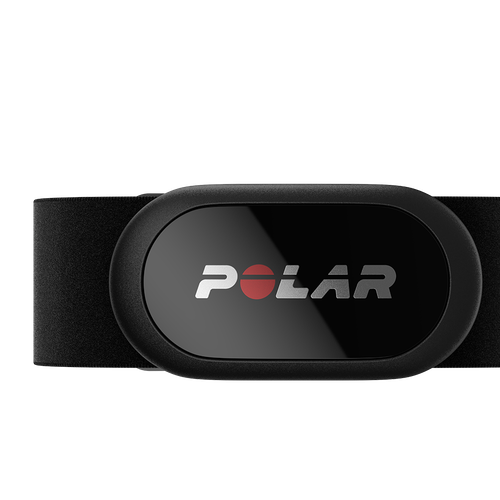
As pioneers of wireless heart rate monitoring, we at Polar have spent decades refining how autonomic data gets captured. Devices like the Polar H10 give you the laboratory-grade precision needed to track subtle shifts in your nervous system—provided you’re measuring at the right time. Need a quick refresher on what HRV actually measures? Start with our core pillar guide first.
undefined
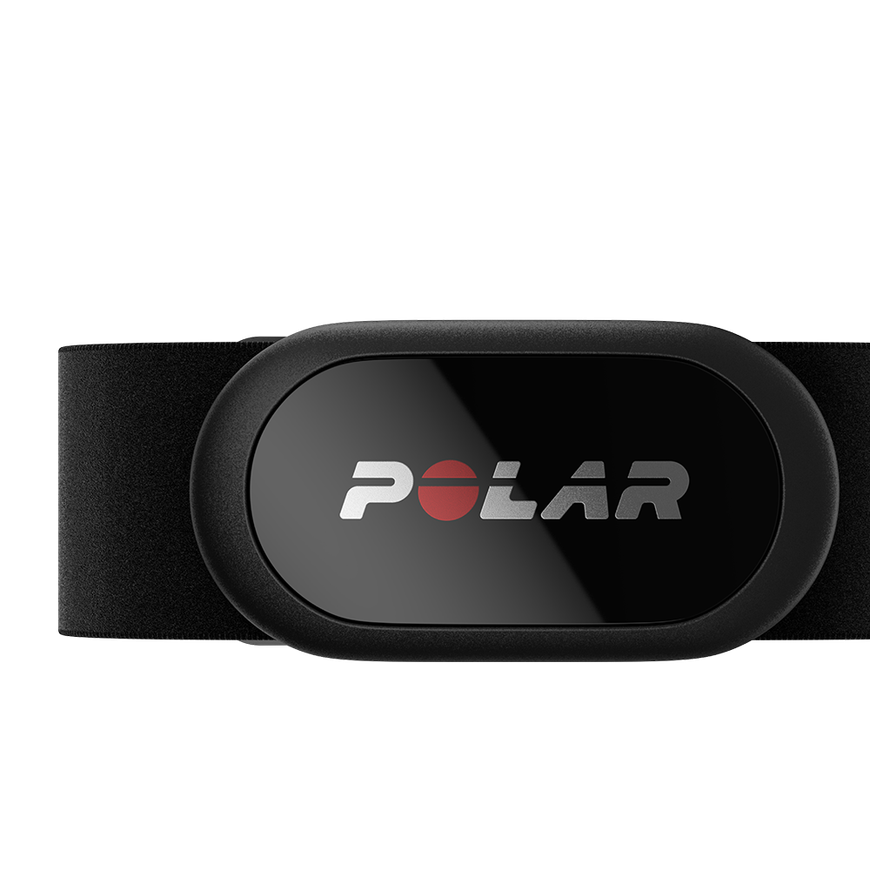
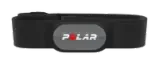
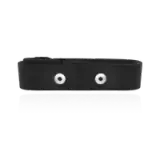
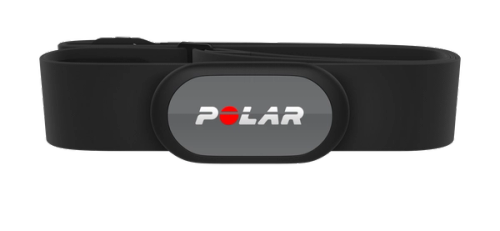
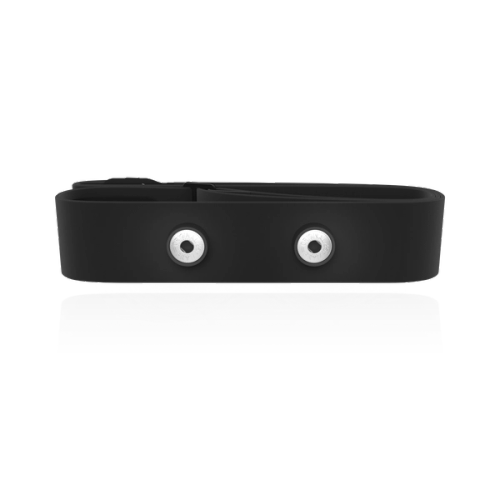
Polar H10
Heart Rate Sensor
When it comes to accuracy and connectivity, Polar H10 heart rate sensor is the go-to choice. Monitor your heart rate with maximum precision and connect your heart rate to a great variety of training devices with Bluetooth® and ANT+.
Quick Take: HRV Timing at a Glance
- Before Training: A stable-or-rising morning HRV trend generally clears you to push hard. A drop sustained over two or more days signals it’s time to ease off—but only when evaluated alongside resting heart rate and how you actually feel.
- After Training: Measuring HRV immediately after exercise is unreliable because your autonomic tone hasn’t stabilized yet. Skip the post-workout spot check and rely on overnight tracking instead.
- Overnight Trends: A rising HRV during intense training blocks isn’t always good news—it can actually be an early signal of functional overreaching, not extra readiness.
What Does HRV Before a Workout Tell You About Readiness?
Checking your HRV before a session isn’t about predicting whether you’ll set a personal record today. It’s about assessing how much stress your autonomic nervous system is already carrying so you can decide how hard to push.
Think of pre-workout HRV as a green, yellow, or red light for intensity—not a permanent verdict on your fitness.
How to Use Pre-Workout Trends (Without Over-Relying on a Single Number)
Using HRV to guide training actually works. In a foundational trial of endurance runners, Kiviniemi et al. (2007) found that athletes who tailored their high-intensity running days to daily HRV changes saw a significantly larger increase in maximal running speed—an extra +0.9 km/h compared to +0.5 km/h in a fixed-training group—despite completing fewer planned hard sessions.
However, a morning HRV reading should never act as a dictator.
In a 2025 study of experienced cyclists, Alfonso, Clarke, and Capdevila demonstrated that combining HRV with resting heart rate and subjective well-being yielded greater gains in 5-minute (+27.4 W) and 20-minute power output than relying on HRV alone. Your nervous system doesn’t operate in a vacuum, which is why recovery starts before the workout begins.
Here’s the most critical rule to remember: there is no universal drop threshold that means ‘skip training.’ Research evaluating long-term endurance recovery (Rothschild et al., 2024) reinforces that individual baselines vary far too much for blanket rules like ‘a 10% drop means take a rest day.’ What matters is your personal rolling average over several days, not a single dip. (If you aren’t sure where your baseline sits, check out our guide on what counts as a good HRV score).
This multi-metric approach is why Polar developed tools like the Orthostatic Test and Recovery Pro. By pairing a quick standing HRV test with your resting heart rate and simple subjective feedback, you get an accurate picture of training readiness based on your trends—so you know when to go hard and when to hold back.
Should You Measure HRV Right After Exercise?
If you finish a grueling interval session or a long ride, strap on your monitor, and check your score five minutes later, you’re going to see a tanked HRV. It can be alarming, but checking your HRV after exercise is one of the most common missteps in recovery tracking. A spot reading taken in the minutes or hours right after a session doesn’t tell you how well you’re recovering. It simply confirms that you just worked out.
Why Immediate Post-Workout HRV Is Unreliable
When you exercise, your sympathetic nervous system (the ‘fight or flight’ branch) takes the driver’s seat, pushing up your heart rate and suppressing your heart rate variability. Once you stop, your parasympathetic nervous system—the rest-and-digest branch—has to step back in to pull your body back toward homeostasis. That process, known as parasympathetic reactivation, takes time. So, measuring HRV right after a workout captures an active physiological transition, not your actual baseline recovery.
The timeline for that reset is longer than most athletes realize:
- Low-intensity workouts: Cardiac autonomic recovery typically takes up to 24 hours.
- Threshold sessions: Recovery extends to 24-48 hours.
- High-intensity intervals: Full parasympathetic reactivation can take at least 48 hours.
This multi-phase timeline was highlighted in a comprehensive review by Stanley, Peake, and Buchheit (2013), proving that autonomic recovery isn’t an instant switch you can spot-check after catching your breath.
For maximal efforts, that timeline stretches even further. In one study of recreational runners, Špenko et al. (2022) found that parasympathetic activity was suppressed on the day of a half-marathon itself, then rebounded above baseline the very next day—a swing the researchers tracked for a full week afterward as the body worked to re-settle. Even a ‘normal-looking’ HRV reading a day or two after a hard race can be part of that overcorrection, not a clean bill of health.
Thus, if you want to accurately monitor your recovery, step away from the post-workout spot check. Your body needs hours—not minutes—for its autonomic tone to settle down and reveal true recovery trends.
Why Overnight (Nocturnal) HRV Is the Metric That Actually Matters
If measuring HRV immediately after a workout provides meaningless noise, where should you look for an accurate recovery signal? The answer lies in your sleep.
Overnight, or nocturnal, HRV eliminates external variables like posture, stress, meals, and movement. When your body is completely at rest, your autonomic nervous system reveals its true baseline.
Decoding Your Recovery Pattern
Tracking HRV while you sleep is far more sensitive to accumulated fatigue than a quick morning test. In a study evaluating recreational runners during an overload phase—where training load was bumped by 80%—Nuuttila et al. (2024) found that nocturnal HRV segments were significantly better at detecting overall fatigue and performance shifts than single morning spot checks.
However, interpreting those overnight numbers requires looking past a simple ‘higher is better’ mentality. In a study of trained triathletes undergoing intensified overload training, Le Meur et al. (2013) observed a 9.0% (± 2.1%) drop in maximal running performance, yet weekly averaged nocturnal HRV paradoxically increased. This phenomenon, known as parasympathetic hyperactivity, occurs when an overreached nervous system works in overdrive to force recovery. If you see a sudden spike in HRV alongside heavy fatigue, it could actually be one of the early signs of under-recovery.
That is why single-night readings can be misleading. As highlighted in a meta-analysis by Manresa-Rocamora et al. (2021), a weekly rolling average is essential to catch real trends and avoid misinterpreting a temporary surge or dip.
Automated sleep tracking tools like Polar Nightly Recharge™ take the guesswork out of this process by measuring your autonomic recovery during the first hours of sleep. Paired with Training Load Pro, it compares your strain against your long-term baselines—alerting you to persistently low HRV before you slide into systemic overtraining. (Curious how this differs from manual checks? Read our guide on Nightly Recharge vs. Recovery Pro).
The Verdict: Play the Long Game with Your Data
Heart rate variability is one of the most powerful metrics in an endurance athlete’s toolkit, but only when you respect its timing. Use your pre-workout HRV alongside resting heart rate and subjective feel as a flexible guide for today’s intensity. Ignore the noise of immediate post-workout spot checks, and trust your multi-day nocturnal trends to reveal your true recovery status.
Tomorrow morning, check your Nightly Recharge™ status to see where your autonomic balance stands before tying your shoes. If you’re new to tracking or want to dive deeper into the fundamentals, head back to our complete guide on everything you need to know about HRV to build your baseline.
Enjoying this article? Subscribe to the Polar Newsletter and get notified when new articles are out.
Subscribe
References
Kiviniemi, Hautala, Kinnunen, & Tulppo. (2007). Endurance training guided individually by daily heart rate variability measurements. European Journal of Applied Physiology. https://doi.org/10.1007/s00421-007-0552-2
Alfonso, Clarke, & Capdevila. (2025). Individual training prescribed by heart rate variability, heart rate and well-being scores in experienced cyclists. Scientific Reports. https://www.nature.com/articles/s41598-025-13540-z
Rothschild, Stewart, Kilding, & Plews. (2024). Predicting daily recovery during long-term endurance training using machine learning analysis. European Journal of Applied Physiology. https://pmc.ncbi.nlm.nih.gov/articles/PMC11519101/
Stanley, Peake, & Buchheit. (2013). Cardiac Parasympathetic Reactivation Following Exercise: Implications for Training Prescription. Sports Medicine, 43(12), 1259–1277. https://doi.org/10.1007/s40279-013-0083-4
Špenko, Potočnik, Edwards, & Potočnik. (2022). Training History, Cardiac Autonomic Recovery from Submaximal Exercise and Associated Performance in Recreational Runners. International Journal of Environmental Research and Public Health. https://pmc.ncbi.nlm.nih.gov/articles/PMC9408689/
Nuuttila et al. (2024). Morning versus Nocturnal Heart Rate and Heart Rate Variability Responses to Intensified Training in Recreational Runners. Sports Medicine – Open. https://pmc.ncbi.nlm.nih.gov/articles/PMC11541970/
Le Meur, Pichon, Schaal, Schmitt, Louis, Gueneron, Vidal, & Hausswirth. (2013). Evidence of Parasympathetic Hyperactivity in Functionally Overreached Athletes. Medicine & Science in Sports & Exercise, 45(11), 2061–2071. https://pubmed.ncbi.nlm.nih.gov/24136138/
Manresa-Rocamora, Flatt, Casanova-Lizón, Ballester-Ferrer, Sarabia, Vera-Garcia, & Moya-Ramón. (2021). Heart rate-based indices to detect parasympathetic hyperactivity in functionally overreached athletes: A meta-analysis. Scandinavian Journal of Medicine & Science in Sports. https://onlinelibrary.wiley.com/doi/abs/10.1111/sms.13932



 POLAR Street X
New
 Polar Vantage M3
 Polar Grit X2 Pro Titan
 Polar Grit X2 Pro
 Polar Grit X2
 Polar Vantage V3
 Polar Ignite 3
 Polar Pacer
Grit X Series
Vantage Series
Pacer Series
Ignite Series