What is the anaerobic threshold and why should you care? If you're looking to improve your fitness, understanding the concepts of aerobic threshold and anaerobic threshold is key as they impact the benefit you get from your workouts. When you understand what you're really working on at different intensity levels, you can work out more effectively and really start improving different areas of your fitness. Let’s break it down. Here’s what you need to know about the anaerobic threshold.
What is anaerobic threshold?
“The term 'anaerobic threshold' has actually caused a bit of controversy and discussion over the years,” says Caroline Varriale, DPT, CSCS, FAFS, and a physical therapist at Finish Line Physical Therapy in New York City. The anaerobic threshold is the highest exercise intensity that you can sustain for a prolonged period without lactate substantially building up in your blood. “The anaerobic threshold is commonly thought of as the point at which lactic acid – a byproduct of energy being made from glucose – starts to build up quickly in the blood.”
Most athletes enter the anaerobic threshold zone when they’re putting in some serious work
Muscles burn glucose two ways: aerobically, which means with oxygen, and anaerobically, or without oxygen. Most athletes enter the anaerobic threshold zone when they’re putting in some serious work and a lot of power output over a short period of time – like during an interval or sprint. That's when you’re using energy that’s readily available, but that won’t last long. As you rest and recover, between intervals for example, your aerobic system recharges, readying you for the next push.
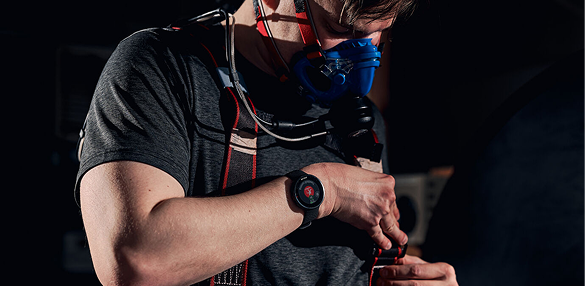
What’s the best way to measure anaerobic threshold?
The anaerobic threshold varies from athlete to athlete. For athletes who regularly do interval-style workouts, their anaerobic thresholds will be much higher and more conditioned than those who only do long, steady-state workouts – or don’t train at all. The more you perform high-intensity workouts, the better you can condition your anaerobic threshold and process lactate in the body – and the faster you’ll be able to swim, bike, or run.
What does anaerobic threshold feel like?
When you go over your anaerobic threshold, your anaerobic metabolism increases and blood lactate starts to accumulate, which will cause your muscles to stiffen. This happens because lactic acid can no longer be removed quickly enough and recombined with other molecules to make more energy. “At this point, exercise intensity feels more difficult and some people feel a burning sensation in their muscles,” Varriale says. It probably hurts and burns a little, but it shouldn’t be completely uncomfortable. If you’ve ever done a track workout – say 400-meter repeats – you’ve probably gotten into the anaerobic zone on each repeat. You feel it when you’re breathing heavily, can feel a pronounced heartbeat, are slightly gasping for air, and can’t carry on a conversation. Even as you get fitter, you’ll still find yourself gasping for air during your track workouts – but you’ll probably be shaving a few seconds off each repeat. So, as the effort stays consistent, your performance increases. (That means it’s working!)
Aerobic vs. anaerobic threshold
“It’s important for athletes to understand aerobic and anaerobic energy systems,” says Varriale. “The aerobic energy system gives you more long-lasting energy because it burns predominantly fat stores. So for endurance athletes, it’s an important system to train. But the anaerobic energy system can produce energy more quickly, and allows us to exercise at higher intensities, so that’s crucial, too.” In other words, make sure your training plan includes high-intensity intervals, steady-state workouts, and rest days to recover from both. Because slow, steady, fast, and recovered are what work together to improve your fitness – or win the race, if that's what you're aiming for.
Enjoying this article? Subscribe to the Polar Newsletter and get notified when new articles are out.
Subscribe



 POLAR Street X
New
 Polar Vantage M3
 Polar Grit X2 Pro Titan
 Polar Grit X2 Pro
 Polar Grit X2
 Polar Vantage V3
 Polar Ignite 3
 Polar Pacer
Grit X Series
Vantage Series
Pacer Series
Ignite Series