One of the wonderful things about running is that you can put on your shoes, walk out your front door – wherever that may be – and get running. Sure, we tend to make it a little more complicated than that with loads of data (not sorry – we love it!), fancy gear, and expensive race entry fees, but in its simplest form, running is an awesomely accessible, modifiable, enjoyable way to get some fresh air while breaking a solid sweat. But once you’ve made it out your front door, what’s next? It can be tempting to run the same loop of your neighborhood every day, but part of the beauty of this sport is that it’s a great way to see the world and explore. (And, thanks to watches and maps, the likelihood of getting lost is dwindling.) “Variety is the spice of life, especially when it comes to running,” says Mary Arnold, co-leader of November Project New York City and a co-leader of Run 4 All Women. “Taking on a different route a few times per week switches up muscle groups, helps improve conditioning, and can help keep you focused.” Consider this a challenge to switch up your regular run route at least once a week – here’s how.
What to know before you go
When it comes to finding the perfect-for-you running route, the most important factor is safety, of course. But beyond that, your route should be motivating, whatever that means to you.
A good running route is one that makes you want to run it,” says Arnold. “A route that offers a challenge, a scenic view, a chance to see friends out running – that’s the good stuff.
“A good running route is one that makes you want to run it,” says Arnold. “A route that offers a challenge, a scenic view, a chance to see friends out running – that’s the good stuff.” Beyond the visual appeal and Instagrammability of any given route, Arnold also says practicality matters. “Consider how long it will take you to get to the route,” she says. “Can you walk out the front door, or is it a train or car ride away? Will you be in a remote area or a busy area? What time will you be running? Will there be options to get help if you need it, or ways to get home if you can’t finish your workout?” If you’re a trail runner in a remote area, take into consideration the fact that many parks may close in the evening and be less populated in general. Or if you need to get a road run in after 9 pm, you may want to consider busier or more well-lit areas.
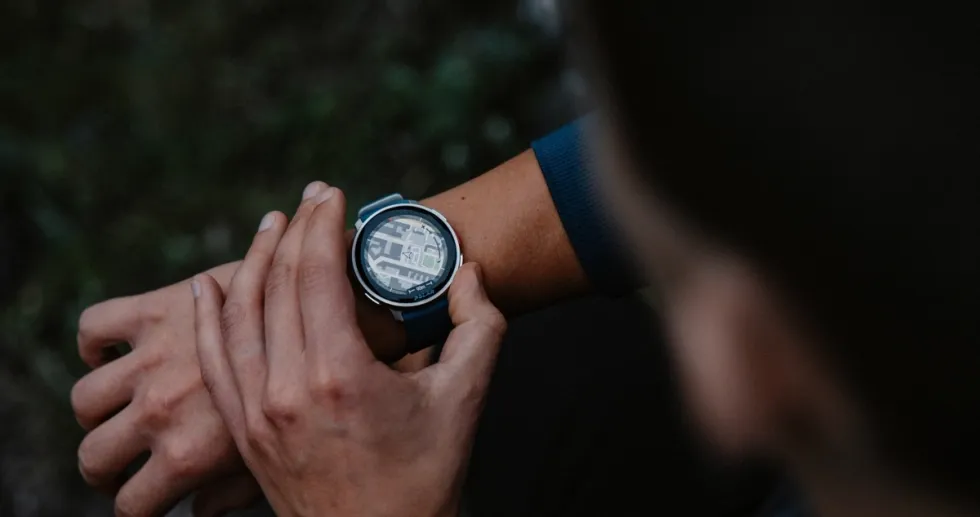
It’s never a bad idea to map out your run beforehand, or to at least scout the area and determine a rough idea of your route.
It can be tempting to use running as a means of exploration – like if you’re visiting a new city and want to sightsee on the run. But it’s never a bad idea to map out your run beforehand, or to at least scout the area and determine a rough idea of your route. “I like to get a sense of distance, landmarks, and resources – water fountains, delis, or natural elements like mountain passes or trail junctions,” Arnold says.
How to find the ideal route when…
You’re going for an easy run with friends
“It really depends on what you and your friends like to get out of your runs together,” says Arnold. “Do you want to catch up on life? Is someone in the group just getting back into running and may need a little push? Are you all coming from different locations and need to pick something central?”
If you're running with a group, pick a running route that’s accessible for the least fit person but isn’t so easy that more experienced runners in the group will get bored.
"Overall," Arnold says, "pick a group run route that’s accessible for the least fit person in the group but isn’t so easy that the group will get bored." (Arnold’s favorite group running route is the Bridle Path loop in Central Park.) And pro tip: Even if the path allows it, try to avoid running four abreast. “Running in a horizontal line makes it harder for people to hear each other clearly,” Arnold says. “It’s better to go two up and one back so everyone is included.”
You’re doing a long run in preparation for a half marathon or marathon
The key is specificity. “Pick a route that’s similar to the event you’re training for,” Arnold says. “If you’re training for the Chicago Marathon, a bike path or country road would work well. If you’re planning on the Runner’s World Half, which has plenty of hills, opt for a park or route with those same features.” Arnold also suggests considering the facilities and resources along the way, like water fountains and public restrooms.
You’re planning to tackle a track workout
Find a track that’s close to you and map out the most direct route there. Your jog to the track will be your warmup, and you can dive right into the workout once you get to the oval. Not sure where your closest available track is? A Google search can help, or seek out local public high schools or colleges that may be open for non-school use. (Just be sure you’re not scheduling your workout at the same time as the track team.) If you can’t get access to a track, find a straight, flat road or path, and rely on your watch to log your distance.
You have a tempo run on tap
“An out-and-back route can help you focus on keeping the pace,” suggests Arnold. “You’ll know what to expect in the second half, and you’ll be able to stay mentally engaged and dialed in on your pace.” Again, Arnold says, opt for specificity. “If you have a hilly race coming up, do your tempo run on hills,” she says.
You’re in a new city and want to explore
Find a local to guide you. “Check out a group run from a local running store, or just pull up a point of interest on your phone and run there and back,” Arnold says. If you’re staying in a hotel, ask the concierge to point you in the right direction and to give you some safety pointers.
You want to be one with nature – but you’re not a seasoned trail runner
"Head to a trailhead and grab a paper map. Sure, it’s old school (and yes, trail mapping apps like All Trails or Google Maps can help, too), but you never need to worry about a paper map running out of battery life or losing signal in the middle of the woods."
You just want to zone out
A nice head-clearing run can do wonders for the mind and body. But you’re not likely to get into a meditative state if you’re navigating your way through busy city streets or constantly halting at stoplights or crosswalks. "Instead," Arnold says, "think about a place where you feel most comfortable, and go there." “For me, the peacefulness of the waterfront or the well-worn sign posts of a favorite trail let my mind wander,” she says. Or hop on a treadmill. “If you’re in an unfamiliar city on a work trip, you may want to consider a run inside on the ’mill,” Arnold says. “Letting your attention wander in these kinds of settings can cause problems. Like the time I ran six miles through a pretty Irish village and then had to stop because I hit the Atlantic Ocean. It was a very long six miles back, with lots of people asking me out their car windows if I needed a ride. Lesson learned."
Enjoying this article? Subscribe to the Polar Newsletter and get notified when new articles are out.
Subscribe



 POLAR Street X
New
 Polar Vantage M3
 Polar Grit X2 Pro Titan
 Polar Grit X2 Pro
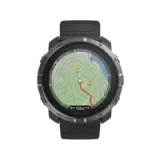 Polar Grit X2
 Polar Vantage V3
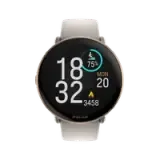 Polar Ignite 3
 Polar Pacer
Grit X Series
Vantage Series
Pacer Series
Ignite Series