As you watch your deep sleep metrics steadily decline over the years, it’s easy to mistake a natural biological shift for a personal recovery failure. Your sleep tracker isn’t warning you of a breakdown, but rather mapping a predictable lifelong evolution—so how do you stop fighting your changing biology and start optimizing the data you have today?
It’s 6:30am, and your alarm goes off. Emerging from sleep, the first thing you look at is your wrist. That’s because lately you’ve been checking your sleep score with the same level of curiosity as you do with your split times after a tempo run. Why? Well, your data has been telling you what you already know: your sleep has changed.
You can probably remember your early twenties when you could sleep through a thunderstorm and wake up feeling fully charged. Now, in your mid-40s, you’re putting in a lot of effort to do everything “right”—you’ve cut out your afternoon espresso, switched off your phone at 9pm and made sure the temperature in your bedroom is a mild 65° Fahrenheit. Yet your deep sleep percentage is a shadow of its former self, and your sleep tracker keeps flagging those 3am awakenings, which feel like a personal failure.
But here’s the truth that your data doesn’t always explain: Your sleep isn’t necessarily “getting worse”; it’s evolving. The same biological machinery that spends 16 hours a day wiring a newborn’s brain is the same system that shifts a teenager’s internal clock three hours into the night, and eventually strips the “depth” from a 50-year-old’s rest.
Throughout these evolutions, your sleep architecture is governed by a shifting relationship between the autonomic nervous system, melatonin, and adenosine. Understanding this lifespan arc is the key to moving from aging anxiety to data-driven insight. So, before you look at what you can potentially change to enhance your sleep, you have to understand what’s simply your biology.
Is Your Changing Sleep Normal?
Sleep changes across the human lifespan are driven primarily by brain maturation and shifting circadian sensitivity. While newborns require 50% of their sleep to be REM for neural wiring, adults naturally lose approximately 2% of deep (slow-wave) sleep per decade, starting in their 20s. These shifts are biological, not pathological—knowing your age-indexed baseline is essential for accurately interpreting your recovery data.
Why Sleep Architecture Changes at All: The Underlying Biology
To understand why a 6-year-old is nearly impossible to wake while a 60-year-old rouses at the click of a door handle (a difference rooted in the dramatic decline in slow-wave sleep depth), we have to look at the three primary drivers of sleep evolution:
Drive 1: Brain Maturation and Synaptic Pruning
Slow-wave sleep (SWS) is the brain’s primary tool for “synaptic homeostasis.” We use deep sleep to consolidate and prune connections made during the day. Because a child’s brain is wiring itself at a massive scale, their SWS drive is at its lifetime peak.
Drive 2: Circadian Clock Sensitivity
The suprachiasmatic nucleus (SCN)—your internal master clock—changes its sensitivity to light and its timing of melatonin secretion as we age. This causes the dramatic “phase delay” in teens (driven by delayed melatonin onset) and the “phase advance” in seniors.
Drive 3: Adenosine Sensitivity
The buildup of adenosine drives our desire for sleep. As we age, our sensitivity to this molecule and the potential rate at which we clear it appears to change, affecting how heavy or light our sleep feels, regardless of duration.
undefined
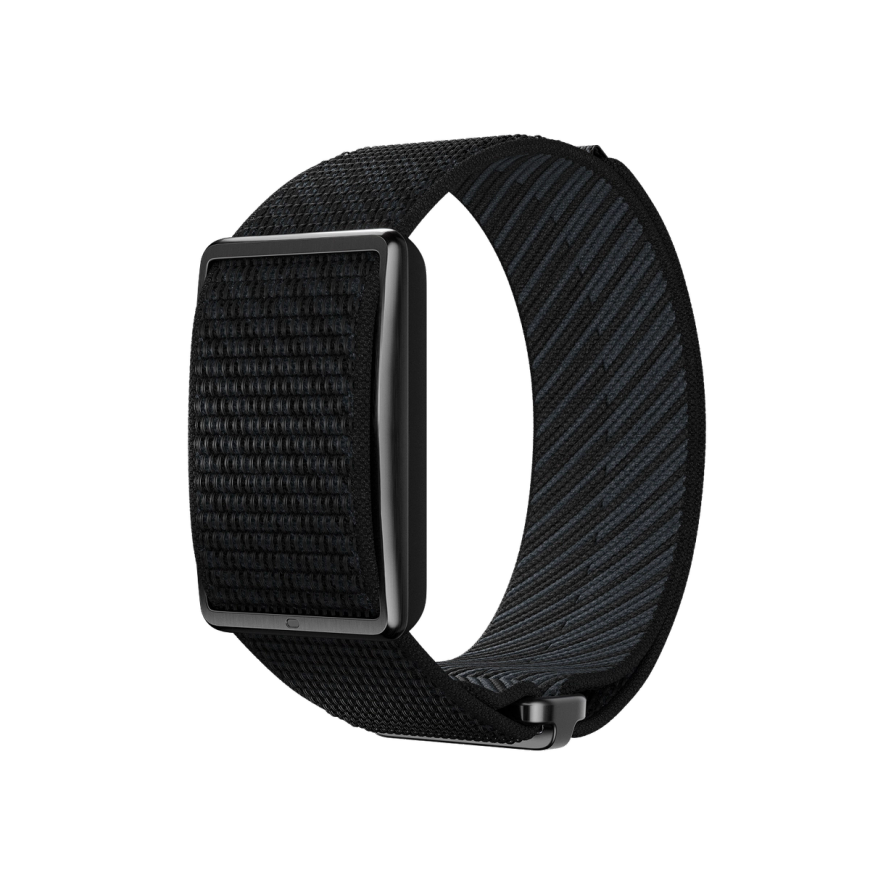
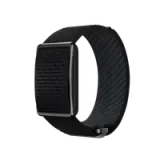
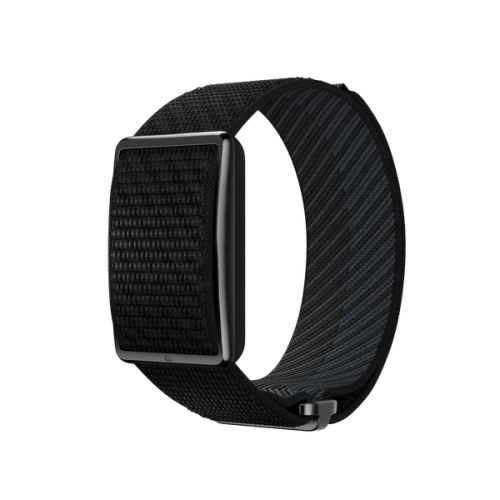
POLAR Loop
Screen-Free Wearable Health Band & Fitness Tracker
POLAR Loop is a screen-free, subscription-free fitness band that helps you sleep better, recover smarter, and stay active—without distractions.
The Lifespan Sleep Transition: From Deep to Light
While the biological drives explain the how, the visual shift in our sleep architecture is even more striking. The following graph illustrates the quantitative transition we all undergo—a journey from the REM-heavy days of infancy to the more fragmented, lighter sleep patterns of our later years.
As you look at these shifts, remember that for a training athlete, “quality sleep” is relative. A 45-year-old’s optimal night will naturally look different than a 20-year-old’s, even when recovery has peaked.
| Life Stage | Primary Keyword | Sleep Duration | Key Architecture Feature |
|---|
| Newborn | Infant Sleep | 14-17 Hours | 50% REM (Brain Building) |
|---|
| Child | Deep Sleep Peak | 9-11 Hours | Highest SWS Percentage |
|---|
| Teenager | Circadian Shift | 8-10 Hours | 1.5-3-hour Phase Delay (Late Nights) |
|---|
| Adult | Sleep and Aging | 7-9 Hours | 2% SWS Loss per Decade |
|---|
| Seniors | Older Adult Sleep | 6-7 Hours (Fragmented) | Phase Advance (Early Rising) |
|---|
Data adapted from:
Ohayon et al., 2004, Jenni & Carskadon, 2007 and Van Cauter et al. (2000).
Why Do Infants Spend So Much Time in REM Sleep?
If you’ve ever looked at the sleep data of a newborn, it looks like a chaotic marathon. Infants sleep 14-17 hours a day, but the standout metric is that nearly 50% of that time is spent in REM (Rapid Eye Movement) sleep.
According to researchers, including Jenni & Carskadon, this extreme REM dominance isn’t for “rest”—it’s for “construction.” In infancy, REM is the primary state in which the developing brain lays down new neural circuits. It provides the endogenous stimulation required to “wire” the visual and sensory systems before the infant is even fully interacting with the world. Furthermore, their sleep is ultradian—occurring in short bursts—because their SCN isn’t yet entrained to the 24-hour light/dark cycle. They aren’t “bad sleepers”; they are simply mid-build.
Why Do Teenagers Stay Up Late?
The classic trope of the “lazy teenager” who can’t get out of bed for school is actually a case of biological mismatch. At the onset of puberty, the adolescent circadian clock undergoes a documented phase delay of roughly two to three hours.
This means that a teenager’s brain does not begin secreting melatonin until much later in the evening than a child’s or an adult’s. When we force a teen to wake up early for school, we create social jetlag—a chronic state of sleep deprivation caused by the conflict between biological timing and societal demands. Their recovery sleep on weekends isn’t sloth; it’s a desperate attempt to recover from the accumulated sleep debt created by that biological mismatch.
Why Do Adults Need Less Deep Sleep as They Age?
This is the section that most often triggers “tracker anxiety” for the endurance athlete. In your 20s, you likely had high-amplitude slow-wave sleep (N3). But, as we mentioned above, from age 20 onward, deep sleep begins a steady, measurable decline of about 2% per decade. The biological reason for this slow-wave sleep decline isn’t that you need less recovery; it’s that the aging brain loses the ability to generate the high-voltage, slow-moving brain waves (EEG amplitude) that characterize deep sleep.
In fact, a landmark study published in JAMA (Van Cauter et al., 2000) found that the proportion of sleep spent in deep slow-wave sleep can fall by more than 80% between early adulthood and midlife—dropping from roughly 19% of sleep time in your 20s to just 3-4% by your late 30s and 40s—with that lost deep sleep replaced by lighter stages rather than by longer total sleep time.
When you see your “Deep Sleep” percentage drop on your watch, you’re witnessing the natural loss of EEG amplitude. Your brain is becoming less efficient at generating that specific deep state, making your sleep feel lighter and more easily disrupted.
Why Do Older Adults Wake Up So Early?
As we move into our 60s and 70s, the teenage phase delay reverses into a circadian phase advance. The master clock in the SCN begins to shift earlier, causing melatonin to rise sooner in the evening and drop off in the early hours of the morning. This is compounded by a reduction in light sensitivity—the aging lens yellows and transmits less blue-spectrum light to the SCN, weakening the very signal the brain uses to anchor its internal clock to the day.
This shift, combined with sleep fragmentation, is why older adults often wake at 4 or 5am. Because there is significantly less slow-wave sleep to “anchor” them in a deep state, the threshold for arousal is much lower. A bird chirping or a partner moving can easily trigger a full awakening. The result is a pattern where sleep is shorter and more “brittle,” but for many, this is a normal biological signature of aging rather than a clinical sleep disorder.
What This Means for Your Sleep Tracker Data
If you’re an athlete or fitness enthusiast using a wearable, understanding the lifespan arc of sleep completely changes how you interpret your morning data. The most common anxiety surfaced by a sleep tracker is “my metrics look worse than they used to.” But when you understand the underlying biology, you realize that a shifting baseline is not a training failure—it’s simply the passage of time.
For those using our sleep tracking, here’s how that biology maps to your morning data. Polar’s ecosystem is built specifically to handle this personal evolution. Features like Nightly Recharge™ are designed to account for your personal baseline rather than a fixed population standard—measuring your recovery status against your own recent history rather than an idealized average. For athletes across different life stages, this distinction matters: what counts as recovered looks different at 55 than it does at 25.
Here is how to decode your Sleep Plus Stages™ data in a way that accounts for your life stage:
- In your 20s and 30s: You’re at your biological peak for slow-wave sleep. If your deep sleep percentages suddenly drop, don’t blame aging. Look instead at recent training load spikes, late-night alcohol consumption, or psychological stress. Your baseline is stable; your lifestyle factors are likely the variables.
- In your 40s and 50s: A declining deep sleep percentage is expected. If your scores are trending lower but you wake up feeling fundamentally rested and perform well in workouts, your data is accurately reflecting normal biology. However, if scores drop and daytime fatigue rises, focus on optimizing controllable factors like evening light exposure, alcohol intake, and sleep consistency to support the quality of the deep sleep you’re still getting.
- At 60 and Beyond: Fragmented sleep and earlier wake times are your new normal, not an indicator of insomnia. Shift your focus away from chasing a rigid 8-hour total sleep goal and look at your autonomic nervous system (ANS) recovery metrics. Features like the Orthostatic Test—which measures your heart rate response to resting and standing as a window into nervous system recovery—can give you a far more accurate gauge of your actual readiness than raw sleep duration alone.
Frequently Asked Questions
Is it normal to sleep less as you get older?
Yes and no. The overall sleep need for most adults remains broadly stable. However, research suggests it may modestly decrease in later life—the more significant change is in the brain’s ability to deliver consolidated, restorative sleep rather than in the raw hours required.
Can I increase my deep sleep as I get older?
You cannot fully reverse the biological decline in EEG amplitude, but you can prevent lifestyle factors from compounding the loss. Restricting alcohol, avoiding heavy meals near bedtime, and sleeping in a cool room (around 59-66°F or 15-19°C) ensure you maximize the deep sleep your brain is still capable of producing.
Why am I waking up at 5am now that I’m older?
This is caused by a biological phenomenon known as a circadian phase advance. As the master clock in your brain ages, it naturally shifts your internal schedule earlier, triggering melatonin release and morning alertness hours earlier than it did in your youth.
Calibration, Not Perfection
The reality of human biology is that you cannot freeze your sleep architecture in your twenties any more than you can maintain your peak aerobic capacity without changing how you train. Your body undergoes a slow, deliberate rewiring from the moment you’re born to your last sunrise. Attempting to force a 45-year-old brain into a 6-year-old’s deep sleep schedule, or to demand that a teenager conform to a corporate 9-to-5 clock, is a misunderstanding of our design.
But a changing baseline is not bad news for your fitness, your cognitive sharpness, or your health. It’s simply a new set of parameters. The human body is remarkably adaptive, and an experienced athlete knows that success isn’t about chasing an impossible, idealized dataset—it’s about optimizing the reality of the machine you have today. If your deep sleep is naturally shorter, you protect what remains by tightening your sleep hygiene. If you begin waking up naturally to 5am, you lean into that early window as your new time for quiet, focused training.
Your sleep tracker is not a grade book designed to tell you if you’re failing at resting; it’s a specialized dashboard built to show you how your unique system is recovering in real time. When you stop fighting the natural lifecycle of your biology, the data ceases to be a source of anxiety. Instead, it becomes a tool of precision. Work with the architecture your brain is handing you, calibrate your training to your actual recovery metrics, and let go of the rigid rules of how you used to sleep. The goal was never to achieve a perfect, youthful score—it was to understand your data so clearly that you can perform at your absolute best, at any age.
Enjoying this article? Subscribe to the Polar Newsletter and get notified when new articles are out.
Subscribe
References
Ohayon, M. M., Carskadon, M. A., Guilleminault, C., & Vitiello, M. V. (2004). Meta-analysis of quantitative sleep parameters from childhood to old age in healthy individuals: Developing normative sleep values across the human lifespan. Sleep, 27(7), 1255–1273. https://doi.org/10.1093/sleep/27.7.1255
Jenni, O. G., & Carskadon, M. A. (2007). Sleep behavior and sleep regulation from infancy through adolescence: Normative aspects. Sleep Medicine Clinics, 2(3), 321–329. https://doi.org/10.1016/j.jsmc.2007.05.001
Van Cauter, E., Leproult, R., & Plat, L. (2000). Age-related changes in slow wave sleep and REM sleep and relationship with growth hormone and cortisol levels in healthy men. JAMA, 284(7), 861–868. https://doi.org/10.1001/jama.284.7.861



 POLAR Street X
New
POLAR Street X
New
 Polar Vantage M3
 Polar Grit X2 Pro Titan
 Polar Grit X2 Pro
 Polar Grit X2
 Polar Vantage V3
 Polar Ignite 3
 Polar Pacer
Grit X Series
Vantage Series
Pacer Series
Ignite Series
Polar Pacer
Grit X Series
Vantage Series
Pacer Series
Ignite Series