You can build a massive squat and a fast 5K simultaneously, but only if you know how to stop your body from fighting against itself at a cellular level. The “interference effect” is the real biological bottleneck that stalls hybrid progress—so how do you program around the science to maximize both without sacrificing either?
In 1980, a researcher named Robert Hickson found himself in a physiological bind. Hickson was a powerlifter who had recently started running with his boss—a guy named John Holloszy, often cited as the father of modern exercise physiology. Hickson was a beast in the weight room, but as he racked up the miles on the pavement, something frustrating happened: his strength stalled.
Even though Hickson was training harder than ever, his max strength was plummeting. He wasn’t just tired; he was witnessing his body actively fight against itself. When Hickson shared his problem with Holloszy, the professor wisely advised, “This should be the first study you do when you have your own lab.” And that’s how Hickson ended up doing the seminal study on concurrent training (Europ. J. Appl. Physiol, 1980).
For decades, the Hickson Paradox became the gospel of the ‘cardio kills gains’ movement. It created a binary world: you were either a lifter or a runner. Trying to be both was considered a recipe for mediocrity. But for the modern hybrid athlete, that binary is dead.
So, how do we now understand the interference effect in concurrent training? Simply put, the theory is that molecular signals for endurance and strength are like two radio stations trying to broadcast over the same frequency. The stakes are real, but at the same time, interference doesn’t have to be a mystery. We’re moving past the era of guesswork and focusing on insights into training load. By using physiological data to see the invisible conflict in real time, you can stop wondering whether your morning miles are sabotaging your afternoon sets. So, let’s dive into the science of why the interference effect happens, and exactly how to use data to outsmart it.
Does Running Actually Kill Muscle Gains?
To understand how to overcome concurrent training interference, we first have to strip away the gym-floor anxiety—that stepping onto a track instantly triggers a catabolic cascade that dissolves your hard-earned quad sweep. This is a fundamental misunderstanding of the science, because the interference effect is not an on/off switch; it’s a rate limiter.
When Robert Hickson documented the phenomenon in 1980, his protocol was extreme: subjects performed five days of heavy lifting plus six days of high-intensity running per week for ten weeks. Unsurprisingly, their strength gains stalled and ultimately reversed relative to the strength-only group. So, for decades, this paper was used to validate the ‘cardio kills gains’ dogma.
However, modern sports science paints a far more nuanced picture. A landmark review by Murach and Bagley (2016) analyzed decades of subsequent data. Their conclusion? Skeletal muscle hypertrophy is surprisingly resilient to concurrent work. Translation: your body can absolutely build size while expanding its aerobic base.
The real casualty of poorly managed concurrent training isn’t muscle size—it’s explosive power and top-end (1RM) strength.
| Impact of Unmanaged Running | The Physiological Reality |
|---|
| Muscle Hypertrophy (Size) | Minimal to None | Resilient. Cross-sectional area can increase significantly even with high running volumes, provided caloric intake and protein synthesis are maintained. |
|---|
| Maximal Strength (1RM) | Moderate Attenuation | Rate-limited. The rate of strength gain slows down because neural drive and high-threshold motor unit recruitment are compromised by lingering fatigue. |
|---|
| Explosive Power / Velocity | Severe Attenuation | Highly Sensitive. The transition of Type IIx muscle fibers toward more oxidative Type IIa profiles directly blunts explosive, high-velocity force production. |
|---|
If your goal is to stand on a competitive powerlifting platform and extract every single fraction of a percent of your 1RM potential, high volumes of running are a compromise. But if you’re a hybrid athlete training for multi-dimensional performance, the interference effect is not a disqualifier—it’s simply a variable to be managed.
The question isn’t if you can do both, but how you program them to keep your pathways clear.
The Molecular Conflict: Why Your Muscles Get Mixed Signals
To defeat the interference effect, you have to understand the cellular tug-of-war happening inside your muscle fibers. When you train, you aren’t just burning calories; you’re flipping a molecular switch that tells your body how to adapt. In concurrent training, the problem is that you’re trying to flip two opposing switches at the same time.
undefined
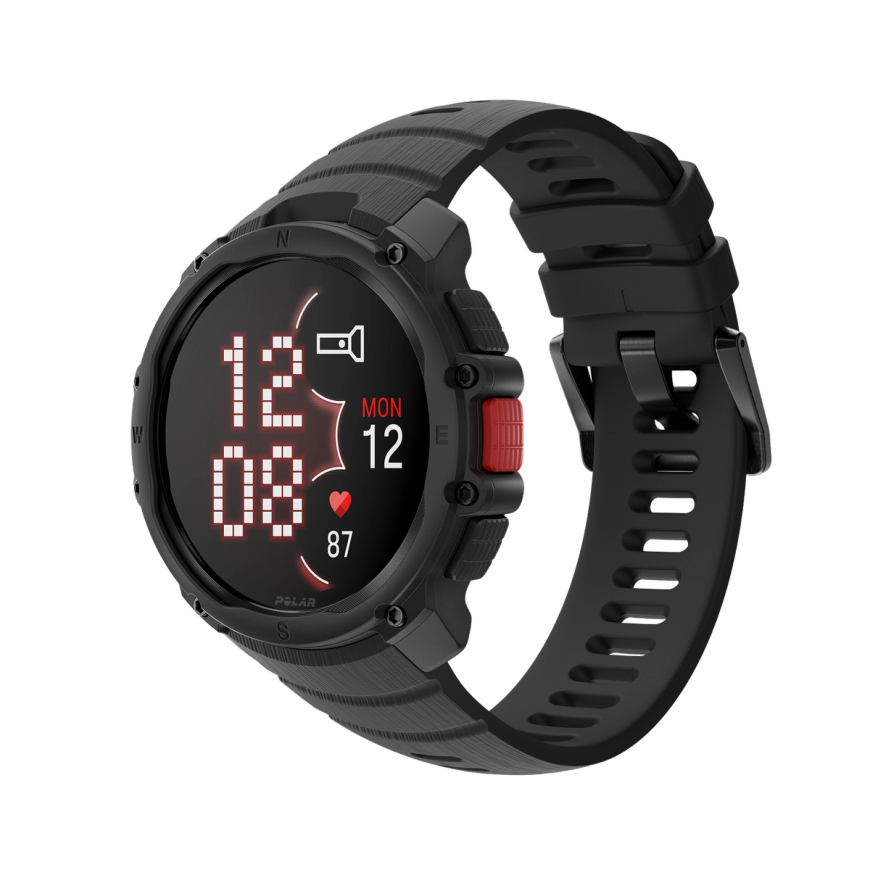
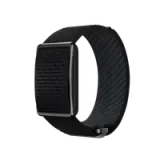
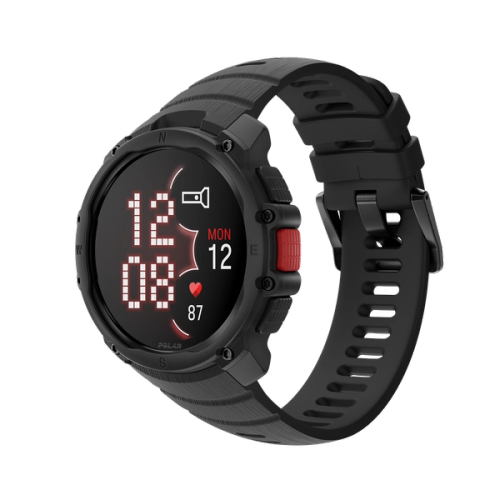
POLAR Street X
The Urban Sports Watch
POLAR Street X is the urban sports watch for those who live, work, and train in the city. Tough, lightweight, and always ready, it delivers reliable GPS, a bright AMOLED display, precision heart-rate tracking, and 24/7 shock resistance for training, commuting, and everyday wear.


The Two Masters: mTOR vs. AMPK
To understand the AMPK mTOR switch concurrent training conflict, think of your muscle cells as a major construction site with a strict financial budget. When you train, you’re sending orders to the site foreman. The interference effect happens because running and lifting send two completely opposite commands at the exact same time.
The conflict boils down to two primary cellular master-switches:
- mTOR (The Builder): This is your body’s master anabolic signaling pathway. When mTOR is activated, it hits the gas pedal on muscle protein synthesis, telling your body to use available resources to repair tissue, build muscle hypertrophy, and increase structural strength. So, what flips the switch here? High mechanical tension (heavy lifting), eccentric loading (lowering the weight), and having plenty of amino acids (specifically leucine) in your system.
- AMPK (The Energy Sensor): This is your body’s master metabolic fuel gauge. It monitors your cellular energy tank (specifically tracking your AMP:ATP ratio). When you run far or fast, your energy tank drains. AMPK activates to safeguard cellular survival, shifting the body away from building and toward fuel mobilization. So, what flips the switch here? Glycogen depletion, prolonged cardio strain, and elevated cellular energy debt.
The Cellular Hijack: How AMPK Blunts mTOR
Here is the crux of the problem: mTOR wants to build a mansion, but AMPK is the accountant screaming that the bank account is empty. Because building new muscle tissue is incredibly energy-expensive, AMPK’s primary job is to cut spending. When AMPK is activated by a hard run, it puts a physical padlock on the mTOR pathway. It stops the construction project dead in its tracks to save fuel.
If you lift weights while that padlock is on, the mechanical tension is there, but the signal to actually build new muscle is significantly muted.
The 6-Hour Interference Window
Fortunately, the accountant doesn’t stay in the room forever. This cellular hijack operates on a strict, predictable timeline.
Following a high-intensity or high-volume running session, your AMPK levels spike immediately. This cellular energy crisis peaks around 2 to 4 hours post-run. Depending on how badly you depleted your muscle glycogen stores, AMPK can remain elevated for up to 6 hours before your energy balance restores and the pathway clears.
If you lift weights within this 6-hour ‘interference window,’ you’re forcing your body to attempt precision construction during a budget freeze. The mechanical tension from the barbell is there, but the downstream signal to grow is completely muted.
To achieve uninhibited hybrid progress, you don’t have to quit running—you just have to engineer your training schedule to outlast this 6-hour clearance window. Here’s exactly how to do that.
Research-Backed Rules to Outsmart Interference
Mitigating the interference effect isn’t about avoiding hard work—it’s about optimizing your training geometry. By structuring your week around baseline physiology rather than convenience, you can force these competing pathways to coexist.
Here are the four non-negotiable rules for the serious hybrid athlete.
Rule 1: Separate Sessions by 6+ Hours
- The Science: To bypass the optimal time between running and lifting, you must respect the 6-hour AMPK clearance timeline. If you force back-to-back training, you’re intentionally dumping a heavy lifting stimulus right into a cellular environment that is programmed to blunt it. Giving your body a 6-hour window allows cellular energy (ATP) to be restored, clearing the accountant from the room so the builder can get to work.
- The Metric: Don’t guess whether your systemic readiness has reset. A prolonged state of high energy debt leaves a footprint on your autonomic nervous system (ANS). By checking your Nightly Recharge™ score the morning of a planned double-day, you can verify if your parasympathetic activation has successfully rebounded.
- The Action: If you must train twice in one day, ensure a minimum 6-hour gap between the sessions. If your Nightly Recharge™ status is flagged as ‘Poor’ or ’Compromised,‘ bypass the double-day entirely and separate the sessions by 24 hours instead.
Rule 2: Lift Before You Run
- The Science: When it comes to lifting before running to preserve muscle, central nervous system (CNS) fatigue is the deciding factor. Heavy strength training requires high-threshold motor unit recruitment—your brain needs to fire on all cylinders to move heavy loads. While sequencing studies like Chtara et al. (2005) show that running first is great for pure running performance, subsequent meta-analyses (like Murlasits et al., 2018) prove that if you want to preserve lower-body 1RM strength and neuromuscular drive, you must lift first. A pre-fatigued nervous system from running severely limits your ability to recruit high-threshold motor units under a barbell. Conversely, the aerobic system is incredibly resilient; your heart and lungs don’t care if your quads are carrying a minor pump from a previous squat session.
- The Metric: Look at your real-time heart rate zones during the subsequent run. If your cardiovascular system is working significantly harder (shifting into zone 4) at a pace that normally feels like an easy zone 2 cruise, your CNS is under-recovered from the morning lift.
- The Action: Always perform your strength session first when combining disciplines on the same day. Keep the lift focused on progressive overload, and treat the subsequent run as a low-intensity, steady-state aerobic engine builder.
Rule 3: Swap Miles for Wheels When Strength Stalls
- The Science: The interference effect, comparing running vs. cycling data, reveals that the modality of your cardio drastically alters your strength footprint. Running is mechanically demanding on muscle tissue due to severe eccentric loading fatigue—every foot strike acts as an active brake, causing microtears in the muscle fibers. Cycling, however, is almost entirely concentric. It drains your fuel tank (activating AMPK) but skips the structural, localized muscular damage.
- The Metric: Track your localized perceived exertion vs. your overall cardiovascular strain. If your lower-body lifting numbers are plateauing but your lungs feel great, you’re dealing with localized neuromuscular fatigue from impact, not a lack of aerobic conditioning.
- The Action: If your squat or deadlift progress hits a multi-week plateau, temporarily swap 50% of your weekly running volume for low-impact cycling or rowing. This maintains your aerobic baseline while eliminating the eccentric pounding that stalls lower-body recovery.
Rule 4: Deploy Strategic Block Periodization
- The Science: While concurrent adaptation is entirely possible for intermediate athletes, trying to maximize both a 1RM peak and a running PR in the exact same week introduces a hard biological ceiling. A block training approach honors the law of specificity of adaptation. By alternating your training focus across distinct 4-to-6 week blocks, you can maintain one attribute with minimal volume while aggressively driving progression in the other.
- The Action: Divide your competitive year into dedicated emphasis blocks. Run a 4-week ‘Strength Emphasis Block’ (lifting 4x/week at high intensity, running 2x/week at low-intensity maintenance), followed by a 6-week ’Endurance Emphasis Block’ (running 4x/week for progression, lifting 2x/week for structural maintenance). Link this macro strategy directly to your overarching hybrid training programming parameters.
Turning Data into an Interference Alarm
The fundamental flaw in traditional hybrid programming is that it relies on guesswork. You apply the 6-hour rule, sequence your lifts first and hope your cells are cooperating. But because the interference effect operates quietly at a molecular level, you usually don’t realize you’ve crossed the line into systemic overreaching until your lift numbers stall and your running paces regress.
To optimize tracking training load for hybrid athletes, you have to move past subjective feel and look at objective biometrics. Your wearable data acts as an early-warning system, transforming an invisible cellular conflict into measurable, actionable inputs.
HRV: The Macro Dashboard
Your primary metric for auditing systemic interference is Heart Rate Variability (HRV). When you subject your body to the dual stressors of heavy resistance training and high-volume endurance work, your ANS bears the burden.
Instead of looking at a single morning’s reading, track your 7-day rolling HRV average. If your HRV trendline is stable or climbing, your body is successfully managing the concurrent strain and adapting to both stimuli. If your rolling HRV average takes a sustained downward dive while your training volume remains constant, your autonomic balance is compromised. This is a strong indicator that systemic stress is winning, and the interference effect is actively blunting your recovery.
Training Load Pro: Isolating the Strain
While HRV gives you a macro-level view of overall stress, Training Load Pro offers a microscopic audit of your training geometry. Most tracking systems lump all exercise into a generic ‘activity’ score. For a hybrid athlete, that is useless data.
Training Load Pro solves this by explicitly separating your training footprint into two distinct metrics:
- Cardio Load: Measures the cardiovascular strain placed on your system during your engine-building running sessions, calculated via heart rate monitoring and training impulse (TRIMP).
- Muscle Load: Measures the mechanical and structural strain placed on your musculoskeletal system during heavy lifting, calculated using power output data.
By comparing these two metrics side by side, you can audit your training week with actionable clarity. If your Muscle Load is consistently redlining while your Cardio Load is low—or vice versa—you can identify exactly which system is failing to recover and adjust your sequencing before a true performance plateau sets in.
Frequently Asked Questions
Can I build muscle and improve running at the same time?
Yes. Your body is fully capable of driving concurrent adaptation to build muscle size while expanding your aerobic base. The key is volume moderation. While explosive, top-end power is highly sensitive to cardio interference, pure muscle hypertrophy is incredibly resilient if you maintain a caloric surplus and sufficient protein intake.
How long should I wait between a run and a lift?
You should wait at least 6 hours. This timeline is dictated by the AMPK pathway, your body’s cellular energy sensor, which spikes after a run and remains elevated for several hours post-run. For optimal strength retention, separate your sessions by 6 hours on the same day (lifting first), or ideally, by 24 hours on alternating days.
Does cardio really kill muscle gains?
Only if it’s poorly sequenced or performed at extreme volumes. High-volume running induces localized eccentric muscular fatigue, which can blunt lower-body strength gains. However, managing your miles, incorporating low-impact modalities like cycling, and protecting your heavy-lifting sessions help prevent your cardio from sabotaging your muscle growth.
Own the Arena: The Hybrid Blueprint Is Yours
The interference effect isn’t a life sentence for your performance; it’s a blueprint waiting to be mastered. The old paradigm forced you to choose between the barbell and the track, but the modern hybrid era proves you don’t have to compromise.
By applying the 6-hour window, prioritizing your nervous system under the iron, and leaning into low-impact modalities when things get heavy, you’re already steps ahead of the gym-floor rumor mill. You aren’t guessing, and you certainly aren’t training blind. Armed with real-time biometric metrics like HRV and localized training load, you can confidently outmaneuver cellular conflicts and turn abstract physiological risks into a measurable, high-yielding strategy.
You have the work ethic. Now you have the science. Clear your pathways, audit your data, and go build a body that is uncompromised, uninhibited, and undeniably fast.
Enjoying this article? Subscribe to the Polar Newsletter and get notified when new articles are out.
Subscribe



 POLAR Street X
New
POLAR Street X
New
 Polar Vantage M3
 Polar Grit X2 Pro Titan
 Polar Grit X2 Pro
 Polar Grit X2
 Polar Vantage V3
 Polar Ignite 3
 Polar Pacer Pro
 Polar Pacer
 Polar Unite
Grit X Series
Vantage Series
Pacer Series
Ignite Series
Polar Unite
Grit X Series
Vantage Series
Pacer Series
Ignite Series