Taking on 42k requires far more than just enthusiasm—it demands an honest assessment of your physical foundation, schedule, and training strategy before you ever cross a starting line. You know you can run, but are you truly equipped with the roadmap, heart rate discipline, and fueling strategy needed to conquer your first marathon without breaking down?
You’re standing at the registration screen, cursor hovering over the “Sign Up” button, a mix of excitement and pure dread tying knots in your stomach. You know how to run—you’ve put in the miles and maybe even conquered a local race or two. But running a marathon for the first time? That feels like stepping into a completely different ocean.
Here’s the honest truth: running your first marathon isn’t just about multiplying your experience of a couch to 5K. It’s a distinct physiological challenge that completely rewires how you view your body. If you’re unsure whether your joints, schedule, or mind are actually ready for the commitment, you don’t need generic motivational hype. You need a real roadmap for readiness before you dive in.
This guide is here to help you with exactly that, showing you how your heart rate can serve as the ultimate, objective coach to keep you safe. So, let’s find out if you’re ready to cross that line.
Am I Ready for a Marathon? Your First-Time Marathon Checklist
Let’s clear something up right away: checking your readiness isn’t gatekeeping. It’s race-day insurance. The vast majority of training collapses don’t happen because a runner lacked heart; they happen because of decisions made before day one even started. If you choose the wrong window, skip building a solid baseline, or ignore your current life circumstances, you’re setting yourself up for frustration.
Before you commit to your first-time marathon training, you need an honest look at where you’re starting. Use this quick-check summary to see whether your body and schedule are truly aligned for the challenge.
| Readiness Metric | Minimum Baseline Standard | Why It Matters |
|---|
| Running History | 12+ months of continuous running | Musculoskeletal and tendon adaptation |
|---|
| Weekly Mileage Base | 25–30 km per week comfortably | Establishes the necessary aerobic floor |
|---|
| Long Run Baseline | Single weekly run of 90+ minutes | Prepares the body for extended time on feet |
|---|
| Injury History | No recurring injuries in past 6 months | Prevents chronic issues from compounding |
|---|
| Weekly Time Flexibility | 8–12 hours available per week | Accounts for runs, strength, sleep, and recovery |
|---|
Keep in mind that this list is not a strict set of rules but a rough guide, with the goal of helping you prepare for your first marathon in a healthy, fit, and fulfilling way. Of course, individual variation is possible.
Consistency Over Intensity (The 12-Month Rule)
When you’re asking yourself, “Am I ready for a marathon?”, don’t look to your lungs as the deciding factor. That’s because your cardiovascular fitness builds relatively fast, but your bones, tendons, and ligaments take much longer to adapt to repetitive impact. Rookie marathon runners often get injured because their engine outpaces their chassis. That’s why you need at least 12 months of consistent, unbroken running history to ensure your structural foundation can handle the high-mileage loads ahead.
Weekly Volume and the Long Run Base
A common question floating around running forums is: “How many kilometers should I be running before I start marathon training?” To safely enter a marathon training program, you shouldn’t be starting from zero. You need to be comfortably logging 25–30 kilometers per week without feeling completely wiped out. Furthermore, you should already be doing a regular weekly long run that keeps you on your feet for at least 90 minutes. If that baseline feels brutal right now, you aren’t ready to layer a demanding marathon load on top of it just yet.
Do I Need to Have Run a Half Marathon First?
Strictly speaking, no—there’s no rule saying you must race a half before tackling the full 42k. But practically speaking? It helps enormously. A half marathon introduces you to the logistics of race day, pacing strategies, and mid-run fueling without pushing your body to the absolute limit. If you haven’t crossed a half-marathon finish line yet, it’s highly recommended to use a half-marathon training plan to bag that milestone first before diving into the full distance.
Managing Your Total Weekly “Life Load”
Marathon training is essentially a part-time job. It demands a massive amount of physical and mental energy, meaning your sleep, stress levels, and daily workload must have room to give. If you’ve had a recurring injury in the last six months, the high mileage will likely trigger it again. You also have to check your ego: a successful build means you must be willing to run mostly easy. In fact, about 80% of your total training volume will feel suspiciously, frustratingly slow. If you can’t commit to that discipline, your body will pay the price.
How Long Does It Take to Train for a First Marathon?
If you look around online, you’ll see programs ranging anywhere from 12 to 24 weeks. For a first-timer, the gold standard is a 16-to-20-week window—and you should lean heavily toward the full 20 weeks. Giving yourself those extra four weeks isn’t about laziness; it provides a vital buffer for life’s inevitable interruptions, whether that’s a hectic week at work, a head cold, or a minor muscle twinge that requires a few days of rest.
But let’s be clear about what training for your first marathon actually entails. True preparation isn’t just about accumulating random junk mileage or heading out the door to run until you drop. There’s a massive difference between just running more and executing a structured marathon training plan. A proper build balances purposeful long runs, controlled tempo sessions, and deliberate, scheduled recovery to systematically rebuild your aerobic system. Yup, you need to make time to be intentional with structuring everything.
The timeline matters because your body needs time to adapt safely. You’ve probably heard of the traditional “10% Rule”—the classic running folklore stating you should never increase your total weekly mileage by more than 10% from the previous week. While that’s a decent baseline, a major 2025 cohort study published in the British Journal of Sports Medicine challenged this idea by looking more closely at the data. They found that our bodies are actually quite resilient to minor weekly fluctuations; the real danger zone is spiking the distance of your individual long run. The researchers discovered that increasing a single long run by more than 10% compared to your longest run in the prior month triggers a massive 64% jump in overuse injury risk.
Either way you look at the math, time is your best defense. If you try to cram your training into a tight 12-week schedule, you’ll be forced to choose between breaking these safety limits or showing up to the starting line dangerously underprepared because you simply didn’t allow your body the time to gradually adapt. Instead, a 20-week timeline gives you the breathing room to build your mileage safely, navigate the high-stakes final weeks of marathon training, and execute a proper marathon taper so your legs feel fresh on race day. When you’re learning how to run your first marathon, patience is the most valuable tool in your kit.
undefined

POLAR Street X
The Urban Sports Watch
POLAR Street X is the urban sports watch for those who live, work, and train in the city. Tough, lightweight, and always ready, it delivers reliable GPS, a bright AMOLED display, precision heart-rate tracking, and 24/7 shock resistance for training, commuting, and everyday wear.
Running Your First Marathon: What a Marathon for Beginners Looks Like
When you look at a spreadsheet for first-time marathon training, it’s easy to get overwhelmed by the sea of numbers. But you don’t need to stress over a rigid day-by-day calendar just yet. Instead, look at the architecture of a typical training week. A sustainable beginner marathon program relies on four core pillars that recur week after week, balancing training with essential recovery.
The first pillar is the long run. This is the absolute backbone of your week. It slowly builds your time on your feet, peaking around 32 to 35 kilometers late in the program. The golden rule here is pace: it must stay slow, residing entirely in your low-intensity heart rate zones. Next are your easy runs. These fill out your mid-week schedule, accumulating the baseline volume your aerobic system needs to grow. Third, you’ll layer in one quality session per week—think controlled tempo runs or long intervals—to build structural speed once your base is solid. Finally, you need two short sessions of strength training for runners to protect your joints and tendons from the repetitive stress of high mileage.
If that sounds like a lot of slow running, that’s by design. Pioneering research by exercise physiologist Dr. Stephen Seiler (2010) on polarized training demonstrates that endurance athletes maximize performance by adhering to a strict 80/20 intensity distribution. This means roughly 80% of your total weekly volume should feel easy and conversational (zones 1 and 2), reserving just 20% for high-intensity quality sessions.
This is where a lot of rookie runners trip up when running their first marathon. They run their easy days about 10% to 15% too fast, turning a recovery run into a moderate-effort grind. When you do that, your muscles never fully repair, leaving you too exhausted to absorb the benefits of your hard days.
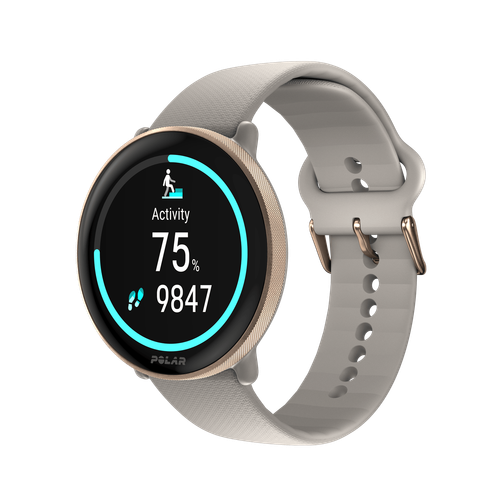
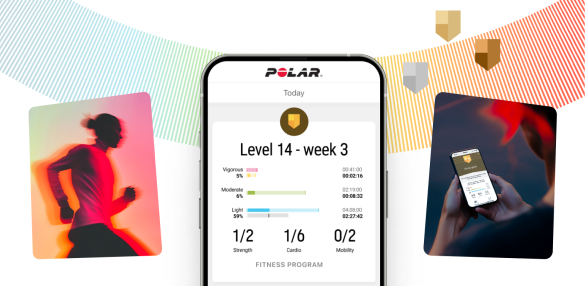
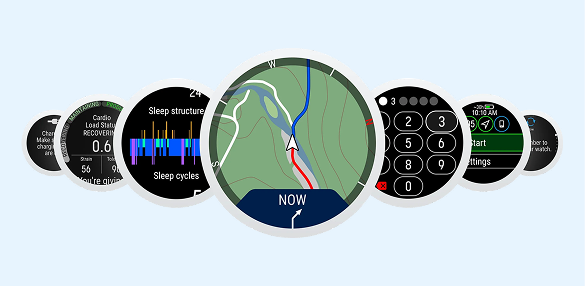
To help you stay on target, you need an objective coach on your wrist. Using a GPS watch like the Polar Vantage M3 lets you lock in your exact heart rate zones and track your real-time training load. When the watch alerts you that you’re drifting out of zone 2, it provides the precise biological prompt you need to slow down. Embracing the philosophy of running with a low heart rate ensures you build massive aerobic fitness without burning out before race day.
Don’t Forget to Keep It Fun
While building an 80/20 polarized routine takes real discipline, marathon training shouldn’t feel like a 16-week sentence to a spreadsheet. Injecting variety into your schedule—whether that means treating yourself to a second breakfast after a weekend run or teaming up with some friends on the track for a speedwork session—keeps the process light. Check out these favorite marathon training workouts for creative ways to break up the routine and make those high-mileage weeks genuinely enjoyable.
Pacing Strategy: Essential First Marathon Tips to Avoid the Wall
Ask any experienced marathoner where things usually go wrong, and they’ll point to the exact same spot on the course: kilometer 30. Up until that point, the energy from the crowd and the thrill of the starting line make running feel surprisingly easy. That easy feeling, however, is a dangerous trap. When an eager first marathon runner goes out too fast in the first half, they inevitably pay for it in the final 12 kilometers.
This sudden, crushing exhaustion isn’t just mental—it’s pure biochemistry. In his seminal 2010 study on metabolic limits, Dr. Benjamin Rapoport developed a quantitative model showing that the body’s stored muscle and liver glycogen (carb energy) caps out right around the 30-kilometer mark for most runners. If you burn through that fuel too quickly early on, your body is forced to switch to burning fat, which requires far more oxygen and causes your pace to plummet. This physiological shutdown is what runners call “hitting the wall.”
To avoid this, your pacing strategy must be built around an even split (running both halves at the same pace) or a negative split (running the second half slightly faster). Among all the first marathon tips you’ll receive, this is the non-negotiable one: stay under a strict heart rate ceiling. For the first 30 kilometers, keep your effort disciplined and cap your heart rate below 78% to 80% of your maximum heart rate (HRmax). Then, if you feel strong at kilometer 32, that is your green light to pick up the pace—not a moment before.
Setting these boundaries shouldn’t be a guessing game. By taking a guided assessment like the Polar Running Performance Test before your build, you can accurately identify your personal lactate threshold and target heart rate zones. This automatically anchors a personalized, foolproof heart rate ceiling for race day. Remember, the ultimate goal for your first marathon is simply to cross the finish line feeling strong. Avoid the common marathon mistakes and instead let your watch run the math so your legs can do the work.
Fueling Your First Marathon: Practice in Training
When tackling that first marathon distance, your stomach is just as crucial to your success as your heart or legs. You can’t simply show up on race day and expect your digestive system to process heavy gels while under physical stress. Your gut requires deliberate, identical training during your weekly long runs.
As a baseline rule, you should practice fueling on every single training run that exceeds 75 minutes. This conditions your gastrointestinal tract to absorb nutrients while blood is being diverted away to your working muscles.
Sports science backs up this practice with hard numbers. Landmark research by Dr. Asker Jeukendrup (2014) on carbohydrate oxidation demonstrated that the human body’s intestinal transporters cap the absorption of a single carbohydrate source (like pure glucose) at roughly 60 grams per hour. Attempting to force down more than that won’t make you faster—it will just trigger severe sloshing and stomach cramps. For a beginner, aiming for a realistic range of 30 to 60 grams of carbohydrates per hour is the sweet spot for keeping your energy steady.
Use your long runs as testing grounds for specific energy gels, chews, or sports drinks to find what your stomach tolerates best. The golden rule among those essential first marathon tips is simple: never try anything new on race day. Match this fueling protocol with a “drink to thirst” hydration model to prevent over-drinking or dehydration, and dive deeper into the mechanics by dialing in your full marathon fueling strategy early in your program.
The Mental Phases of a Marathon
When running a marathon for the first time, mental toughness isn’t about repeating generic motivational quotes when your legs get tired. True mental prep is tactical; it’s about setting hard psychological boundaries long before you line up.
Think of the distance in three distinct mental phases. The first section (0–14km) is all about discipline and actively holding yourself back while energy is high. The middle phase (14–28km) requires focused patience—this is where you lock into a cruise-control rhythm and efficiently digest fuel. The final third (28–42k) is pure discomfort management.
To navigate that final stretch, equip yourself with concrete cognitive tools rather than vague hype. Adopt a simple mid-race mantra (“smooth and light,” “relax the shoulders”), break the remaining distance into small 5km chunks, and stick to a strict “no surging before km 30” rule. Building this structured mindset is key to developing real mental strength for marathon day.
Soak In the Starting Line Magic
As you stand in your corral waiting for the gun, take a deep breath, look around, and let the sheer energy of the crowd wash over you. There’s something deeply inspiring about being surrounded by thousands of everyday people—from seasoned pros in hyper-minimalist gear to brave souls tackling 42k in full costume—all united by the exact same goal. Looking at the wild variety of outfits and pre-race rituals is a great reminder that you’re part of a massive, supportive running community. For a fun, lighthearted look at the colorful range of race-day styles you’ll see on the course, check out what to wear for a marathon before you line up.
Post-Race Recovery: Plan Your Return Before You Start
Crossing the finish line of your first marathon is a massive triumph, but the physical impact on your body doesn’t end when you get your medal. Down to a cellular level, a 42k effort causes micro-tears in muscle fibers and temporary immune suppression that takes weeks to fully repair. Commit to two to three weeks of very light, unstructured movement—like walking, swimming, or easy cycling—before even thinking about structured running. Avoid the classic trap of booking another race right away while on a post-finish high. Instead, follow a dedicated marathon recovery routine and take time to plan a gradual, safe return to training after a marathon.
From the Sign-Up Screen to the Finish Line
Learning how to run your first marathon isn’t about uncovering a secret shortcut; it’s about respecting the distance and giving your body the time it needs to adapt. When tackling your first event like this, ticking off the baseline readiness checklist, honoring the 80/20 rule in training, and staying strictly disciplined with your heart rate ceiling on race day virtually guarantees a successful finish line experience.
Your next move is simple: review the checklist. If you meet the criteria today, pick a target race 20 weeks out and lock in your build. If you aren’t quite matching those baseline numbers yet, don’t worry. Set your sights on a shorter milestone first and use our intermediate half marathon training plan to build the unbreakable foundation you need for marathon.
Enjoying this article? Subscribe to the Polar Newsletter and get notified when new articles are out.
Subscribe



 POLAR Street X
New
POLAR Street X
New
 Polar Vantage M3
 Polar Grit X2 Pro Titan
 Polar Grit X2 Pro
 Polar Grit X2
 Polar Vantage V3
 Polar Ignite 3
 Polar Pacer Pro
 Polar Pacer
 Polar Unite
Grit X Series
Vantage Series
Pacer Series
Ignite Series
Polar Unite
Grit X Series
Vantage Series
Pacer Series
Ignite Series