When you track your heart rate, you get invaluable insights into the cardiovascular intensity of your workout and how it impacts your aerobic system. But for a hybrid athlete, tracking cardiovascular output is only part of the equation. When your watch claims you are fully recovered but your body tells a completely different story, how do you bridge that measurement gap to protect your progress?
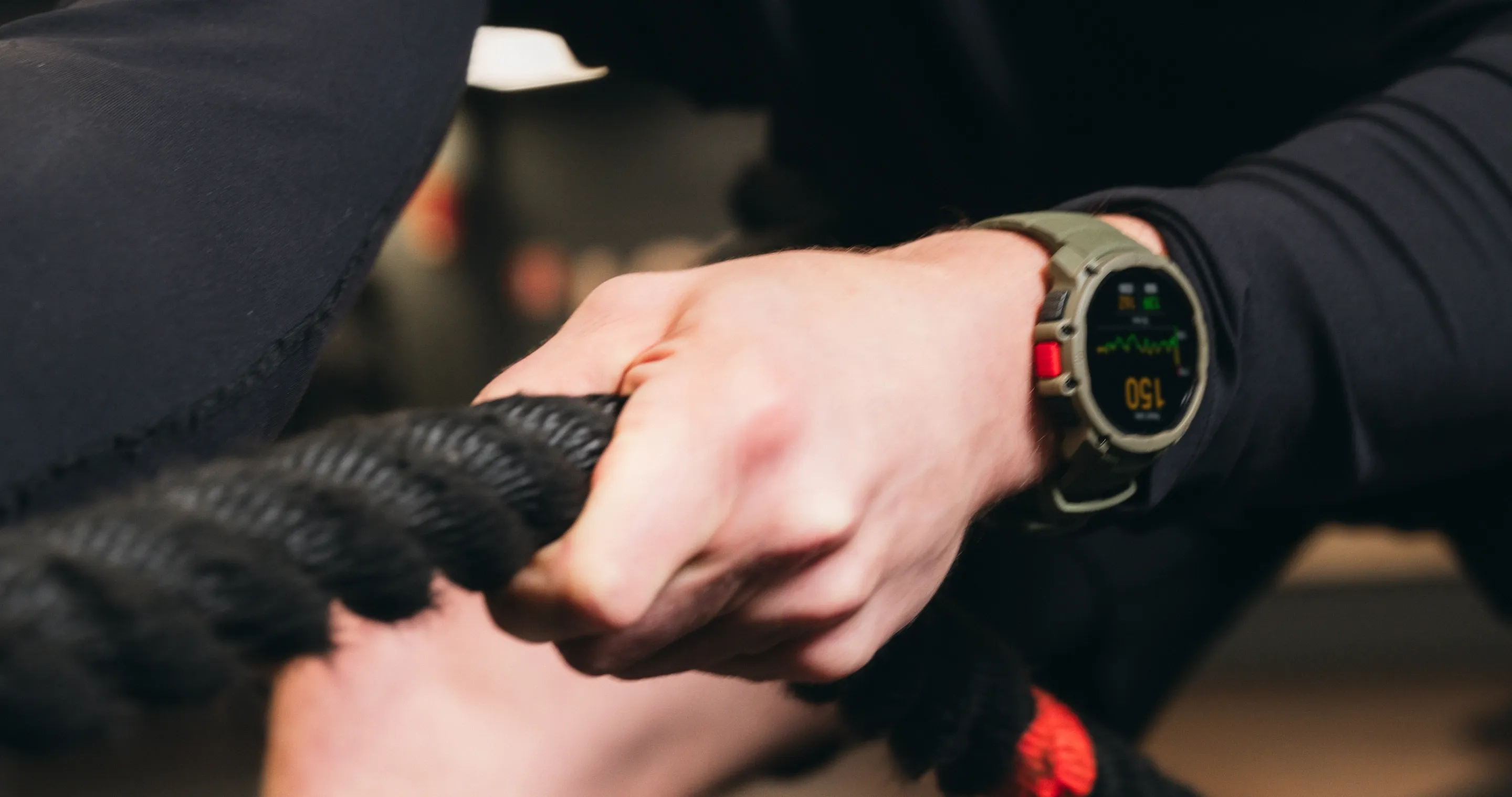
Think about what happens in the thirty seconds after a heavy deadlift set. Your heart rate spikes sharply into the 150s or 160s, depending on the load and how hard you braced. If someone glanced at your monitor mid-set, they’d see numbers that look like moderate aerobic work. But within 60 to 90 seconds of stepping back from the bar, your heart rate drops right back toward 100.
When you track your heart rate, you get invaluable, highly accurate insights into this cardiovascular intensity and how it impacts your aerobic system. The cardiovascular system recovers quickly; it spiked to meet a transient metabolic demand, and once that demand passed, it stood down. The problem is that the mechanical demand on your muscles didn’t pass.
What a heavy compound lift actually creates within your muscle fibers, motor units, and connective tissue is a form of structural and neuromuscular stress that your heart rate monitor cannot detect. The micro-tears in the tissue, the depletion of local intramuscular glycogen, and the acute disruption to the central nervous system signaling required to recruit muscle fibers efficiently—none of this keeps your heart rate elevated. It simply quietly degrades your capacity to produce force.
As you only see that rapid cardiovascular recovery on your watch, you might look at a modest 118 bpm average after a brutal session of heavy back squats and Romanian deadlifts and assume you’re perfectly fresh. Your watch rates the workout a ‘light load,’ even though your legs feel like a tactical challenge to walk down the gym stairs.
Trusting that data, you could lace up the next morning for an easy zone 2 run—the kind that should feel almost meditative on fresh legs. Except your heart rate climbs to 158 before you’ve even hit the first kilometer. You slow down, check your form, your breathing, and your caffeine intake, but nothing explains it.
This is the central frustration of monitoring concurrent training. Your heart rate monitor isn’t wrong; it is simply measuring a single type of stress. While it tracks aerobic demand with precision, it cannot register the hidden mechanical cost left behind by heavy lifting. Those signals don’t show up in your bpm. Where they do show up is in your legs the next morning, and in a rate of perceived exertion (RPE) that’s three points higher than your pace deserves.
To bridge this gap, you need a practical framework built around three signals—heart rate, RPE, and heart rate variability (HRV)—that, between them, cover the full picture of what concurrent training actually costs your body. Let’s dive into why that disconnect happens and how to read the signals together.
The Problem: HR Measures One Type of Fatigue, Lifting Creates Another
This morning-after disconnect isn’t a flaw in your fitness; it’s a predictable mismatch in the physiological timeline. The landmark review on exercise-induced muscle damage by Howatson & van Someren maps out this exact tracking blind spot, demonstrating a stark divergence in how our bodies recover:
The Recovery Timeline Mismatch
- Cardiovascular Markers (RHR, HRR): Return to baseline within 1–2 hours.
- Neuromuscular Markers (Force Output, RFD): Remain depressed for 24–72 hours.
When you check your watch after lifting, it’s reporting on a system that has already finished its job. The real trouble begins the next morning: because your legs are operating with depleted glycogen and fewer functional motor units, your cardiovascular system must work twice as hard to sustain a pace that should feel easy. Your heart rate spikes, your RPE climbs, and because your monitor has no record of yesterday’s mechanical cost, your data baseline feels broken.
To fix this measurement gap, you have to stop treating heart rate as a standalone truth and start balancing it with two metrics that actually capture the rest of the physiological picture: RPE and HRV.
Same Day Training: Why Your Data Looks Wrong on Combined Days
When you compress cardio and weights into the same day, you aren’t just stacking workouts; you’re layering distinct physiological stress profiles. This concurrent training creates an interference effect (as detailed by Wilson et al., 2012 and Coffey & Hawley, 2007), in which molecular signaling pathways compete. This tracking confusion usually manifests in the following two specific scenarios.
Scenario 1: Running After Lifting
You finish a heavy lower-body session and head out for a run later that afternoon. Within minutes, you’ll notice cardiac drift—a progressive rise in heart rate at a constant, unvaried running pace—setting in earlier than usual.
Why does cardiac drift happen after strength training? Your heart rate tends to rise on easy runs after lifting because your body is experiencing a prolonged hormonal stress response. Heavy lifting spikes cortisol and catecholamines (adrenaline and noradrenaline), which remain elevated for hours. This systemic stimulation, combined with the minor dehydration common after weight training, forces your heart to beat faster just to maintain your standard stroke volume. It’s normal for your heart rate to be 5–10 bpm higher than usual during a post-lift run; it reflects combined fatigue, not a loss of aerobic fitness.
Scenario 2: Lifting After Running (The Low-HR Illusion)
If you flip the sequence and lift after an intense run, you face the opposite problem. Your muscles are glycogen-depleted, and neural drive is blunted. Because your local muscle fibers cannot recruit enough force to hit peak output, you physically terminate your sets earlier. Paradoxically, your heart rate during the lift stays surprisingly low because fatigued muscle tissue can no longer demand a massive metabolic workload. Your watch registers a ‘light’ session, but your systemic, neural stress is deceptively high. Untracked, this hidden systemic strain is a direct path to chronic overreaching—an issue we explore in our guide on overtraining.
undefined
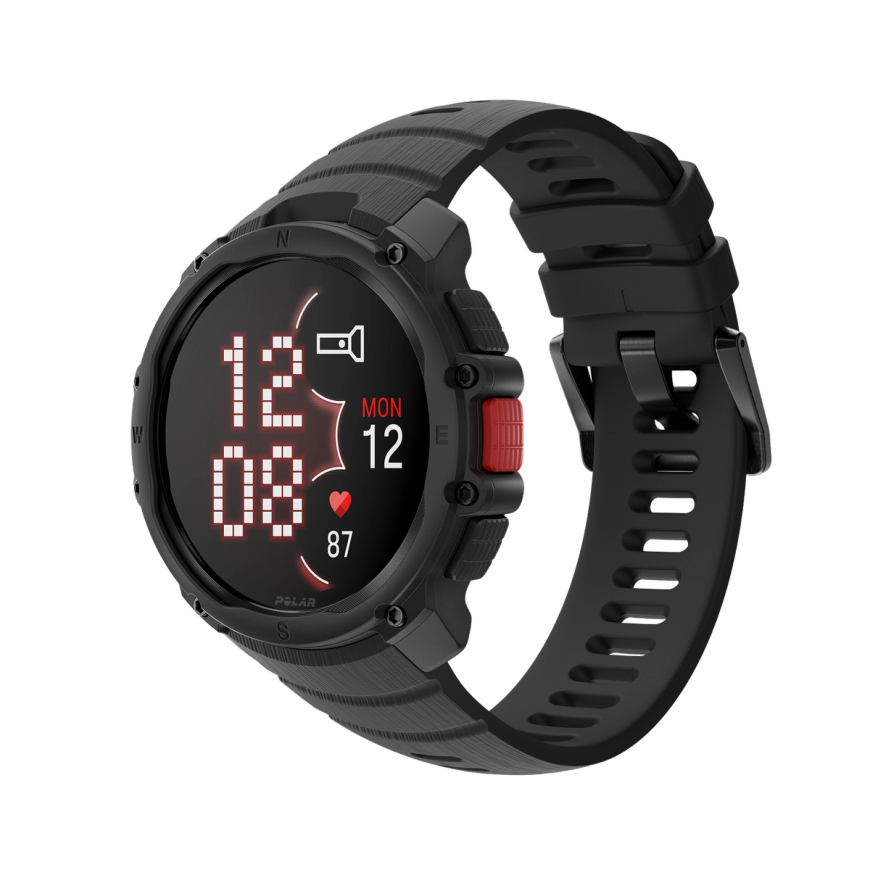
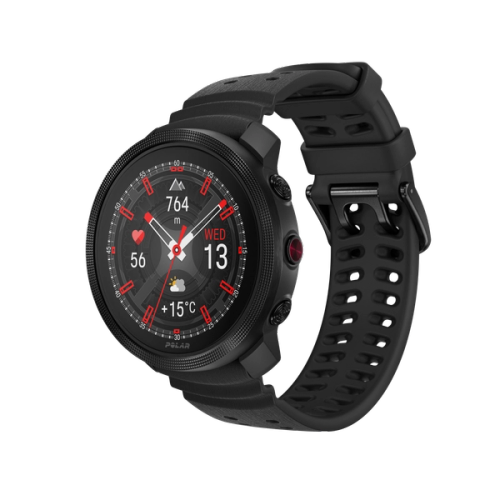
POLAR Street X
The Urban Sports Watch
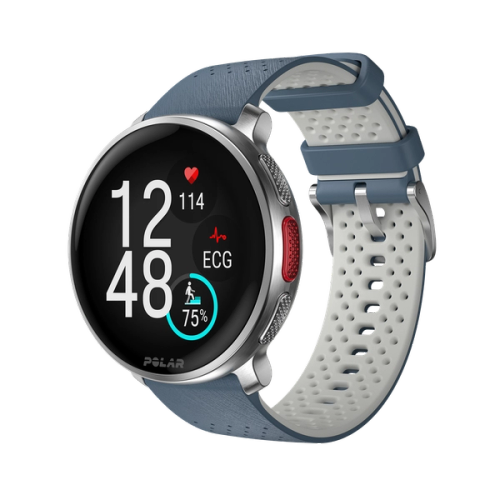
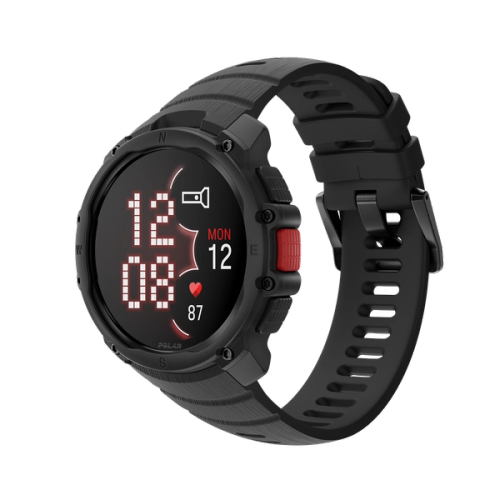
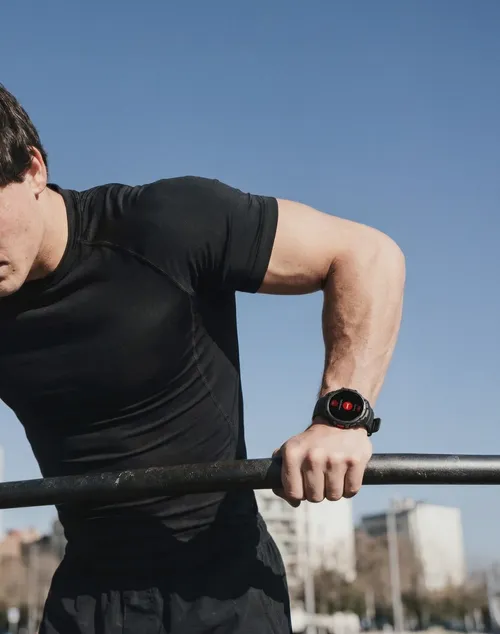
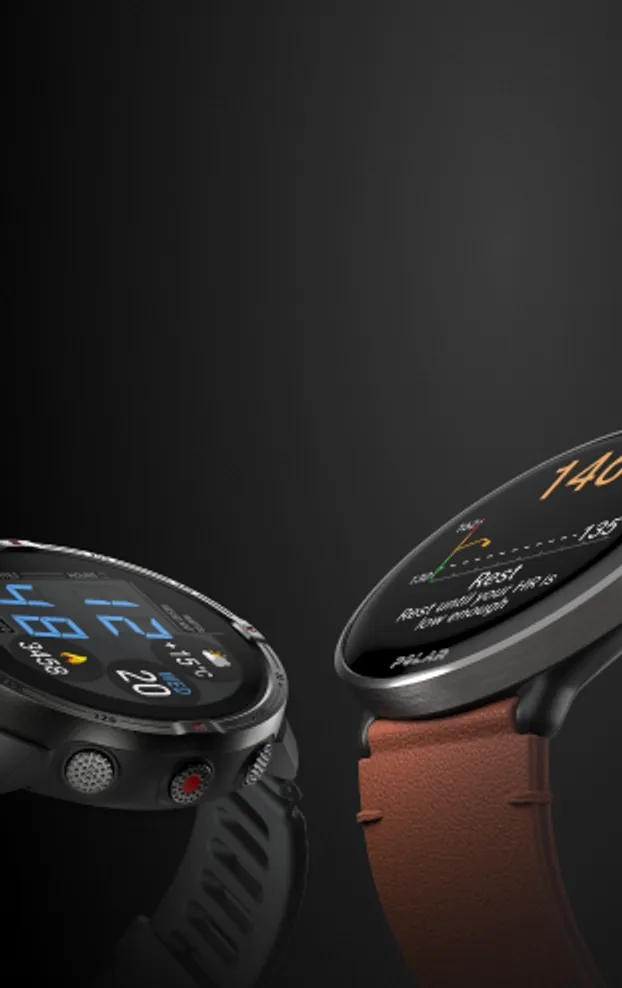
POLAR Street X is the urban sports watch for those who live, work, and train in the city. Tough, lightweight, and always ready, it delivers reliable GPS, a bright AMOLED display, precision heart-rate tracking, and 24/7 shock resistance for training, commuting, and everyday wear.
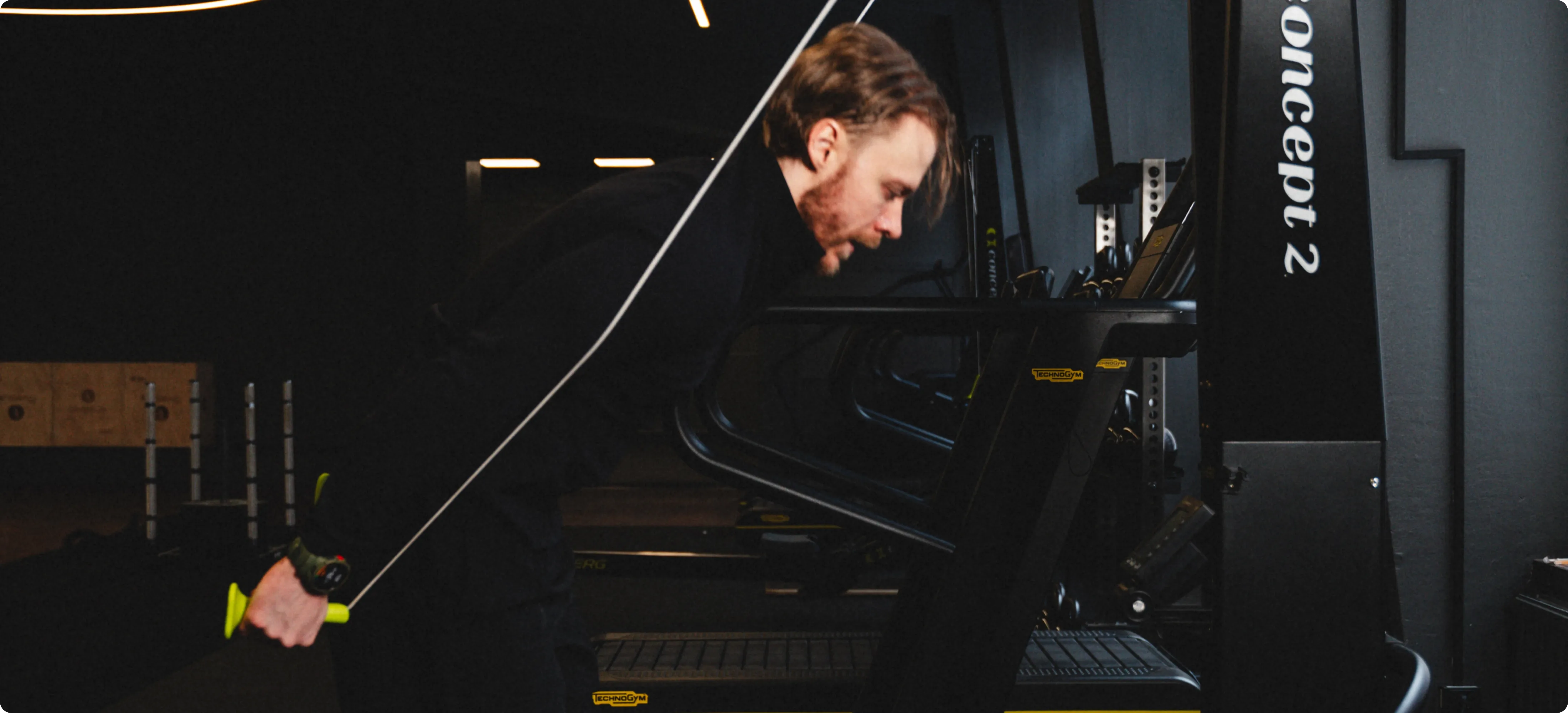
The Three-Signal Framework for Hybrid Athletes
To stop guessing, you need to read three signals simultaneously—because each one sees something the others can’t. As mentioned above, Heart rate, RPE, and HRV map your cardiovascular load, muscular fatigue, and autonomic readiness in parallel. The key shift is in how you interpret the divergence between them. When these numbers don’t agree, that’s not confusion—that’s diagnostic data. Here’s what each signal is actually telling you.
Signal 1: Heart Rate (Cardiovascular)
Heart rate remains the right tool for governing your pure endurance sessions. On dedicated running days, your target zones function exactly as intended, keeping you at the correct metabolic intensity.
On combined training days, recalibrate your expectations. Can I use heart rate zones for weight training? Not reliably, as the cardiovascular signal during lifting is too transient and too disconnected from muscular demand to govern intensity. Use RPE instead (see below).
When running after lifting, expect your heart rate to be 5–10 bpm higher than usual at the same pace, driven by residual hormonal stress and earlier-onset cardiac drift. If your standard zone 2 window is 130–140 bpm, accept 125–135 on a post-lift run. Your heart is working harder to support fatigued muscles. Respect the elevated internal cost rather than chasing a pace target that assumes fresh legs.
Signal 2: RPE (Muscular)
What should I track instead of heart rate for strength training? RPE. Because heart rate cannot capture mechanical tension or neuromuscular fatigue, RPE is the most practical way to quantify lifting intensity in a hybrid context.
Using either the classic Borg RPE scale (6–20) or the modified CR-10 scale (0–10), RPE measures how close a set is to muscular failure. A heavy triple (3 reps per set) at 9/10 RPE represents a significant neuromuscular tax regardless of whether your monitor registers a brief spike or a near-resting pulse.
In hybrid training, the divergence between RPE and heart rate is highly diagnostic. If you’re on a recovery run with heart rate safely in zone 2 but perceived exertion at 8/10, that’s the framework working exactly as it should: your cardiovascular system is recovered, your neuromuscular system is still paying yesterday’s debt. Now you know which one to respect today.
Signal 3: HRV (Recovery)
While heart rate tracks acute aerobic stress and RPE tracks localized muscular fatigue, HRV operates on a different time horizon entirely. It measures millisecond variations between consecutive heartbeats, reflecting the real-time state of your autonomic nervous system (ANS)—the balance between sympathetic drive (stress, activation) and parasympathetic recovery (rest, adaptation).
A high HRV relative to your personal baseline indicates your system has absorbed prior training load. A depressed HRV signals that cumulative stress is still being processed.
You may ask, how do I use HRV as a hybrid athlete? Track it relative to your personal baseline. When it trends low (below your rolling average), default to lower intensity across both domains: active recovery instead of a heavy lift, zone 1 instead of a tempo run. When it’s at or above baseline, your system has adapted to the prior load, and you’re ready for higher-intensity work.
This is uniquely valuable for hybrid athletes because the ANS integrates all systemic strain into a single readout. It doesn’t distinguish between stress from a squat session and stress from a threshold run—it sees the total cost. That’s exactly the kind of cross-domain signal an HR-only approach misses entirely.
For consistency, HRV needs to be measured under the same conditions each time. Polar Nightly Recharge™ captures it automatically during the first hours of sleep, removing the behavioral variables that make morning spot-checks unreliable. For athletes who want a deeper active readout of nervous system state, pairing this with an Orthostatic Test adds another layer of precision.
Together, these three signals give Training Load Pro the context it needs to isolate cardio strain from structural muscle load. Plus, it gives you a genuinely complete picture of what combined training is costing your body, day by day.
Run First or Lift First? What the Sequencing Research Actually Says
When structuring a combined training day, the most common question athletes ask is also the most debated: Should I run before or after lifting? The answer is rarely a universal rule, as it depends entirely on your primary adaptation goal for that specific training block.
Priority 1: The Endurance Focus
If your current objective is to build aerobic capacity or prepare for a race, run first. You’ll hit your pace targets with full glycogen stores and a fresh nervous system. Your subsequent lift will be somewhat compromised by acute fatigue, but your primary training quality is protected, which is the point.
Priority 2: The Strength Focus
If building maximal strength is your priority, lifting first is your best bet. The landmark meta-analysis by Wilson et al. (2012) mentioned above confirmed that while the long-term ‘interference effect’ on raw muscle strength is relatively modest for recreational athletes, it’s highly sensitive to modality and volume. Specifically, running before lifting—rather than low-impact options like cycling—creates a chronic compound tax on the body. Over a months-long training block, consistently running first subtly blunts your rate of strength and power development compared to training on fresh legs.
Making it measurable
Rather than inferring the cumulative cost of your chosen sequence from how you feel, Training Load Pro makes it concrete—independently calculating Cardio Strain and Muscle Load from the same session so you can see exactly what each component of a combined day actually costs.
After a same-day session, check both values. If Muscle Load is consistently high while Cardio Strain is low, your runs are likely being compressed by residual fatigue from the lift—a signal to either separate the sessions across the day or trial the reverse order for your next training block. If both are elevated and training load is trending upward across the week, that’s the cue to reduce combined days before your next scheduled hard effort.
What Overreaching Actually Looks Like for Hybrid Athletes
So, how will you know if you’re overreaching as a hybrid athlete? Instead of waiting for an injury to force a deload, look for a sustained, system-wide breakdown across your three-signal dashboard. True hybrid overreaching shows up as a chronic shift in your baseline trends:
- HRV trending downward over 5–7 days: Your morning readiness scores drop and stay below your rolling personal average, signaling that your body has exhausted its systemic adaptive energy.
- RPE rising at fixed loads over consecutive sessions: Your standard working weights feel like maximum attempts, and your recovery running pace feels like a threshold effort. Your central nervous system is failing to recruit motor units efficiently.
- Heart rate recovery (HRR) slows down: Your heart rate remains stubbornly elevated for several minutes after a hard interval or lifting set rather than dropping sharply.
- A toxic convergence of mood, motivation, and sleep: Central nervous system exhaustion alters neurotransmitter profiles, causing your sleep quality and training drive to decline simultaneously.
If you experience this compound timeline of signs of overtraining, you have crossed the line from productive functional overreaching into systemic fatigue. Step back, drop your volume by 30–50%, and allow all three metrics to return to baseline.
Frequently Asked Questions
Why is my heart rate low after lifting, but I still feel exhausted?
This happens because lifting primarily induces neuromuscular fatigue, which silently degrades your muscle tissue’s force output for days without keeping your heart rate elevated. Your heart rate monitor only tracks acute cardiovascular load, meaning your watch sees a fully recovered system while your muscles are still structurally compromised.
Can I rely on heart rate zones when lifting and running on the same day?
Not without adjustments. Heart rate zones are completely unreliable for tracking strength training intensity, and on post-lift runs, residual hormonal stress will artificially elevate your heart rate via early-onset cardiac drift. On combined days, you must balance your target cardiovascular zones with your subjective rate of perceived exertion (RPE).
How long does neuromuscular fatigue last after a heavy lift?
While cardiovascular markers routinely return to baseline within one to two hours post-workout, research shows that neuromuscular fatigue—such as a depressed rate of force development—can persist for 24 to 72 hours. This extended recovery window is why your legs can feel completely shattered the morning after a heavy leg session.
Why does RPE feel high but heart rate looks normal?
This divergence is a classic diagnostic signal of central nervous system and muscular exhaustion. When your cardiovascular system is rested but your muscles are operating at a reduced capacity due to low glycogen or micro-tears, your body must work significantly harder to match a pace that would normally feel easy.
Is heart rate a reliable training metric for hybrid athletes?
Heart rate is a highly reliable metric for governing pure aerobic endurance work, but it’s an incomplete tool for a hybrid athlete when used in isolation. To accurately map the total strain of concurrent training, you must look beyond heart rate alone and balance it with day-level HRV trends and session-level RPE tracking.
Mastering the Hybrid Equation
Navigating the intersecting demands of endurance and strength training is one of the toughest puzzles in sports science. It’s a discipline that requires you to be comfortable with nuance, to lean into complexity, and to accept that your body is constantly balancing competing adaptations.
But as a hybrid athlete, this complexity shouldn’t be a source of frustration—it’s your competitive edge.
You’re no longer flying blind or forced to choose between trusting an incomplete heart rate info or ignoring your data entirely. By implementing the three-signal framework, you have every single tool you need to accurately audit your training, decode your recovery, and understand exactly what concurrent training costs your system day by day. You have the knowledge to read the gaps between your heart rate, your RPE, and your HRV not as noise, but as a deep physiological truth.
If you want to take the guesswork out of the equation entirely, then as we’ve seen, Polar is built to simplify this exact process for you. Systems like Training Load Pro™ and Nightly Recharge™ automatically bridge the measurement gap on your wrist—running the background calculations to cleanly separate your acute cardio strain from your deep structural muscle load.
The data is there. The science is clear. Now, use the framework, listen to the signals, and keep building a stronger, faster, and more resilient hybrid engine.
Enjoying this article? Subscribe to the Polar Newsletter and get notified when new articles are out.
Subscribe



 POLAR Street X
New
POLAR Street X
New
 Polar Vantage M3
 Polar Grit X2 Pro Titan
 Polar Grit X2 Pro
 Polar Grit X2
 Polar Vantage V3
 Polar Ignite 3
 Polar Pacer Pro
 Polar Pacer
 Polar Unite
Grit X Series
Vantage Series
Pacer Series
Ignite Series
Polar Unite
Grit X Series
Vantage Series
Pacer Series
Ignite Series