A rising heart rate during a steady long effort—a phenomenon known as cardiac drift—isn’t a sign that your fitness is failing. Instead, it’s your body’s natural thermoregulatory math balancing itself in real time. When your watch shows your heart rate creeping out of your target zone, should you actually slow down, or is it time to trust your pace?
You’re 90 minutes into a steady long run. Your pace is locked in, your breathing feels controlled, and your legs feel strong. Yet, a glance at your watch reveals a frustrating surprise: your heart rate has climbed 12 beats higher than where you started, steadily creeping right out of your target zone.
Don’t worry—your heart rate monitor isn’t malfunctioning, and you haven’t suddenly lost your fitness. You are experiencing a well-documented phenomenon in sports science known as cardiac drift.
While this upward shift can feel like an error, it’s actually a highly predictable physiological response to sustained endurance effort. In this guide, we will unpack the exact mechanics behind why your heart rate drifts, explain what it reveals about your current aerobic durability, and show you how to intelligently adjust your pacing strategy when it happens.
What Is Cardiac Drift?
Cardiac drift (sometimes called cardiovascular drift or aerobic decoupling) is the gradual upward trend in heart rate during prolonged, steady-state exercise despite a constant workload, pace, or power output. It is a natural thermoregulatory adaptation to sustained effort, not a sign of sudden overexertion.
To understand why this happens, you only need to look at one foundational equation in exercise physiology:
Cardiac Output = Heart Rate x Stroke Volume
Cardiac output is the total volume of blood your heart pumps per minute. Stroke volume is the amount of blood ejected with every single beat, and heart rate is simply how fast your heart beats per minute.
During the first 30 to 45 minutes of a steady run or ride, this equation sits in a comfortable balance. But as your session extends, a physiological chain reaction begins:
- Your core temperature rises: As your muscles generate heat over time, your body works hard to keep your internal temperature safe.
- Blood shunts to the skin: Managed by your autonomic nervous system, your blood vessels dilate near the skin’s surface, diverting blood flow outward to dissipate heat through sweat.
- Plasma volume drops: Between sweating and this outward fluid shift, the liquid component of your blood—your plasma volume—begins to decrease.
- Stroke volume declines: Less total blood returns to the heart’s chambers between beats. With less blood filling the heart, stroke volume inevitably drops.
Here’s where the math catches up with you: your working muscles still demand the exact same amount of oxygenated blood to maintain your pace. If stroke volume goes down, cardiac output will fall—unless heart rate goes up to compensate.
Your heart isn’t working inefficiently; it is actively adjusting its rhythm to maintain a stable supply of oxygen to your legs. That steady upward climb in beats per minute is simply your cardiac output equation balancing itself in real time.
What Causes Cardiac Drift—And What Makes It Worse?
While the mechanics of stroke volume decline explain how cardiac drift occurs, several distinct training variables dictate when it starts and how rapidly your heart rate climbs. Understanding these triggers allows you to separate normal physiological adaptations from environmental stress.
1. High Ambient Heat and Humidity
Heat is the ultimate amplifier of cardiac drift. When the temperature or humidity rises, your body must work exponentially harder to cool itself. To dissipate heat, a far larger percentage of your total blood volume is diverted away from active skeletal muscles and directed toward the skin. This aggressive peripheral redistribution severely starves the heart’s chambers of returning blood, forcing a much steeper and earlier rise in heart rate to maintain your pace compared to cool-weather training.
2. Progressive Dehydration
You don’t need to suffer severe fluid loss to feel the effects of drift. Even mild dehydration—losing as little as 1% to 2% of your total body weight through perspiration—can measurably reduce overall blood volume. As your blood thickens, central venous pressure drops, accelerating the decline in stroke volume. The result is a compounding upward spike in heart rate. Tracking your individual sweat rate across varying temperatures helps you establish a personalized hydration strategy to prevent fluid deficits from artificially inflating your heart rate.
3. Exercise Duration
Cardiac drift is inherently time-dependent. During the first 30 to 60 minutes of steady-state exercise, most conditioned endurance athletes maintain a relatively stable equilibrium between heart rate and output. However, as continuous effort extends past the 60-to-90-minute mark, cumulative heat storage, fluid loss, and metabolic fatigue begin to break down homeostasis. The longer you remain on your feet, the more pronounced the separation between your heart rate and your pace becomes.
4. Training Intensity Near Your Aerobic Threshold
Intensity dictates the severity of the drift. True zone 1 recovery efforts generate minimal core temperature increases and negligible fluid shifts, leaving your heart rate virtually flat. However, cardiac drift becomes exceptionally prominent right at your aerobic threshold—the upper boundary of zone 2 where most long endurance training occurs. At this steady, moderate intensity, your cardiovascular system operates at a high enough output for hours at a time, making it the exact zone where decoupling is most noticeable and most relevant to your training data.
How Cardiac Drift Affects Your Training Decisions
Understanding the underlying science of cardiac drift is one thing, but translating that physiology into real-world training decisions is where data turns into performance. Once you recognize that a rising heart rate during a long effort isn’t necessarily a sign that you are pushing too hard, you can use that information to refine your pacing, judge your fitness progression, and execute smarter race strategies.
Why Your Heart Rate Zones Become Unreliable on Long Runs
The single most common trap for athletes using heart rate guidance is blindly following target zones without accounting for time on feet.
Imagine your training plan calls for a two-hour low-intensity long run with a strict zone 2 heart rate ceiling of 148 bpm. You start at a controlled pace with a heart rate of 140 bpm. Ninety minutes in, your pace hasn’t changed, your breathing remains easy, and your Rate of Perceived Exertion (RPE) feels identical to the first mile. Yet, a glance at your watch shows your heart rate has climbed to 154 bpm, placing you squarely in zone 3.
Did you suddenly cross into an unsustainable intensity zone? Not necessarily. In the early stages of cardiac drift, a heart working faster doesn’t automatically mean your muscles are working harder. Your mechanical output (pace) and underlying metabolic demand remain constant; your heart rate is simply rising to compensate for fluid loss and heat regulation. If your breathing is relaxed and your RPE remains low, panicking and slowing down to force your heart rate back under 148 bpm will under-stimulate your aerobic system in the final miles of your workout.
However, there is a key caveat: drift isn’t infinite, and it eventually leads to real physiological strain.
As cardiovascular drift continues over hours, the continuous drop in stroke volume eventually forces your heart toward its upper limit. At a certain point, that high heart rate is no longer just benign compensation—it actively increases cardiac strain, elevates core body temperature, and increases carbohydrate burn.
The telltale sign that drift has transitioned into real strain is a shift in your perceived effort and breathing rate. If your pace remains constant but holding it suddenly requires greater mental effort, or your breathing becomes noticeably heavier, the drift is no longer just “background noise”—your body is genuinely working harder.
The Practical Fix: On workouts longer than 90 minutes, treat your target heart rate zones as your primary gold standard for the first 45 to 60 minutes. As the session progresses past the hour mark, pivot to a multi-metric approach:
- Check your RPE and breathing: If effort and breathing feel stable, trust your pace and accept the higher heart rate number.
- Listen for real strain: If perceived effort and breathing climb alongside your heart rate, that is your signal that physiological strain has caught up with you—and it is time to back off the pace.
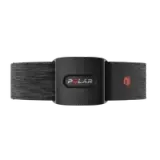
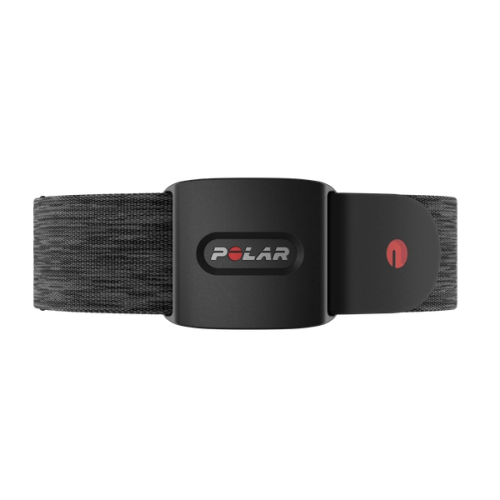
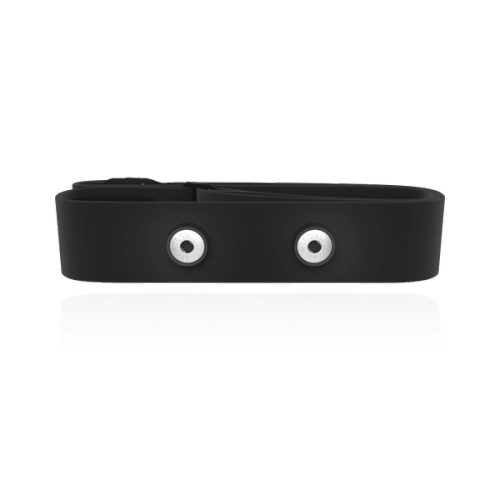
A Note on Measurement Precision: This is precisely where measurement accuracy becomes critical. While wrist-based optical sensors are convenient, thermal stress, sweat, and movement can sometimes induce optical artifacts or cadence lock, giving false readings. Utilizing a dedicated chest strap like the Polar H10 provides beat-to-beat ECG accuracy, ensuring that the upward trend you see on screen reflects genuine physiological drift rather than sensor interference.
undefined

Polar H10
Heart Rate Sensor
When it comes to accuracy and connectivity, Polar H10 heart rate sensor is the go-to choice. Monitor your heart rate with maximum precision and connect your heart rate to a great variety of training devices with Bluetooth® and ANT+.
Aerobic Decoupling: Using Drift to Measure Your Fitness Base
Rather than viewing cardiac drift as a limitation, endurance athletes can reframe it as a powerful diagnostic feedback tool. In training literature, the divergence between heart rate and physical output over time is referred to as aerobic decoupling.
Your rate of aerobic decoupling directly reflects the depth of your endurance base. Well-conditioned athletes boast higher baseline plasma volumes, superior sweat efficiency, and larger stroke volumes. Because their physiological systems manage heat and fluid loss far better, their heart rates drift significantly less over a given duration.
Tracking Your Progress: You can actively measure this adaptation without needing a laboratory. Run or ride an identical steady route at a fixed pace across a six-to-eight-week training block. Calculate your decoupling percentage—comparing the ratio of heart rate to pace in the first half of the session against the second half. If your heart rate drifts by 8% during week one, but drops to 3% by week eight at the exact same pace, your cardiovascular system has adapted. Your engine has become far more efficient at maintaining homeostasis under load.
The Durability Angle: What Modern Sports Science Shows
In recent sports science research, the conversation around cardiac drift has evolved beyond simple base building toward the concept of aerobic durability—defined by researchers in Experimental Physiology as an athlete’s resilience against the progressive degradation of physiological capabilities during prolonged exercise.
Traditional fitness markers like VO2max or lactate threshold are typically measured when an athlete is fresh in a laboratory setting. However, as a long run extends past the 90-minute mark, those fresh numbers decay. Recent research published in Frontiers in Sports and Active Living highlights that aerobic durability—measured by an athlete’s ability to minimize cardiovascular drift—is often a far better predictor of marathon performance and late-race pacing than fresh baseline numbers alone.
Studies analyzing tens of thousands of marathon runners show that athletes who exhibit the lowest rates of heart-rate-to-pace decoupling in the first half of a race consistently maintain even pacing and avoid dramatic performance drops over the final 10 kilometers. Furthermore, research in Exercise and Sport Sciences Reviews demonstrates that as cardiac drift sets in, the relative metabolic strain (VO2 cost) required to maintain a constant pace increases. Maintaining a low decoupling rate over long efforts isn’t just a sign of base fitness; it’s a direct, field-tested proxy for fatigue resistance when it matters most.
Hot Weather and Race Day Strategy
Thermal stress dramatically accelerates cardiac drift, making heat management crucial for execution on race day. When running in the heat, the physiological trade-off happens almost immediately: a much higher proportion of blood is sent straight to the skin for cooling, causing stroke volume to drop far sooner in the effort. Just as on long training runs, this early rise in heart rate reflects increased cooling demand—not necessarily that you are running at an unsustainable aerobic intensity.
The Race Day Adjustment: Accept that heart rate targets established during cool training sessions cannot be applied directly in hot race conditions. Forcing your heart rate into a “cool-weather zone 2” on a warm day will force you into an artificially slow, unproductive pace before you’ve even logged significant miles.
Instead, calibrate your effort using pace and Rate of Perceived Exertion (RPE) as your primary guides. On a hot day, a heart rate that feels surprisingly easy or unusually elevated during the opening miles is usually right on target—it is simply your thermoregulatory system working as intended. Holding that controlled pace leaves the necessary physiological buffer to absorb the inevitable cardiac drift that will occur in the closing stages without causing you to panic early.
What You Can Do to Manage Cardiac Drift
While cardiac drift is an inevitable physiological response during prolonged effort, you don’t have to let a rising heart rate derail your training. By shifting how you interpret your watch metrics mid-workout, you can manage drift effectively and avoid common pacing mistakes.
Utilize Dual Metrics
On long sessions, structure your data strategy around the clock:
- First 60 Minutes: Rely on heart rate as your primary benchmark to ensure you don’t overcook the opening miles.
- Beyond 90 Minutes: Shift your focus to a combination of pace (or power) and Rate of Perceived Exertion (RPE). Cross-referencing these metrics keeps you honest without falling prey to drifted heart rate numbers.
Don’t Chase the Drifting Number
The single biggest mistake endurance athletes make when encountering cardiac drift is slowing their pace to a crawl just to force a drifting heart rate back into a strict Zone 2 box. If your pace is consistent, your cadence is steady, and your breathing feels controlled, accept the upward trend in heart rate as normal physiology at work. The drift is helpful feedback—not an error you need to immediately fix.
Listen to Your Body, Trust the Data
Cardiac drift isn’t a training error—it’s your body doing exactly what it was designed to do: adapting dynamically to keep you cool and moving forward during sustained effort.
Understanding this physiological response protects you from two costly mistakes: accidentally overworking in the second half of a workout, or overcorrecting by slowing to a crawl just to keep a number in check.
Use your heart rate honestly for the first hour, blend it with pace and perceived exertion as the miles tick by, and watch your drift decrease over time as you build a more resilient aerobic engine.
For step-by-step guidance on structuring your weekly mileage to build a rock-solid base, explore our long run training strategies in our comprehensive marathon guide.
Enjoying this article? Subscribe to the Polar Newsletter and get notified when new articles are out.
Subscribe



 POLAR Street X
New
POLAR Street X
New
 Polar Vantage M3
 Polar Grit X2 Pro Titan
 Polar Grit X2 Pro
 Polar Grit X2
 Polar Vantage V3
 Polar Ignite 3
 Polar Pacer Pro
 Polar Pacer
 Polar Unite
Grit X Series
Vantage Series
Pacer Series
Ignite Series
Polar Unite
Grit X Series
Vantage Series
Pacer Series
Ignite Series