There’s a particular kind of restlessness that comes from being good at one sport. You’ve built an aerobic base, or a squat, or a stroke — and now you want more than that single identity. What holds most people back isn’t ambition, but fear: that adding a second or third sport means losing ground in the first, through deconditioning, injury, or burnout. Combining sports well is less about willpower and more about arithmetic — how much load your body can absorb, and how you verify it’s recovering from that load. Heart rate zone training and load-tracking metrics were built for exactly this problem, long before “hybrid training” had a name. This guide lays out a framework for how much to train, how to prioritize, and how to know it’s working.
Key takeaways
- Combine sports at the minimum effective dose per discipline — not the maximum you can tolerate.
- Heart rate zone monitoring keeps easy sessions easy across every sport you combine, which is what stops fatigue from accumulating unnoticed.
- Pick one sport as your seasonal focus and keep the others in maintenance mode, rather than running full programs for each at the same time.
- Recovery — sleep, carbohydrate and protein intake, and stress management — has to scale up with the number of sports you combine, not stay constant.
What is combining sports (hybrid training), and why do it?
Hybrid training means training seriously in more than one sport at once, rather than treating a second discipline as an occasional add-on. A runner who lifts twice a week isn’t just “cross-training” — once both disciplines have real goals and real programming, it’s hybrid training.
The appeal is straightforward. Different sports load the body differently, so combining them spreads the training stimulus — strength, aerobic capacity, mobility — across a broader base than any single sport builds alone. It also lowers the pressure on any one discipline: a bad training block in your running doesn’t have to feel like a bad training year if your strength is still progressing. Hybrid-format competitions — Hyrox, obstacle course racing, CrossFit — have turned combining strength and endurance from a hobbyist’s compromise into its own competitive category. If that side interests you, Hyrox and obstacle course racing reward exactly this kind of training.
None of this requires elite-level performance in any one sport. The goal is progress against your own baseline in more than one direction at once, not competing with single-sport specialists on their terms.
What are the biggest challenges of training multiple sports at once?
Three things make combining sports harder than training one: time, energy, and fatigue.
Time is the most obvious constraint — every sport you add competes for the same weekly hours. Energy is less visible but just as real: your body draws from one shared pool of recovery capacity, regardless of which sport used it up. Fatigue compounds in a way single-sport athletes rarely think about — pre-fatigue, where a hard strength session on Monday leaves your legs measurably heavier for Tuesday’s intervals, even though Tuesday is a different sport entirely.
This is also why running two full single-sport programs side by side almost always fails. A structured marathon plan and a structured hypertrophy program each assume they’re your only training stress. Stack them and the recovery math stops working — adaptation depends on stress followed by adequate rest, and two full programs leave too little rest between either one’s demands. This overlap has a name in the literature — the interference effect, where concurrent training blunts the strength or power gains you’d get from resistance training alone. Hickson (1980) first documented it: combining heavy strength and endurance training caused leg strength gains to plateau over several weeks, while a strength-only group kept improving [Hickson, 1980]. Later work suggests the effect is dose-dependent — it shows up more when endurance volume or intensity is high, and less for upper-body strength than for the legs [Fyfe et al., 2014]. The takeaway isn’t “don’t combine sports” — it’s “don’t run two maximal programs at once.”

How much training is enough when you combine sports?
The concept to hold onto is the minimum effective dose — the smallest amount of training in each sport that still produces progress. It’s the opposite of “more is always better,” and it’s the difference between hybrid training that works and hybrid training that quietly wears you down.
For beginners, that often means one to two sessions per week per sport, each shorter than a single-sport athlete’s equivalent session. Beyond frequency, the type of training matters as much as the amount:
- For endurance work, most of your volume should sit in Zone 2 — the aerobic base zone — because it’s the least fatiguing way to build cardiovascular capacity. Runners who kept roughly four-fifths of their volume at low intensity improved competitive times more than runners who spent more of their week at threshold pace [Esteve-Lanao et al., 2005].
- For strength work, keep volume low by trimming sets and reps first, not intensity — this maintains strength without the fatigue cost of a full hypertrophy block. If running is part of your combination, essential strength exercises are a good place to start.
- Be sparing with high-intensity efforts in every discipline. Hard sessions are expensive to recover from, and that cost is shared across all your sports.
Six days a week, twice a day, is typically the result of years of progressive build-up — not a starting point.
How do you use heart rate zones to combine sports safely?
The more sports you combine, the more heart rate monitoring matters, because the margin for error shrinks. In a single-sport program, drifting into Zone 3 on an easy day costs you one recovery day. In a hybrid program, that same drift eats into the recovery you need for tomorrow’s strength session and next week’s intervals. Understanding your heart rate zones is the simplest objective check that an “easy” session actually stayed easy.
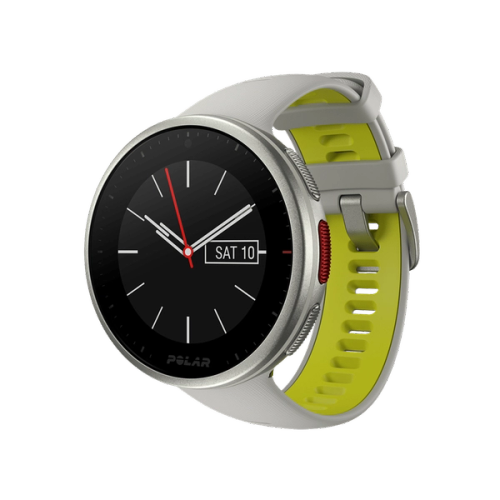
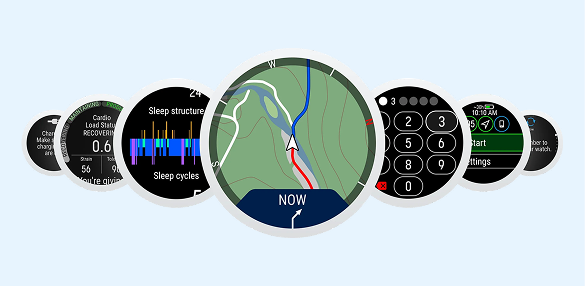
This is where multisport tracking earns its keep. The Polar Vantage M3 calibrates heart rate zones per sport rather than applying one generic zone model across everything you do — your zone 2 on a bike and your zone 2 on a run aren’t the same effort. Beyond zone tracking, Training Load Pro aggregates cardio load, muscle load, and perceived load across every sport you log, which answers the question a hybrid athlete actually needs answered: is my combined training too much, even if no single sport looks excessive on its own? A Fitness Test gives you a baseline aerobic fitness estimate to recalibrate zones as your fitness changes.
One note for the strength side: optical heart rate at the wrist is less reliable during resistance training, where wrist position and grip change constantly. A chest strap like the Polar H10 gives a steadier reading if you want to monitor heart rate while lifting.
undefined

Polar H10
Heart Rate Sensor
When it comes to accuracy and connectivity, Polar H10 heart rate sensor is the go-to choice. Monitor your heart rate with maximum precision and connect your heart rate to a great variety of training devices with Bluetooth® and ANT+.
How do you prioritize when you can’t do it all?
As a beginner, it’s often possible to build endurance, strength, and speed at the same time — early progress is generous across the board. As you advance, that stops working, and the fix is to choose one sport as your focus for a training phase while the rest sit in maintenance mode.
Maintenance doesn’t mean stopping — it means keeping enough stimulus to hold your current level without spending recovery capacity your focus sport needs. A worked example: training for your first marathon while maintaining, not building, your strength training. You’d keep two shorter strength sessions a week instead of four, drop volume rather than intensity, and protect your best recovered state for your most important running sessions — tempo runs and intervals. This is the general framework; for the specific cardio-and-strength pairing, see combining cardio and strength training and combining strength training with running.
How does hybrid training fit into your lifestyle?
Combining sports works best when it fits naturally into how you already live, rather than becoming the organizing principle of your identity. Training ambitiously in more than one discipline takes real time, energy, and planning — worth doing consciously, not by accident.
A few questions worth sitting with: What role do you want sport to play in your daily life? How much time and energy are you realistically willing to give it? What are you willing to trade off for it? Sport is part of a full life, not the whole of it — and answering these honestly makes it easier to set a training volume you’ll actually sustain.

How do you recover when training multiple sports?
Recovery is where combining sports either works or quietly falls apart. As the number of sports you train goes up, so does what you need to recover from all of them — and that need doesn’t split evenly, it stacks.
Fueling is the most common gap. Combined training volume burns more total energy, mostly carbohydrate, and joint sports nutrition guidance puts carbohydrate needs for athletes training at moderate-to-high intensity for more than an hour a day at roughly 6–10 grams per kilogram of body weight daily, with protein at 1.2–2.0 grams per kilogram [Thomas et al., 2016]. Sleep and stress management matter more too, since both feed the same recovery capacity every sport draws from. Overtraining across multiple sports also looks different from overtraining in one: a joint consensus distinguishes short-term functional overreaching, which resolves within days, from true overtraining syndrome, where performance stays suppressed for weeks or months despite rest [Meeusen et al., 2013]. Catching the first before it becomes the second is the point of monitoring recovery, not just load.
Nightly Recharge is useful here specifically: it estimates how well your nervous system and sleep recovered overnight, a signal you can check before deciding whether today is a green light for a hard session or a day to hold back. For a closer comparison of Polar’s two main recovery tools, see Nightly Recharge vs. Recovery Pro.
Common mistakes when combining sports
A few patterns show up repeatedly in athletes who burn out on hybrid training rather than adapt to it:
- Jumping straight to six days a week, twice a day. That volume is an end state for experienced hybrid athletes, not a starting plan.
- Running two full single-sport programs concurrently. Each program assumes it’s the only stress on your system; stacking two removes the recovery margin either one was built around.
- Ignoring pre-fatigue on stacked training days. A morning strength session changes what your legs can give an endurance session that evening — plan stacked sessions with that in mind, not as if they’re independent.
- Under-fueling for total volume. Eating like a single-sport athlete while training like two of them creates an energy deficit that shows up as poor recovery before it shows up as poor performance.
If running is one half of your combination, cross-training for runners covers how to add complementary training without these traps.
Conclusion
Combining sports rewards a small set of behaviors more than any clever schedule: start with less than you think you can handle, use heart rate zones to keep easy sessions honestly easy, design your plan around your own recovery, choose one clear focus at a time, prioritize recovery as deliberately as you prioritize training, and keep sport as part of your life rather than the whole of it. None of it is complicated — it just takes the discipline to under-train slightly rather than over-train significantly. For a deeper look at how hybrid training reshapes identity and long-term planning, The Hybrid Athlete Blueprint picks up where this guide leaves off.
FAQ on combining sports and hybrid training
Can you train for a marathon and lift weights at the same time?
Yes, but not at full volume for both. During a marathon block, shift strength training into maintenance mode — fewer sessions, lower volume — so your legs stay fresh for key running sessions. Running a full strength program alongside a full marathon program is where the interference effect [Hickson, 1980] shows up most clearly.
How many sports can you realistically combine at once?
Most athletes manage two disciplines well and three with careful planning. Beyond that, time and recovery capacity become the limiting factor before motivation does.
Do you need a rest day if you train two sports on the same day?
Not necessarily a full rest day, but you need at least one lower-stress day a week where total combined load, across every sport, is genuinely light. Stacking two sports on one day works better when one of them is easy by design.
Is hybrid training bad for muscle growth or endurance performance?
It can blunt gains in either if programmed poorly — the interference effect is real [Fyfe et al., 2014] — but it doesn’t prevent progress in both. Moderate strength volume, mostly Zone 2 endurance work, and sparing high-intensity efforts let most athletes progress in each.
What heart rate zone should you stay in when combining sports?
Most of your weekly endurance volume should sit in Zone 2 — comfortable, conversational effort — with high-intensity work used sparingly. Zone tracking matters most on easy days, since that’s where hybrid athletes most often drift into too much intensity without noticing.
Enjoying this article? Subscribe to the Polar Newsletter and get notified when new articles are out.
Subscribe
References
Esteve-Lanao, J., San Juan, A. F., Earnest, C. P., Foster, C., & Lucia, A. (2005). How do endurance runners actually train? Relationship with competition performance. Medicine & Science in Sports & Exercise, 37(3), 496–504.
Fyfe, J. J., Bishop, D. J., & Stepto, N. K. (2014). Interference between concurrent resistance and endurance exercise: Molecular bases and the role of individual training variables. Sports Medicine, 44(6), 743–762.
Hickson, R. C. (1980). Interference of strength development by simultaneously training for strength and endurance. European Journal of Applied Physiology and Occupational Physiology, 45(2–3), 255–263.
Meeusen, R., Duclos, M., Foster, C., Fry, A., Gleeson, M., Nieman, D., Raglin, J., Rietjens, G., Steinacker, J., & Urhausen, A. (2013). Prevention, diagnosis, and treatment of the overtraining syndrome: Joint consensus statement of the European College of Sport Science and the American College of Sports Medicine. Medicine & Science in Sports & Exercise, 45(1), 186–205.
Thomas, D. T., Erdman, K. A., & Burke, L. M. (2016). Position of the Academy of Nutrition and Dietetics, Dietitians of Canada, and the American College of Sports Medicine: Nutrition and athletic performance. Medicine & Science in Sports & Exercise, 48(3), 543–568.



 POLAR Street X
New
POLAR Street X
New
 Polar Vantage M3
 Polar Grit X2 Pro Titan
 Polar Grit X2 Pro
 Polar Grit X2
 Polar Vantage V3
 Polar Ignite 3
 Polar Pacer Pro
 Polar Pacer
 Polar Unite
Grit X Series
Vantage Series
Pacer Series
Ignite Series
Polar Unite
Grit X Series
Vantage Series
Pacer Series
Ignite Series