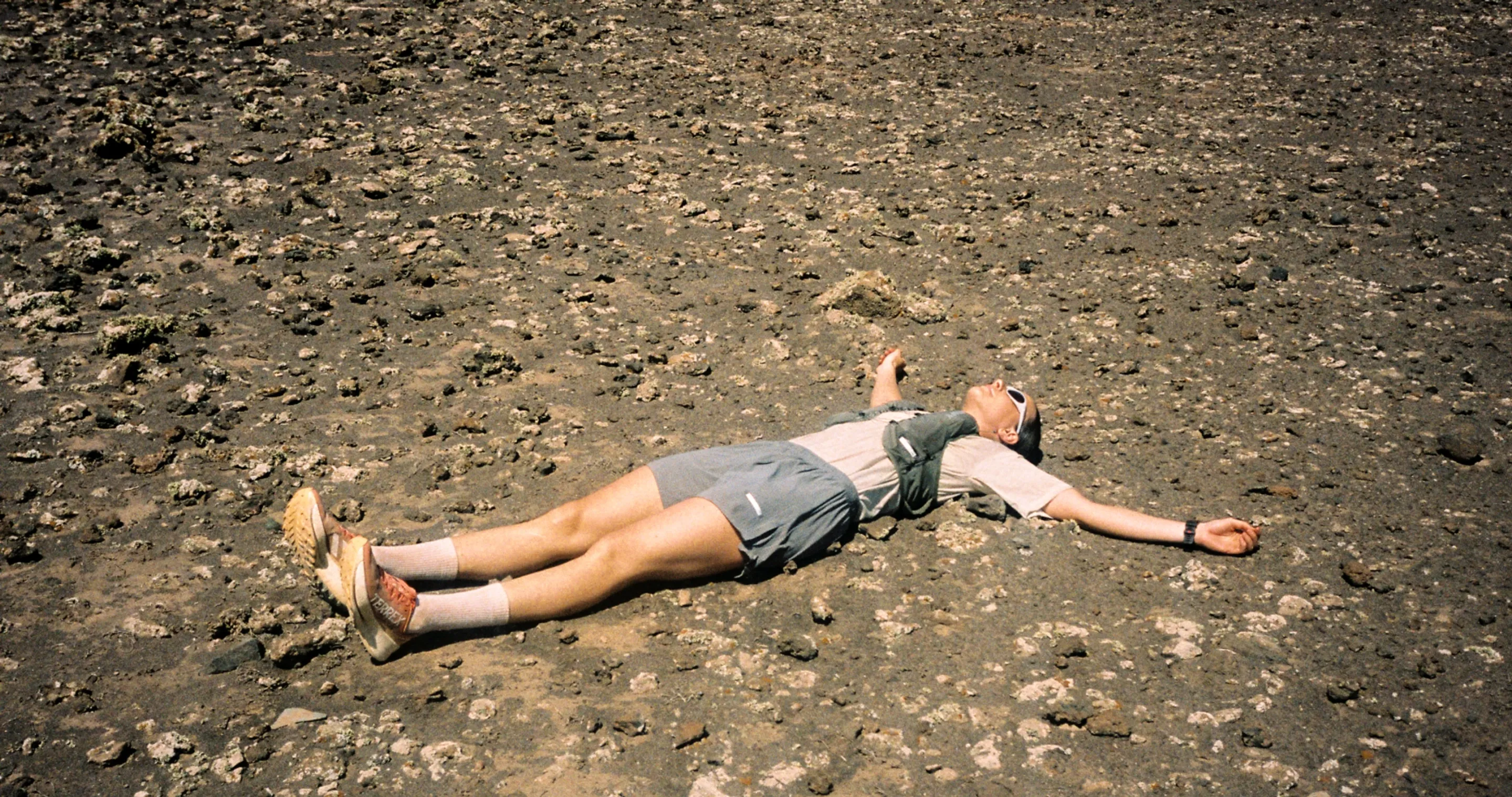
For years, Anita Korva’s world was measured in the rhythmic, metronomic 'shush-shush' of skis on groomed Finnish snow. As a world-class cross-country skier, her body was a finely tuned machine built for one thing: specialized aerobic speed. But eventually, the rigid constraints of elite competition—where even a few extra grams of muscle were seen as a liability—began to feel less like a career and more like a cage. Then, she found a new challenge, covered in mud.
"I’m free now," Anita says, a noticeable shift in her voice. "I don't have to think if this is okay or not. I can do all the things I want," she grins. Today, the groomed tracks have been replaced by the unpredictable chaos of the forest. Instead of avoiding muscle mass, she’s building her own 20kg sandbags at home to prepare for the surprise obstacles that are often included in races. And now, when she returns to the legendary woods of Lahti, Finland, it isn't for a podium in a 15km classic sprint, but to scale a ski jumping hill on foot, smiling through the grit of an obstacle course race.
Yes, you read it right. Obstacle course racing is widely considered one of the toughest tests of human versatility on the planet, demanding a level of grit that traditional sports simply can't replicate. It's the ultimate arena for the hybrid athlete—a place where raw power meets relentless endurance, and where the only way to survive is to embrace the unpredictable.
What is Obstacle Course Racing?
At its core, obstacle course racing (OCR) is a high-octane return to our primal roots—a sport where survival instincts meet athletic precision. While a traditional marathon asks how long you can run, an OCR (a movement largely defined by the cultural juggernaut of Spartan racing) asks what you’re made of when the terrain fights back. It's a grueling, mud-soaked gauntlet that strips away the artificiality of modern fitness and replaces it with a series of physical puzzles: scaling twelve-foot walls, swinging across technical rigs, navigating lightless tunnels, and hauling heavy loads through the muck. It isn’t just a race; it’s a high-stakes adventure where every mile is a battle and every obstacle is a victory. As Anita puts it, these races feel like a playground for the brave, focusing on "what you find in the forest, with all the hanging bars and ropes and everything."
For those ready to trade their clean trainers for a medal, the challenges are categorized by distance and obstacle density, allowing you to scale your effort as your hybrid capacity grows.
Major Obstacle Course Racing Types and Brands:
- Spartan Race:The gold standard for competitive grit, featuring tiered distances designed to break you:
- Sprint:5k and 20 obstacles—a fast, breathless gateway to the sport.
- Stadion:5k inside iconic stadiums for an explosive, urban twist.
- Super:10k and 25 obstacles—the perfect balance of endurance and strength.
- Beast:21k and 30 obstacles—a relentless test of mental and physical fortitude.
- Ultra:50k and 60+ obstacles—only for those who thrive on the edge.
- Tough Mudder:This isn't a race; it's a mission. It emphasizes teamwork and raw mental toughness over the clock, often featuring signature challenges like ice baths and electric shocks.
- Rugged Maniac:A 5k thrill ride featuring fun, bouncy obstacles and a festival atmosphere that proves toughness and fun are two sides of the same coin.
- Nuclear Races:These courses are famous for packing more world-class obstacles into every kilometer than almost any other race, including the bone-chilling grit of their winter 'Fallout' events.
- Terrain Race:Navigate specialized, mud-heavy paths that utilize the natural landscape as its own obstacle. It’s a raw, unpredictable test of your ability to adapt to shifting ground and steep vertical gains.
- Hyrox and Indoor Hybrid:For those who want to test their engine without the mud, these standardized indoor races combine 8km of running with eight brutal functional stations like sled pushes and wall balls.
Key Obstacle Categories:
- Power & Payload: Carrying sandbags, dragging heavy logs, or towing sleds up slick inclines.
- Technical Agility: Rope climbs, traverse walls, and multi-rigs that test your grip and coordination.
- Technical Suspensions: Navigating rings, trapeze bars, and technical holds while your forearms scream.
- The Elements: Plunging into mud pits, crawling under barbed wire, and tackling swim sections.
Competition Formats:
- Competitive/Elite Waves: Timed, strict obstacle completion rules, podium prizes.
- Open Waves: Non-competitive, focused on fun, teamwork, and skipping obstacles if necessary.
- Championships: High-level events like the OCR World Championships.
What makes these events unique is the surprise element that traditional racing lacks. In a road race, you know exactly where every turn is; in Obstacle Course Racing, certain obstacles are often a secret until you’re in the thick of it. "They don't tell you everything that's coming. There's usually a surprise," Anita explains with delight. This lack of predictability is exactly why the sport is so effective at building adaptation. You cannot simply train for a specific pace on a flat surface; you have to train for the unknown.
How Do I Train for Obstacle Course Racing?
To thrive in this unpredictable environment, your training must mirror the chaos of the race itself. This is where hybrid training becomes a necessity. Because obstacle course racing requires you to be a 'jack of all trades,' your workout week should be a deliberate mix of modalities designed to keep your body guessing.
Effective training for these events generally falls into three distinct pillars, each serving a specific purpose on the course:
- Compounded Cardio: Instead of just logging miles on the road, hybrid athletes favor 'compromised running.' This involves running at a steady pace and stopping every kilometer to perform a high-intensity functional movement—like burpees, lunges, or a heavy carry—before immediately returning to your running gait.
- Grip and Pull Strength: Since so many obstacles involve hanging or climbing, vertical pulling power is non-negotiable. Workouts focus on dead hangs, pull-ups, and farmer’s carry to build the forearm endurance needed.
- Functional Explosiveness: Movements like box jumps, kettlebell swings, and sled pushes prepare the legs for the steep inclines and the 'burst' energy required to vault over walls.
For Anita, this meant an adjustment from the 700+ hours of annual aerobic-focused ski training she endured as a competitive skier. "I have always loved to do both," she says, reflecting on the joy of merging strength and endurance. "I was already doing endurance training... so it was easy to just add a bit more strength training and keep on jogging." By shifting the focus, she transformed her physique from a specialized instrument into a versatile tool.
From Specialist to Generalist: Why Hybrid Works
The beauty of Spartan-style racing is that it forces adaptation through variability. In a specialized sport, your body becomes hyper-efficient at particular movements, eventually plateauing. In contrast, hybrid training creates a broader fitness base. When you train for an obstacle course, you aren't just improving your VO2 max; you’re improving your metabolic flexibility—the body's ability to switch efficiently between using oxygen for fuel during a run and using anaerobic stores for a heavy lift.
This shift also offers a unique psychological 'escape hatch' from the pressure of perfectionism that a specialization may cause. Anita found that being a generalist relieved the pressure of being the absolute best in a single narrow discipline. "It’s easier when you have so many things to be good at, so you don't have to be so good at only one thing," she notes. "I have many strengths actually... so many things I can do in one race only."
Training for an obstacle course teaches your nervous system to stay calm under a variety of stressors, whether it's the cold water of a mud pit or the lactic acid buildup from pushing a sled. As Anita suggests, this variety doesn't just make you a better athlete; it makes you "free." You stop worrying about whether a specific workout fits your profile and start focusing on whether you are ready for the adventure ahead.

Physiological Demands of Obstacle Course Racing
A marathon will test your aerobic capacity, but an obstacle course race, with its 'stop-and-start' nature, creates a specific type of stress known as metabolic interference. In traditional running, your heart rate remains relatively stable. In OCR, you might be cruising at a steady pace in Zone 3, only to hit a log-carrying obstacle that sends your heart rate skyrocketing into Zone 5.
This constant toggling between aerobic and anaerobic systems is what sports scientists call metabolic flexibility. Your body must be able to burn fat efficiently during the running sections, then instantly switch to burning glycogen to power through a heavy sled pull or a rope climb. For many athletes, the hardest part isn't the obstacle itself, but the 're-entry'—the moment you finish an obstacle and have to convince your legs to start running again while your heart is still hammering against your ribs.
Mental Readiness
In obstacle course racing, the mental load is often as heavy as the sandbags you carry. Unlike a standard road race, where the challenges are predictable, OCR forces you to confront the unknown at every turn. This constant state of high alert—wondering what’s around the next bend or how deep the next mud pit will be—requires a specific kind of psychological resilience. For Anita, navigating this isn't about rigid mental drills; it’s about a fundamental shift in perspective.
When faced with unexpected obstacles she hasn’t practiced or even heard of, Anita leans into a visualization strategy focused on the finish line of each obstacle. Instead of obsessing over the mechanics of a difficult hang or a technical climb, she focuses on the physical and emotional relief of completion. "I just try to remember the good feeling after that," she explains. "I love the feeling when it’s over, and you put the heavy bag away. That’s the thing you want to remember."
This technique helps the nervous system stay calm even as the brain processes a new challenge. It transforms a moment of potential intimidation into a manageable stepping stone toward a reward. By anchoring her mind towards the relief at the end of the effort, she maintains the confidence to handle whatever the course throws at her. "I’m confident I can do whatever is coming," she says, emphasizing that an "adventurous mind" is her greatest asset.
Recovery
Because this kind of training is as taxing on the brain as it is on the hamstrings, recovery becomes the most critical part of the hybrid athlete’s schedule. High-intensity 'burst' efforts followed by the mental strain of technical obstacles can leave your central nervous system (CNS) feeling a little fried. This is where tracking your sleep and monitoring metrics like heart rate variability (HRV) move from being simple data points to essential 'green lights' for your next session.
Anita’s approach to data in this new chapter of her career is a lesson in sustainable performance. While she admits her metrics have shifted since her elite skiing days—"my nightly heart rate is not so low as it was"—she no longer views these numbers through the lens of high-pressure perfectionism. Instead, she uses them to ensure she’s maintaining the joy that brought her to the sport in the first place. By monitoring how her body recovers from the chaos of obstacle course racing, she can keep her training "simple enough" to avoid burnout.
undefined

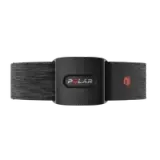
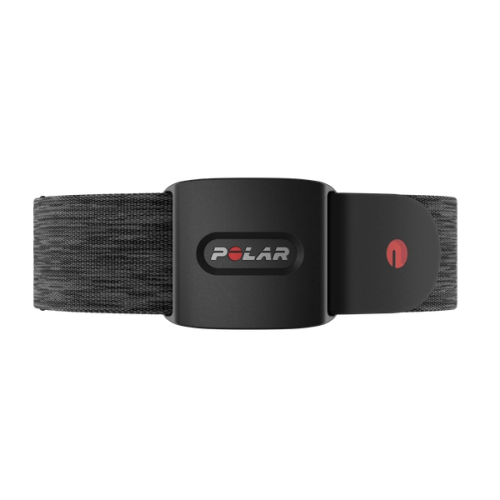
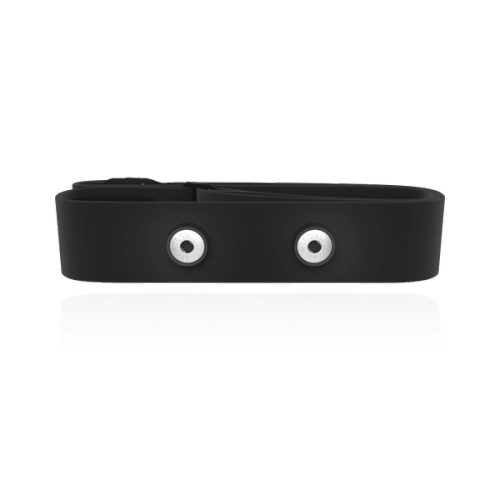
Polar Verity Sense
Optical Heart Rate Sensor
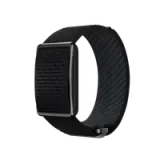
Polar Verity Sense is an optical heart rate monitor that provides you with maximum freedom of movement and multiple options for viewing and recording your workouts. With Bluetooth®, ANT+, and internal memory, you can connect Polar Verity Sense to a sports watch or app to see your workout in real time, or view your data afterwards.
A Lesson in Courage and Community
Anita Korva’s journey from the rigid tracks of elite skiing to the unpredictable mud of the obstacle course is a powerful reminder that fitness is not a destination, but an evolving conversation with your own potential. By embracing the hybrid mindset, she hasn’t just built a more versatile body; she has rediscovered a sense of joy that had been buried under years of high-pressure specialization.
For those standing on the edge of their own specialist plateau—whether you are a gym-goer tired of the treadmill or a runner looking for a new kind of grit—Anita’s advice is simple: stop being so hard on yourself. "Spartan racing is so open-minded... it builds courage," she says, reflecting on the transition. "You don't have to be afraid if you can do it, because there are so many people doing it for fun and challenging themselves." This sense of community is the secret ingredient of the sport. Unlike the solitary pursuit of a PB on a flat road, obstacle course racing is a shared experience of struggle and relief. "It’s an inspiring community. Just do it how you’re able to do it today."
"I can't describe how important it is for me... that I can enjoy and do all the sports again," Anita concludes. "It’s just giving me joy and some small challenges and things I can be better at." So, remember: the forest doesn't care about your past accolades or your perfect splits. It only asks if you are ready to play. Are you?



 POLAR Street X
New
POLAR Street X
New
 Polar Vantage M3
 Polar Grit X2 Pro Titan
 Polar Grit X2 Pro
 Polar Grit X2
 Polar Vantage V3
 Polar Ignite 3
 Polar Pacer Pro
 Polar Pacer
 Polar Unite
Grit X Series
Vantage Series
Pacer Series
Ignite Series
Polar Unite
Grit X Series
Vantage Series
Pacer Series
Ignite Series