If you work in an office, then you may find yourself in this one spot every morning: coffee in hand, staring at the polished steel doors of the elevator. You're mentally preparing to start your day—running through your emails on your phone or rethinking the strategy from yesterday's meeting—but still standing there, waiting, as it's the path of least resistance. But just to your left sits a heavy door, and hidden behind it lies an easily accessible, surprisingly efficient health hack.
Simply put: stairs are everywhere. When you view them only as an alternative to the elevator, you miss out on a free, daily vertical workout.
The truth is, the benefits of stair climbing go far beyond just taking you from A to B, or floors 1 to 3, as it may be. For the modern desk worker (as so many of us are), stairs are the ultimate antidote to a sedentary day. While walking is great, taking the stairs is a high-intensity gift to your heart and muscles that requires zero gym fees (and no change of clothes).
Keep on reading because we’re about to explore why you should make it a rule to 'always take the stairs.' Whether you work in an office or live in an apartment building, we'll look at the science-backed reasons why those steps are an invitation to move better, feel stronger and boost your energy without ever leaving the building.
What are the Benefits of Stair Climbing
So, what actually happens when you push open that stairwell door? You don't simply move, but move upwards—and that shift in direction changes everything for your physiology.
The Vertical Advantage
If you've ever felt your heart thumping after ascending just two flights—that's not a sign you're 'out of shape'. It's a sign that climbing stairs is good exercise because it forces your body to work against gravity. Unlike a standard walk, which is horizontal movement, stairs require something that is known as vertical displacement.
You're essentially lifting your entire body weight with every single step, and because of this, stair climbing is classified as a vigorous-intensity activity. In fact, research from the University of Milan shows that these short, vertical bursts can be around 20-60% more metabolically demanding than walking the same distance on flat ground. So, you're essentially getting the benefits of a jog in the time it takes to reach the third floor.
Heart Rate Boost
For desk workers, stairs act like a cardiovascular reset button. Within seconds of starting your climb, your heart rate spikes, moving you quickly out of a sedentary state and into the aerobic zone. This rapid increase in heart rate helps to:
- Boost VO2 Max: Regular stair climbing trains your heart and lungs to use oxygen more efficiently (more on this below).
- Strengthen the 'Pump': It improves your stroke volume, meaning your heart becomes more powerful at circulating blood with less effort.
- Time Efficiency: A quick 'exercise snack' of three flights of stairs can be just as effective for your heart as a longer, moderate walk.
Which Muscles are Used When Climbing Stairs?
If you've ever wondered, "Does climbing stairs tone thighs?" the answer is a resounding yes. But it doesn't stop there. Every step is a 'triple extension' movement, which is a fancy way of saying you're engaging your ankles, knees and hips all at once. Here is the breakdown of the muscles used when climbing the stairs:
- The Glutes: Your 'climbing muscles.' These are the primary drivers that push your body upward. Stairs are one of the best ways to activate the gluteus maximus without needing a squat rack.
- The Quadriceps and Hamstrings: This is where the thigh toning happens. Your quads (front of the thigh) work to straighten your leg and lift you up, while your hammies (back of the thighs) support the hip movement.
- The Calves: Every time you push off your toes to reach the next step, your calves are under tension, building endurance and definition.
Beyond the burn in your legs, stair climbing recruits several systems that keep you sharp and steady:
- The Cardiovascular System: As mentioned above, your heart and lungs work overtime to deliver oxygen to those large muscle groups, turning a simple stairwell into a high-performance engine room.
- The Vestibular System: Moving vertically requires a subtle but constant shift in your centre of gravity. This system—essentially the sensory equipment in your inner ear that manages balance—gets a workout with every step. It’s a mini-lesson in coordination that is vital for long-term mobility, especially if you spend most of your day tucked into a desk chair.
- The Metabolic System: When you engage these large muscle groups, you trigger a metabolic response that helps manage blood sugar levels and insulin sensitivity, effectively 'clearing out the cobwebs' after a long period of sitting.

Does Climbing Stairs Count as Cardio?
Yes, stairs absolutely count as cardio. In fact, they're one of the most efficient forms of cardiovascular training readily available to us. To understand why, we have to look at intensity. Most of our daily movement—like strolling from the parking lot to the office—falls into low-intensity steady state activity, which means your heart rate stays relatively level.
Stair climbing, however, is a different vibe. As you're working against gravity, your heart rate climbs almost as fast as you do. For many, just 60 seconds of stair climbing can push your heart rate into zone 3 (aerobic) or even zone 4 (anaerobic). This makes it a vigorous-intensity activity, the kind that the World Health Organisation recommends we get at least 75 minutes of every week.
Cardio is ultimately about how well your heart and lungs deliver oxygen to your muscles—a metric we previously mentioned: VO2 max. A 2025 meta-analysis published in the British Journal of Sports Medicine confirmed that 'exercise snacks' of stair climbing are a scientifically proven way to boost this fitness marker. By repeatedly hitting those short bursts of intensity throughout your workday, you are not only making your heart pump more efficiently and burning more in less time, but you are also lowering your Resting Heart Rate. Simply put, this means your heart works less to what is has to do while you're just sitting at your desk.
Why Climbing Stairs is Powerful for Daily Movement
The true power of stair climbing lies in its accessibility. Most of us spend our days in sedentary bubbles: at a desk, in a car, or on a couch. Using the stairs offers a way to pop that bubble without disrupting your entire schedule.
This is why scientists refer to it as 'exercise snacking' because instead of waiting for a free hour that may never come, you can accumulate high-quality movement in 30-second to 2-minute bursts. These 'snacks' act as a metabolic reset, clearing the mental fog that sets in after hours of sitting and giving your body a hit of oxygen and endorphins exactly when you need it most.
And the compounding gains are pretty impressive. Recent research found that climbing just five flights of stairs a day (about 50 steps) can slash your risk of heart disease by an incredible 20%. That is a life-changing return on a time investment of around three minutes a day. It’s also a perfect example of why focusing on high-effort 'active minutes' can sometimes be even more impactful for your fitness than hitting a high step count.
Signs that the Stairs are Helping
One of the best things about stair climbing is that your body provides immediate feedback. The shift in your internal fitness happens remarkably fast, so how should you measure that 'invisible' progress? Here are some signs to look out for.
Let Your Breath Guide You
The most obvious sign of improvement is your breathing. If you find yourself huffing and puffing for the first week, don't stress. Take your time, but keep at it and pay attention when this starts to change. After a few weeks, you'll notice you're reaching the fourth floor before that heavy breathing kicks in. This is a sign that your VO2 max is increasing and your lungs are becoming more efficient at capturing oxygen.
Let Your Heart Tell the Story
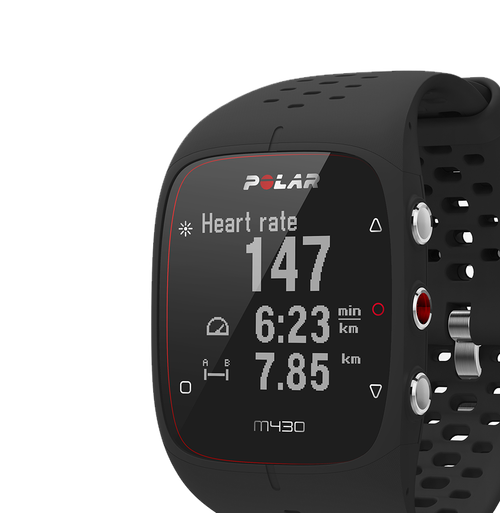
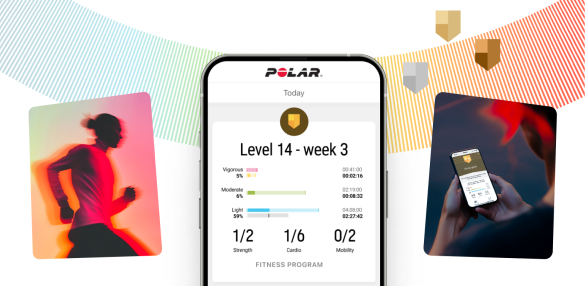
If you really want to see your progress data, heart rate tracking is your best friend. This is where Polar Loop or any of our Polar watches becomes a game-changer. By watching your zones, you'll see two specific things happen as you get fitter:
- Lower Peak Heart Rate: Over time, the same three flights of stairs won't push your heart rate quite as high as they used to be. What used to be a Zone 4 effort might eventually become a Zone 3 breeze.
- Faster Recovery: This is a great marker of a healthy heart. Check your heart rate once you reach the top. How long does it take for your heart rate to drop back to your typical walking or resting level? The more fit you become, the faster that number will plummet.
Let Your Feelings Confirm It
Finally, you'll begin to notice a change in your perceived exertion. Suddenly, the grocery bags will feel a little lighter, and the sprint to catch the train won't leave you wiped out for 10 minutes. This is because those muscles used for stair climbing—your glutes, quads and calves—have built up a new level of endurance.
When you see your active time on Polar Flow climbing alongside your energy levels, you'll realize that these small 'snacks' of exercise are adding up to a much stronger, more resilient you.
undefined
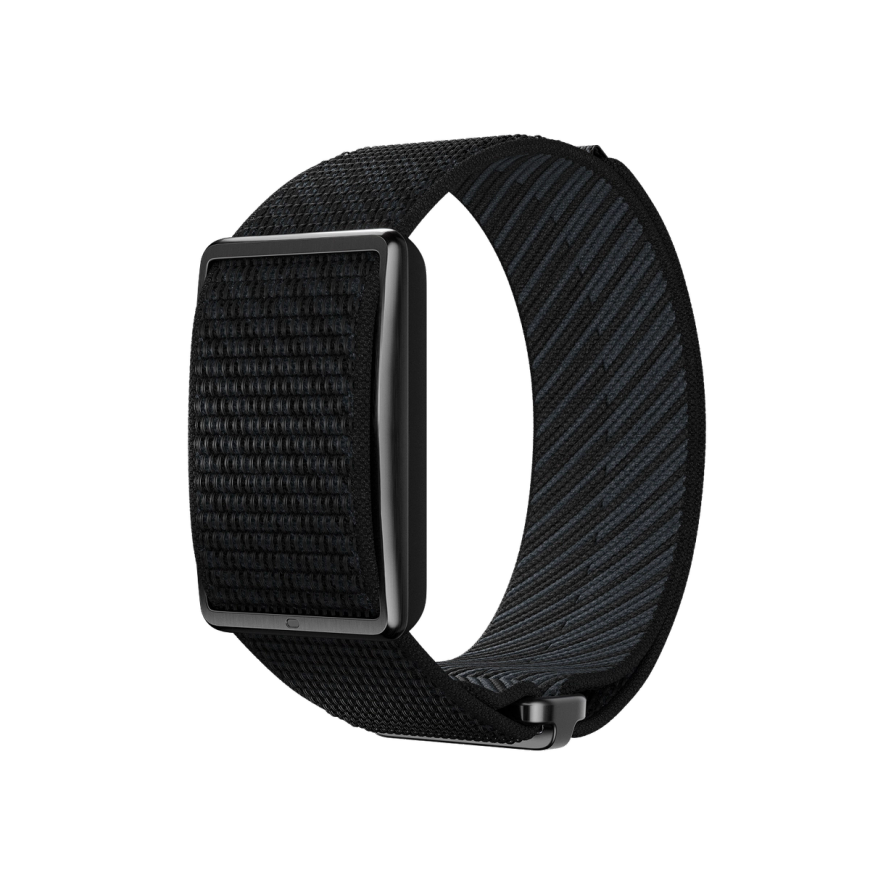
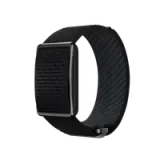
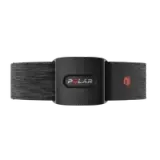
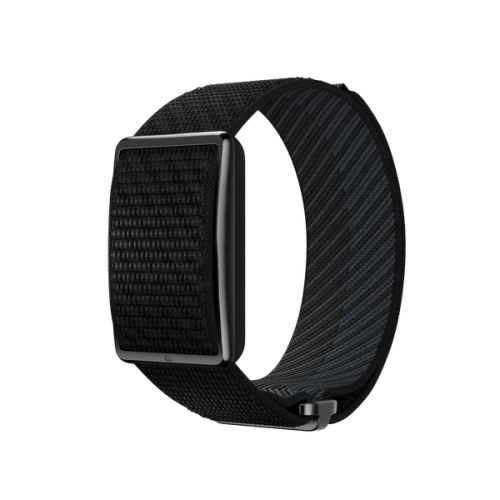
POLAR Loop
Screen-Free Wearable Health Band & Fitness Tracker
POLAR Loop is a screen-free, subscription-free fitness band that helps you sleep better, recover smarter, and stay active—without distractions.
Start Your 'Stair-Wellness' Journey
We often overcomplicate health, thinking it requires grand gestures or hours of sweating in the gym. But as the science shows, the benefits of stair climbing are proof that small, intentional choices are what actually move the needle. Whether you're a desk worker looking to break up a long afternoon or someone simply aiming for a heart-healthy lifestyle, those few flights of stairs are your daily opportunity to get 1% better.
The next time you're faced with the choice between waiting for the elevator and climbing the open stairwell, choose the climb. Your heart will beat a little faster, your legs will grow a little stronger, and your future self will thank you for the investment.
Don't just take our word for it—let the data guide you. Strap on your Polar Loop, start tracking your heart rate, and watch as those daily 'exercise snacks' turn into real, lasting progress. The stairs are everywhere. The only question is: are you ready to take the first step?
Common Questions About Stair Climbing
Is climbing stairs better than walking?
Per minute, yes. While walking is a fantastic foundation for health, climbing stairs is significantly more efficient. Because you are moving your body weight vertically against gravity, stair climbing burns roughly two to three times more calories than walking on a flat surface. It also engages more muscle groups and raises your heart rate much faster, making it the superior choice if you're short on time.
Is climbing stairs good exercise for weight loss?
Absolutely. Because it is a vigorous-intensity activity, stair climbing significantly increases your metabolic rate. As mentioned above, research shows that short bursts of vertical movement—often called 'exercise snacks'—can consume 20% to 60% more energy than steady-state walking. When combined with a balanced diet, the high caloric burn of stairs makes it an incredibly effective tool for weight management.
Is climbing stairs bad for aging knees?
Not necessarily, but technique is key. For most people, climbing stairs actually strengthens the muscles around the knee (like the quadriceps), which provides better joint support. However, it is the descent that can be harder on the joints due to the impact. If you have sensitive knees, a great strategy is to climb the stairs for the workout and take the elevator back down to minimize the 'braking' force on your joints.
How can I start a stair climbing workout?
The best way to start is through lifestyle integration. You don't need to make a specific time for exercise; just aim to climb five flights (about 50 steps) throughout your day.
- Start Small: Commit to taking the stairs for any trip involving three floors or fewer.
- Track the Intensity: Use your Polar Loop or heart rate monitor to see how high your heart rate goes.
- Consistency Over Intensity: Focus on making it a daily habit before you worry about speed. Once it feels easier, try doubling up (taking two steps at a time) to further engage your glutes.



 POLAR Street X
New
POLAR Street X
New
 Polar Vantage M3
 Polar Grit X2 Pro Titan
 Polar Grit X2 Pro
 Polar Grit X2
 Polar Vantage V3
 Polar Ignite 3
 Polar Pacer Pro
 Polar Pacer
 Polar Unite
Grit X Series
Vantage Series
Pacer Series
Ignite Series
Polar Unite
Grit X Series
Vantage Series
Pacer Series
Ignite Series