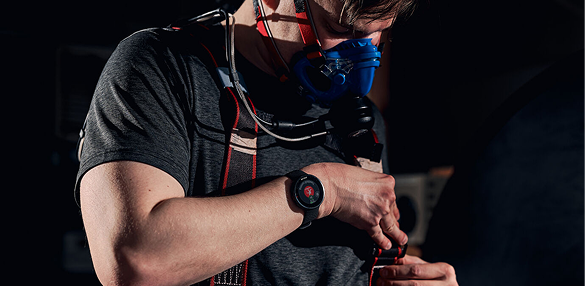
Zone 2 training is on everyone’s lips — and apparently a major trend. But what’s actually behind it, and why should you train in Zone 2? Should you only ever train in the blue zone, and does that make other zones wrong or dangerous? Zone 2 has also drawn real scientific scrutiny recently, and it’s worth knowing what that scrutiny does and doesn’t overturn. Today we give you the answers and a deep dive into Zone 2 training.
Key takeaways
- Zone 2 training is the aerobic base range — roughly 60–70% of your maximum heart rate, slow enough to hold a full conversation.
- Its clearest advantage is fatigue: Zone 2 costs you far less recovery than harder work, so you can accumulate far more training time in it.
- Recent research has challenged whether Zone 2 is uniquely good at building mitochondria and capillaries. It has not challenged whether easy, high-volume training works.
- Your Zone 2 is only as accurate as the numbers behind it. Age-based formulas and wrist-based heart rate readings can both put you in the wrong zone without you knowing.
What Is Zone 2 Training?
The term “Zone 2 training” refers to a training range within endurance training. We use a 5-zone model, the same one you’ll find on Polar sports watches. Each zone represents a different intensity level, and therefore different adaptations that take place in your body. Zone 2 is most commonly referred to as the aerobic base zone, or the aerobic training range.
Worth knowing up front: “Zone 2” has no single agreed definition. When 14 sport scientists and coaches were asked to define it for a 2025 paper in the International Journal of Sports Physiology and Performance, they settled on “just below the first lactate or ventilatory threshold” — but heart rate, perceived effort, and lactate methods don’t all land on the same intensity for the same person. That’s why one session can read as Zone 2 on one measure and Zone 3 on another.
How Do I Determine My Zone 2?
Heart rate is the most common reference point for Zone 2. The target is an average heart rate of 60–70% of maximum heart rate. There are also more precise and individualized ways to define this zone — for example using perceived effort, RPE (Rate of Perceived Exertion), a lactate test, or your FTHR (Functional Threshold Heart Rate).
The following parameters each describe Zone 2. Treat them as four windows onto the same range rather than four ways of saying the same thing — if two disagree for you, that’s normal:
- Perceived effort: The pace feels too slow. You’d rather go faster. It’s almost boring, requires little focus, and you can hold a conversation without difficulty.
- RPE: 3–5/10
- Lactate: <2.0–2.5 mmol
- FTHR: 69–83% of FTHR
All four depend on knowing your own numbers. If your zones came from the 220-minus-age formula — still the default starting point on most devices — your true maximum heart rate could sit 10 to 15 beats either side of that estimate. Move a maximum heart rate by 12 beats and the top of Zone 2 moves by roughly 8, which is enough to turn every “easy” run into a threshold-adjacent one with nothing on your watch looking wrong. If you’ve never measured your maximum heart rate or threshold directly, fix that before anything else in this article.
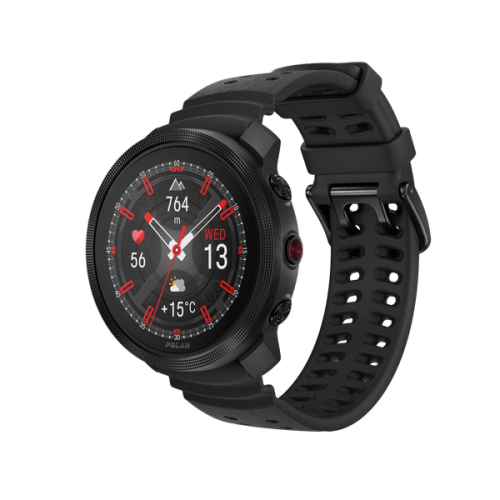
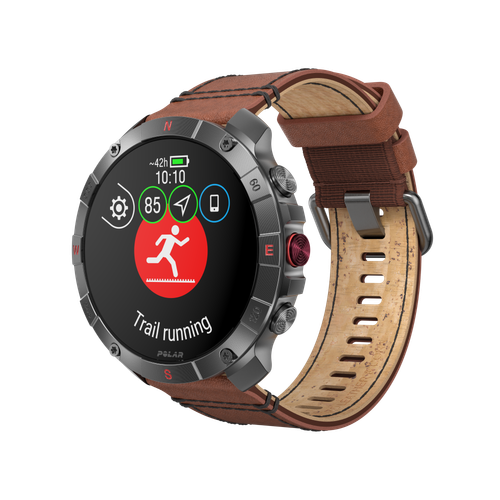
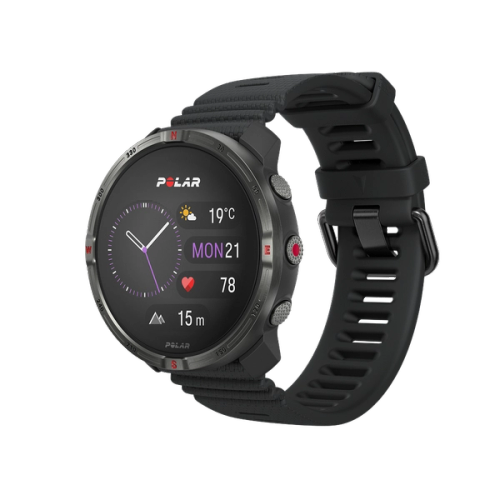
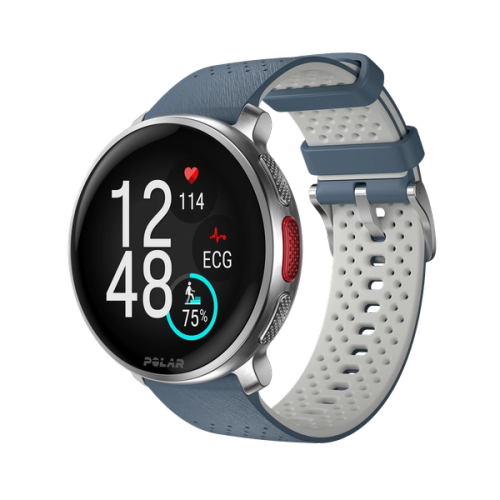
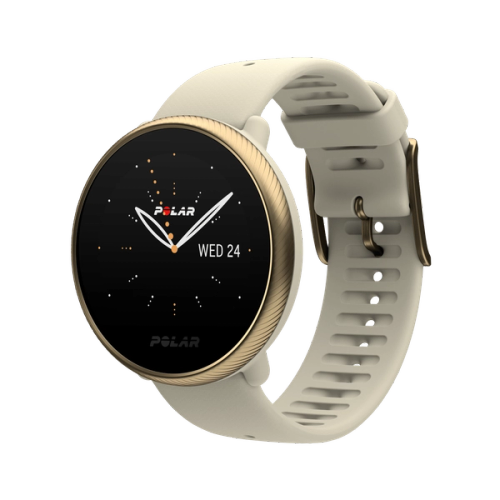
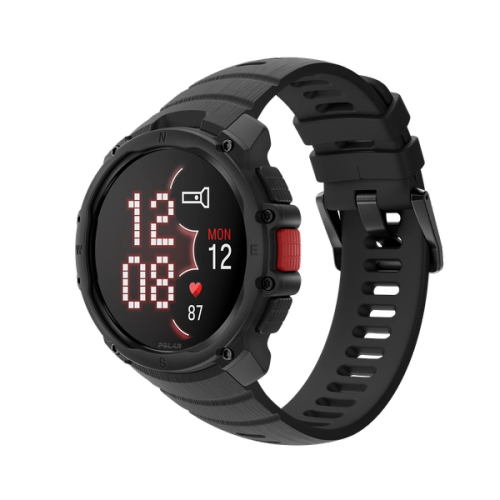
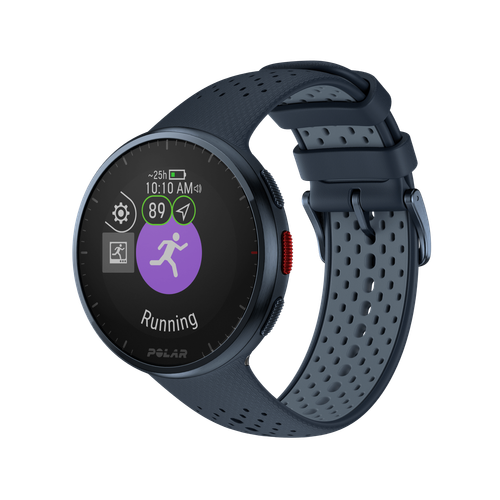
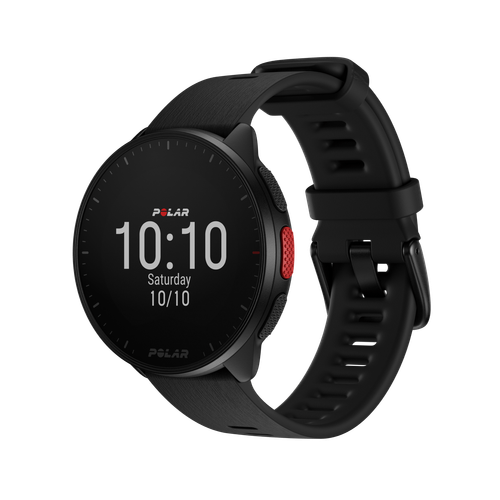
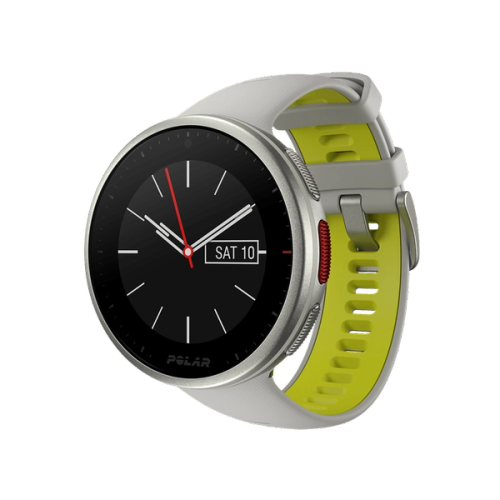
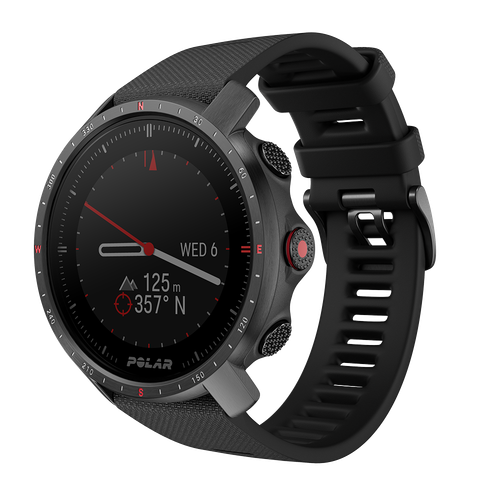
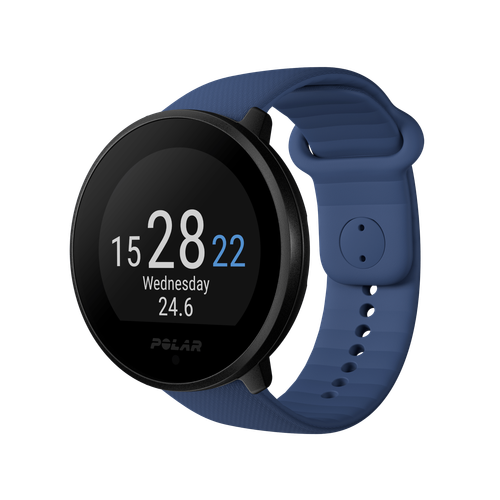
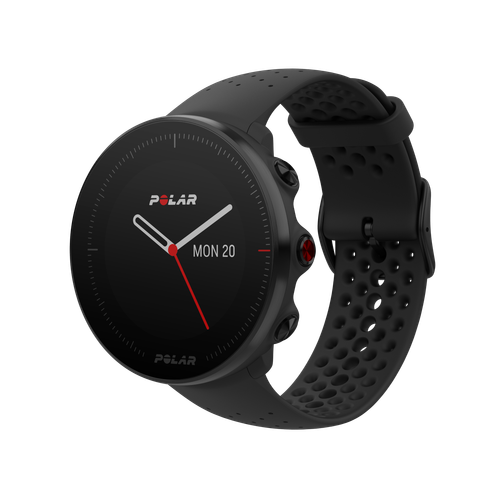
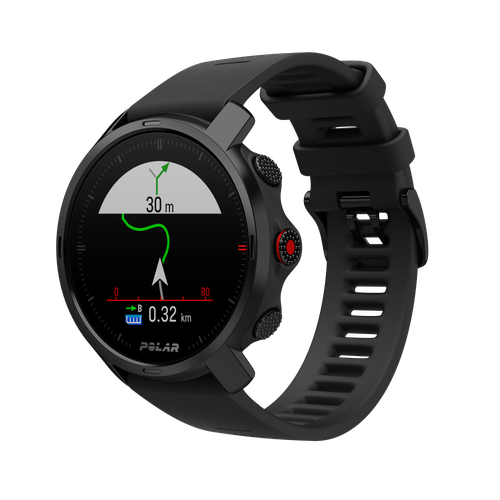
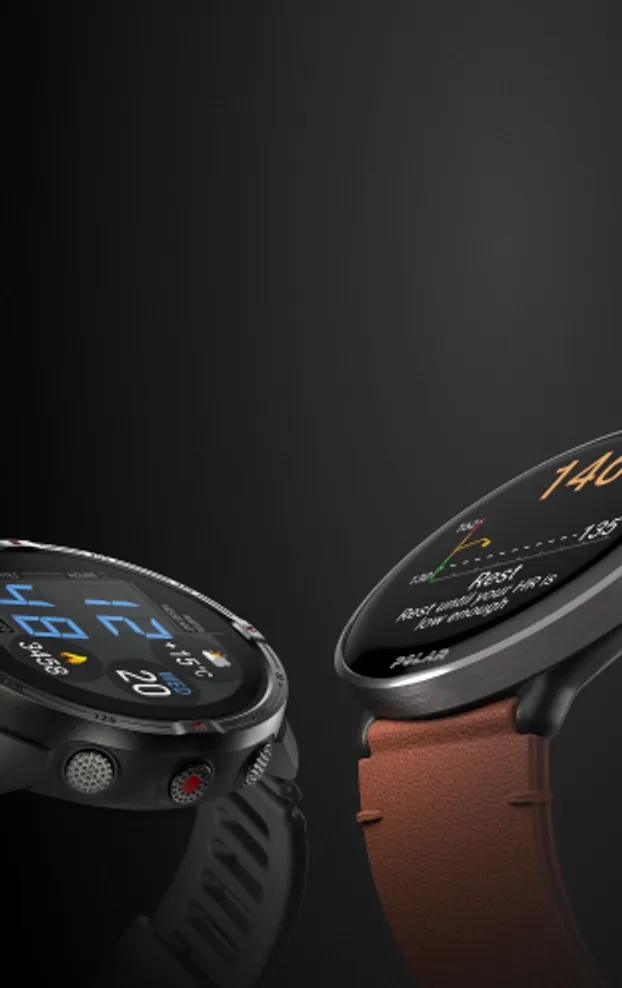
Did you know that many Polar sports watches let you test your training zones individually? The Walking Test and the Running Performance Test measure your own values instead of estimating from your age — for example on the Grit X2 Pro, the Vantage V3, or the Pacer Pro. Cyclists can use the Cycling Performance Test.
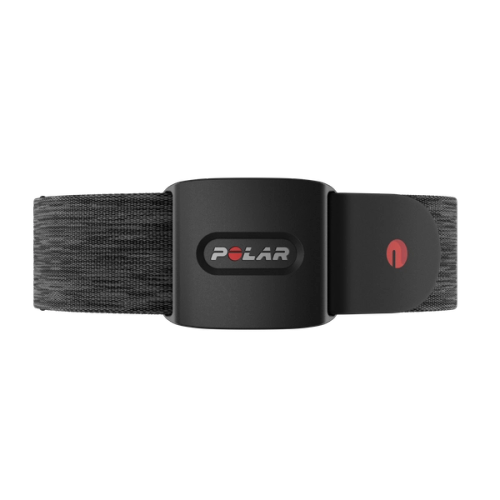
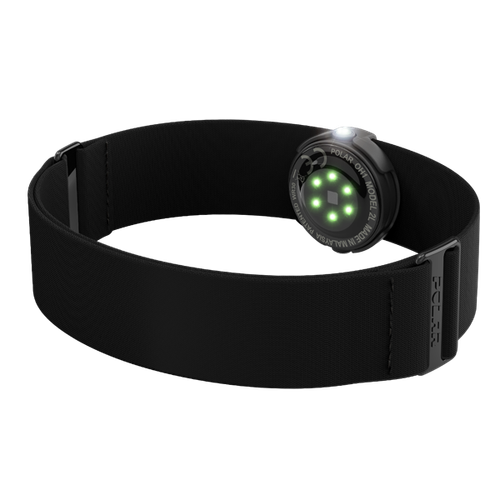
Your Zone 2 can be wrong even if your math is right. Getting the range right is one problem; measuring your heart rate accurately inside it is another. A 2025 validation study in JMIR Cardio compared optical sensors against an ECG chest strap and found the wrist-worn watch was least accurate at low heart rates — exactly where Zone 2 sits — while the upper-arm sensor stayed near chest-strap accuracy throughout (1.43 bpm average error, against 6.41 bpm at the wrist). For easy sessions where a few beats decide your zone, a chest strap like the H10 or an upper-arm sensor like Verity Sense is the more reliable instrument. See also our guides to how optical heart rate monitoring works and choosing between Verity Sense, H10, and H9.
undefined

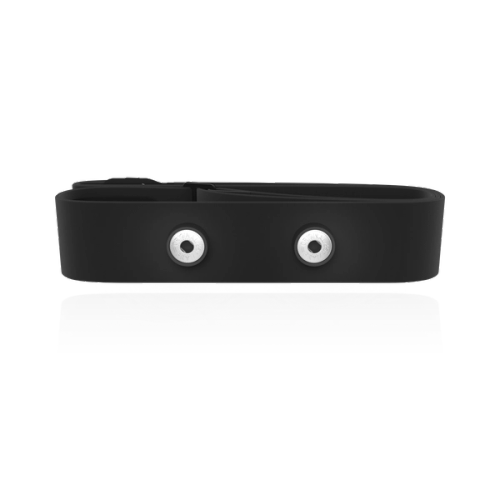
Polar H10
Heart Rate Sensor
When it comes to accuracy and connectivity, Polar H10 heart rate sensor is the go-to choice. Monitor your heart rate with maximum precision and connect your heart rate to a great variety of training devices with Bluetooth® and ANT+.
What Is the Goal of Zone 2 Training?
The goal of training in this zone is to improve your aerobic base. In the blue zone, a proportionally higher share of energy comes from fat — which is why it trains your fat metabolism. With this base training, you’re conditioning your muscles and your entire body to use oxygen more efficiently during exercise. You’re building the foundation of your endurance, so you can go faster and farther later on.
Training in Zone 2 involves less frequent and less intense muscle contractions. This sends different signals to your muscles than fast, intensive contractions — leading to different adaptations. When you train in the blue zone, the following happens in your body:
- You train Type I muscle fibers.
- Your body builds new blood capillaries — the smallest branches of your blood vessels.
- You gain both more and better mitochondria — the powerhouses of your cells.
All of this means you become more efficient at both transporting oxygen-rich blood and at absorbing and using that oxygen. That makes you a better endurance athlete.
Here we have to be straight with you, because this is the part of the Zone 2 story that has changed. Those last two adaptations are real — but the evidence that Zone 2 specifically is the best intensity for producing them is weaker than the popular version suggests. A 2025 narrative review in Sports Medicine titled “Much Ado About Zone 2” concluded that most available evidence argues against Zone 2 increasing mitochondrial capacity, that it offers no fat-oxidation benefit higher intensities can’t also deliver, and that it isn’t the optimal intensity for cardiorespiratory fitness either — your VO2max, one of the strongest predictors of long-term health.
Behind that sits a threshold problem. A 2018 meta-analysis found exercise below roughly 60% of maximum work rate isn’t expected to increase mitochondrial content at all, and a 2022 meta-analysis put the bar for building new capillaries near 50% of VO2max in previously sedentary people. Zone 2’s absolute intensity ranges from about 24% to 80% of VO2max depending on how fit you already are — so for less-trained athletes especially, Zone 2 can sit below where these adaptations reliably switch on. It isn’t one-sided: a 2025 meta-regression found endurance training produced mitochondrial gains only slightly smaller than interval training, though it defined endurance training broadly enough to include intensities above Zone 2.
Not that Zone 2 is pointless, then. The cellular-mechanism argument was never its strongest one, and the next section covers the argument almost nobody disputes. Note too what those comparison studies hold constant: training time. Zone 2’s advantage is that it doesn’t have to be matched — you can do far more of it. And the standard recommendation isn’t 100% Zone 2. It keeps real intensity in the plan, which is exactly what this research says matters.
Training with Minimal Fatigue — the Magic of Zone 2
Zone 2 training doesn’t only produce one-time adaptations — it also has another major advantage: it causes far less fatigue than higher training zones, which means you can spend a much greater amount of time in this range.
For beginners training just a few hours per week, this point isn’t yet as critical. But the more you increase your weekly mileage, the more important managing your fatigue becomes. Long-term, you won’t be able to sustain four, five, or even ten hours per week in zones 3, 4, and 5. That would burn you out quickly and dramatically increase your risk of running injuries and illness.
Your Cardio Load will also reflect this: sessions completed in Zone 2 will result in a lower training load than sessions in higher zones. So if you’re regularly dealing with an overreaching training status, Zone 2 training could be the solution. The recovery side shows it too — Nightly Recharge measures how well your autonomic nervous system settles overnight, and a week built mostly on Zone 2 typically leaves that picture in better shape than the same hours spent in Zone 3.
This is the part of the case recent research doesn’t touch. Whatever is happening in your mitochondria, easy training lets you train more, recover faster, stay healthier, and absorb the hard sessions that do the sharpening. That isn’t a mechanism argument. It’s arithmetic.
How Often Should You Train in Zone 2?
Zone 2 training forms the foundation of your endurance training — it should make up the majority of your sessions. We often talk about 80–95% Zone 2 compared to other zones. But these numbers shouldn’t be taken dogmatically. If you train endurance for just two hours per week, for example, your Zone 2 proportion might drop to 50–70% because you’re doing a proportionally higher share of HIIT.
Treat that ratio as a sensible default rather than a proven optimum. When researchers pooled individual data from 13 studies and 348 athletes in 2025, they found no significant difference in VO2max or time-trial improvement between polarized and pyramidal distributions. A 2026 randomized trial in recreational marathon runners — closer to most readers than the elite groups this idea came from — reached the same conclusion. The consistent finding isn’t that one split wins. It’s that most endurance athletes run their easy sessions too hard and their hard sessions too easy.
The exact volume of Zone 2 training depends on your goals, available time, and fitness level. As a starting point, the WHO physical activity recommendations offer a good baseline:
- At least 150 minutes per week of moderate-intensity physical activity
- or 75 minutes per week of high-intensity activity.
One caveat, following from that wide range: because Zone 2 can sit anywhere from about 24% to 80% of VO2max, a very unfit beginner’s genuine Zone 2 can be gentle enough that it doesn’t clear the minimum intensity guidelines classify as “moderate.” That’s not a reason to train harder than your zone. It’s a reason to treat 150 minutes as a floor you build from.
5 Tips for Zone 2 Training
Zone 2 training is hard — but not hard in the sense of being physically exhausting. It’s hard because it’s a skill you have to train, and because it takes a lot of mental discipline to actually run or ride that slowly. If you haven’t trained in Zone 2 before, it will feel difficult at first. That’s completely normal. Make peace with the idea that it may take months and years before you fully adapt.
Start Slowly
Runners in particular tend to set off too quickly and immediately overpace. Consciously hold back at the start and give your body a few minutes to settle into the effort. Sometimes heart rate takes a few minutes to rise — don’t let that unsettle you, and stick to your slow pace anyway.
Check Your Pace and Heart Rate Regularly
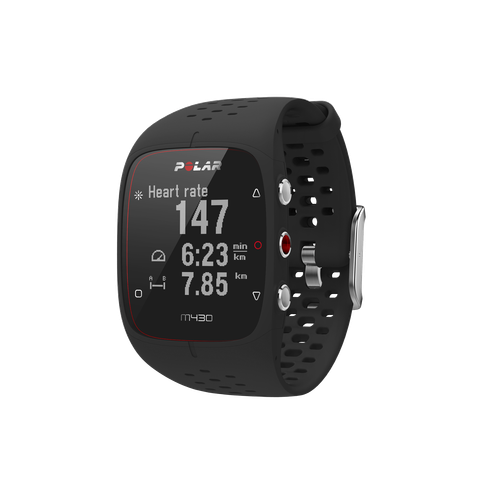
Our sports watches help you monitor your pace and heart rate in real time during your session so you can make adjustments on the fly. Regularly check whether you’re still in the correct heart rate and pace range, and reduce intensity if not.
Tip: You can plan your training sessions in Polar Flow and set specific target zones on many of our watches — making it even easier to stay in the right intensity range.
To control your training zone more precisely, you can also use ZoneLock:
- Hold the OK button during training to lock the zone you’re currently in. Your Grit X / Pacer / Vantage will notify you if you stray outside the target zone.
- Hold the OK button again to deactivate ZoneLock.
Trust Your Perceived Effort
If you’re truly honest with yourself, perceived effort can help you gauge training zones accurately. Zone 2 training feels “almost too easy to be real.” If you feel like you’re going too slowly, wish you could go faster, and are even a little bored — you’re probably in the right zone.
Expect that feeling to shift as you get fitter. Maximal fat oxidation sits at roughly 47–52% of VO2max in untrained people but 59–64% in trained ones, so your Zone 2 is a moving target, not a fixed pace.
The Talk Test
One of the best methods for determining training zones is the talk test. As intensity increases, so does your oxygen demand — making it progressively harder to hold a conversation. In Zone 2, you should be able to answer a phone call and speak to the person on the other end without them realizing you’re exercising. If you can’t form full sentences or sing a short phrase, you’re going too fast.
Alternate Running and Walking
Although experienced runners often resist this, walk intervals are not just for beginners — they’re a great way to improve Zone 2 training for anyone. If you can’t keep your heart rate low while running, it doesn’t mean you’re a bad runner. It simply means you probably haven’t trained this specifically enough yet.
Try to find a pace and duration you can run at while keeping your heart rate low — for example 2–5 minutes. Then take a short walking break of 1–3 minutes. Over time, gradually increase the running intervals and reduce the walking breaks. The goal isn’t to spike your heart rate during the running intervals and then stop — the goal is to keep your heart rate low, and to walk when you feel you can no longer maintain that low range.
Is Zone 2 Just Running as Slow as Possible?
No — and this is one of the most common ways athletes get Zone 2 wrong after being told to slow down. Zone 2 is a bounded range with a floor as well as a ceiling. Going slower than the bottom of it doesn’t make the training more effective; it moves you into Zone 1, which is recovery intensity, not base-building. The instruction was never “go as slowly as you can.” It was “stay inside a specific range that’s probably slower than you expect.”
Here’s what that looks like with real numbers. Take a recreational runner in their mid-forties with a measured maximum heart rate of 178 bpm. Their Zone 2 is 60–70% of that: 107–125 bpm.
| Effort | Heart rate | Zone | Verdict |
|---|
| Old “easy” pace, 5:30/km | ~140 bpm | Zone 3 | Too fast. Above the 125 ceiling — fatiguing without being genuinely hard. The mistake most runners make. |
|---|
| Steady jog, 6:30/km | ~120 bpm | Zone 2 | Correct. Inside the range, conversational, sustainable for hours. |
|---|
| Deliberate slow walk | ~95 bpm | Zone 1 | Too slow. Below the 107 floor — recovery work, not aerobic base training. |
|---|
The instinct after learning about Zone 2 is to fix the first row. The risk is overcorrecting into the third. If you’re walking when you could comfortably jog and still stay under 125 bpm, you’ve swapped one error for another.
The tools for finding the middle row are the ones above: the talk test and honest perceived effort. Feeling like you’re going almost too slowly is a good sign; feeling like you’re barely moving means you’ve gone past the zone rather than into it. And if a heart rate that seems impossible to keep low is the real problem, that’s usually a zone that was never set correctly in the first place.
Summary — Zone 2 Training
Training in Zone 2 is an excellent way to improve your endurance and build the foundation of your fitness. The biggest advantage — and the one the science is clearest about — is that you can spend a large amount of training time in this zone without excessive fatigue, protecting you from burnout and overload. That’s what makes the volume possible, and the volume is what makes you an endurance athlete.
The precise cellular story is still being argued over. Whether Zone 2 is the optimal intensity for building mitochondria and capillaries is genuinely contested, and current evidence leans against the strongest versions of that claim. What isn’t contested is the training logic: mostly easy, some hard, sustained over years. Zone 2 forms the base and should make up the majority of your endurance training. But that doesn’t mean strength training or targeted intensity spikes in zones 4 and 5 are unimportant or dangerous — if anything, the research above is a reminder that harder efforts earn their place in the plan.
When you start out, it’s completely normal to find training in this heart rate range difficult. The following will help:
- Monitoring your heart rate and pace with a Polar sports watch.
- Starting your session slowly.
- Trusting your perceived effort.
- Alternating running and walking.
- Using the talk test to gauge your intensity.
It can take months and years before you see real improvements in this training zone — so be patient, and don’t give up too quickly when you’re starting out. Once your aerobic base is genuinely built, structures like lactate threshold training become the natural next step.
FAQ on Zone 2 Training
Is Zone 2 training a myth?
No. A 2025 review in Sports Medicine challenged the claim that Zone 2 is uniquely effective for building mitochondria, fat-oxidation capacity, and cardiorespiratory fitness, and that challenge is worth taking seriously. But it didn’t conclude easy training is useless, and it didn’t argue against keeping most of your training easy — it argued against prioritizing Zone 2 instead of higher intensity. Zone 2’s strongest justification has always been that it lets you accumulate a lot of training at a low fatigue cost. That remains unchallenged.
Is Zone 2 the same for beginners and experienced athletes?
Not in absolute terms. Zone 2 is roughly 60–70% of maximum heart rate for both, but the pace and oxygen cost behind that percentage differ enormously. Measured as a share of VO2max, Zone 2 can range from about 24% in an unfit person to 80% in a trained endurance athlete. The intensity at which fat oxidation peaks also rises with training, from 47–52% of VO2max untrained to 59–64% trained. Expect your Zone 2 pace to get faster as you get fitter, even though the heart rate range stays the same.
Can my heart rate monitor be wrong even if my zones are set correctly?
Yes, and it matters more in Zone 2 than anywhere else. A 2025 validation study in JMIR Cardio found wrist-worn optical sensors were least accurate at low heart rates and became more accurate as intensity rose. Because Zone 2 can be as narrow as 15–20 beats, an error of several beats is enough to misplace you. An upper-arm sensor such as Verity Sense or a chest strap such as the H10 measures far closer to ECG accuracy across all intensities.
Can I do Zone 2 training on a bike as well as running?
Yes. Zone 2 is defined by physiological intensity, not by sport, so it applies to cycling, swimming, rowing, and skiing just as it does to running. Cyclists often find it easier to hold, since there’s no impact and terrain can be managed with gearing. If you train by power, the Cycling Performance Test establishes your functional threshold so your zones come from your own numbers rather than an age estimate.
Enjoying this article? Subscribe to the Polar Newsletter and get notified when new articles are out.
Subscribe
References
Achten, J., & Jeukendrup, A. E. (2004). Optimizing fat oxidation through exercise and diet. Sports Medicine, 34(1), 5–25. https://pubmed.ncbi.nlm.nih.gov/15212756/
Casado, A., et al. (2025). Which training intensity distribution intervention will produce the greatest improvements in maximal oxygen uptake and time-trial performance in endurance athletes? A systematic review and network meta-analysis of individual participant data. Sports Medicine. https://doi.org/10.1007/s40279-024-02149-3
Esteve-Lanao, J., Casado, A., Arévalo-Chico, H., Sellés-Pérez, S., & Cejuela, R. (2026). Polarized vs pyramidal training intensity distribution in recreational marathoners: A randomized controlled study. International Journal of Sports Science & Coaching. https://doi.org/10.1177/17479541261468168
Granata, C., Jamnick, N. A., & Bishop, D. J. (2018). Training-induced changes in mitochondrial content and respiratory function in human skeletal muscle. Sports Medicine, 48, 1809–1828. https://doi.org/10.1007/s40279-018-0936-y
Liu, Y., Christensen, P. M., Hellsten, Y., & Gliemann, L. (2022). Effects of exercise training intensity and duration on skeletal muscle capillarization in healthy subjects: A meta-analysis. Medicine & Science in Sports & Exercise, 54(10), 1714–1728. https://doi.org/10.1249/MSS.0000000000002955
Mølmen, K. S., Almquist, N. W., & Skattebo, Ø. (2025). Effects of exercise training on mitochondrial and capillary growth in human skeletal muscle: A systematic review and meta-regression. Sports Medicine, 55, 115–144. https://doi.org/10.1007/s40279-024-02120-2
Sitko, S., Artetxe, X., et al. (2025). What is “zone 2 training”? Experts’ viewpoint on definition, training methods, and expected adaptations. International Journal of Sports Physiology and Performance, 20(11), 1614–1620. https://journals.humankinetics.com/view/journals/ijspp/20/11/article-p1614.xml
Storoschuk, K. L., Moran-MacDonald, A., Gibala, M. J., & Gurd, B. J. (2025). Much ado about zone 2: A narrative review assessing the efficacy of zone 2 training for improving mitochondrial capacity and cardiorespiratory fitness in the general population. Sports Medicine, 55(7), 1611–1624. https://doi.org/10.1007/s40279-025-02261-y
Wrist-worn and arm-worn wearables for monitoring heart rate during sedentary and light-to-vigorous physical activities: Device validation study. (2025). JMIR Cardio, 9, e67110. https://cardio.jmir.org/2025/1/e67110/
World Health Organization. (2020). WHO guidelines on physical activity and sedentary behaviour. https://www.who.int/europe/publications/i/item/9789240014886



 POLAR Street X
New
 Polar Vantage M3
 Polar Grit X2 Pro Titan
 Polar Grit X2 Pro
 Polar Grit X2
 Polar Vantage V3
 Polar Ignite 3
 Polar Pacer Pro
 Polar Pacer
 Polar Unite
Grit X Series
Vantage Series
Pacer Series
Ignite Series