As race distances scale into the extreme, the biological gap between male and female runners compresses dramatically—driven by sex-specific advantages in fat metabolism, muscle fatigue resistance, and pacing discipline. But what actually happens inside the female body over 50, 100, or 200 miles to level the playing field so completely?
In 2024, Jasmin Paris became the first woman—and one of just a handful of runners in history—to finish the brutal Barkley Marathons, crossing the line with a mere 99 seconds to spare in the race’s 39-year history. Six years prior, she won the 268-mile Spine Race outright, beating the nearest male competitor by a staggering 15 hours—all while expressing breast milk at aid stations.
Mainstream media quickly seized on these victories, sparking provocative headlines asking if women are fundamentally engineered to outrun men. The reality, however, requires scientific nuance. Bottom line up front: at the absolute elite peak, men still retain the speed edge. Yet the rate at which the sex-based performance gap shrinks with increasing mileage is a genuine, documented physiological phenomenon.
As researchers Fox-Harding & Kendall noted in their widely shared 2024 analysis, the core narrative of modern endurance science is simple: the longer the race, the narrower the margins. While a clear gap exists at the marathon distance, it nearly evaporates by the time athletes cross the 100-mile threshold. These historic performances are not freak anomalies; they are vanguard examples of a biological trend. To understand why women excel when the coordinates get extreme, we must look beyond the headlines and dive into the unique physiological mechanics of ultramarathons.
The Closing Performance Gap in Women’s Ultra Running
The data on human endurance reveals a striking pattern: as event duration expands, the gap between male and female performance contracts. Across a standard 26.2-mile marathon, elite male runners maintain roughly a 10% performance advantage over elite female runners. Shift the finish line to a 50K or 100K ultramarathon, however, and that differential compresses to approximately 4–8%. By the time athletes reach the 100-mile mark, the gap slims to a razor-thin ~0.25%.
This trajectory is not an artifact of selective race reporting. The scientific foundation for this compression was codified in a systematic review and meta-analysis led by Sitko et al. (2025), published in the International Journal of Sports Science & Coaching. Evaluating race outcomes across multi-decade datasets, Sitko and colleagues confirmed that the rate of performance convergence accelerates specifically beyond multi-hour thresholds, establishing the closing gap as a high-confidence biological reality rather than a statistical anomaly.
Skeptics often point to participation numbers to dismiss this trend, arguing that smaller, self-selected female field sizes skew statistical averages. However, recent research explicitly refutes this counterargument. A 2024 study by Tiller & Illidi published in Applied Physiology, Nutrition, and Metabolism controlled for field density by examining races with comparable male and female participation rates. Their analysis demonstrated that even when sample sizes are equalized, female athletes consistently close the margin as distance increases, proving that the phenomenon is driven by physiology rather than demographic dilution.
Furthermore, this performance compression possesses a compelling age dimension. Research by Waldvogel et al. (2019) in the International Journal of Environmental Research and Public Health demonstrated that the sex gap narrows even further in older age brackets. Across multi-day and extreme ultra-marathon events, master-category female runners compress the margin to their male peers at higher rates than younger cohorts, suggesting that fatigue resistance and cellular efficiency may actually strengthen relative to age.
Are women better at ultra running than men?
While popular analyses of historical race pools show women’s average finishing paces edging ahead in extreme events exceeding 195 miles, this crossover reflects broader field demographics rather than head-to-head dominance at the top tier. At the absolute elite level, male runners still hold faster course records across standard ultra distances. The true scientific story isn’t that women routinely beat men, but that female biology possesses unique mechanisms that allow its relative performance margin to narrow so dramatically over extreme distances.
Female Fat Metabolism: The Efficiency Advantage at Distance
To understand why the performance gap compresses over multi-hour events, you have to look under the hood at substrate utilization—how the human body chooses its fuel. During high-intensity, short-duration efforts, the body relies heavily on rapid, carbohydrate-derived glucose to meet immediate energy demands. However, ultra-endurance events are fundamentally different. They are contested predominantly at lower intensities—typically between 60% and 75% of VO2max. This specific intensity window represents a crucial biological threshold: the precise zone where metabolic pathways diverge most significantly between sexes.
At this aerobic intensity, the body transitions from burning fast-acting carbohydrates to tapping into long-term lipid (fat) stores. Research synthesized by Arnesen & Norder (2023) and supported by Besson et al. (2022) demonstrates that female physiology is uniquely primed for this shift. The primary biochemical driver behind this efficiency is estrogen. Estrogen directly upregulates the enzymatic machinery responsible for fatty acid transport and oxidation within cellular mitochondria. Concurrently, it suppresses hepatic and muscular glycogen breakdown during sub-threshold exercise, effectively turning fat into the primary engine for endurance training while keeping carbohydrate reserves safely banked.
This hormonal signaling creates a vast quantitative advantage. In their 2024 analysis in The Conversation, researchers Fox-Harding & Kendall highlighted that during sustained, moderate-intensity exercise, women can oxidize up to 56% more fat than men at equivalent relative effort levels. Over the course of a 50-mile or 100-mile effort, this 56% advantage yields two major practical benefits on the trail:
- Glycogen Sparing: By burning a higher percentage of fat per hour, female athletes deplete their limited intramuscular glycogen stores at a significantly slower rate. This drastically reduces the likelihood of “hitting the wall”—the complete metabolic collapse that occurs when carbohydrate stores are entirely exhausted.
- Gastrointestinal Preservation: Because female athletes rely less heavily on rapid carbohydrate oxidation, their hourly requirement for exogenous carbohydrates (gels, chews, and sports drinks) is lower. High hourly carbohydrate intake under cardiovascular stress frequently overwhelms the gut, leading to severe nausea and distress. By requiring fewer calories per hour to sustain the same relative effort, female runners minimize GI distress—one of the leading causes of race dropouts (DNFs) in ultra events.
Why do women burn fat more efficiently than men during exercise?
Women burn fat more efficiently than men during endurance exercise due to higher circulating estrogen levels, which act as a powerful metabolic regulator. Estrogen upregulates key enzymes involved in lipolysis and fatty acid transport, allowing female muscle tissue to convert stored body fat into usable ATP energy at a significantly higher rate during moderate-intensity efforts (60–75% VO2max).
This estrogen-driven mechanism preserves precious muscle and liver glycogen stores while suppressing reliance on blood glucose. As a result, women can oxidize up to 56% more fat per hour than men during sustained sub-threshold exercise. This unique metabolic adaptation provides a physiological advantage in ultra-distance sports, where sustained fat oxidation reduces reliance on constant feeding and delays metabolic fatigue over multi-hour efforts.

Muscle Fiber Composition and Neuromuscular Fatigue Resistance
Beyond metabolic fueling, key structural differences in skeletal muscle afford female athletes a distinct advantage in endurance: superior resistance to neuromuscular fatigue.
Human muscle tissue is comprised of two main fiber types. Type II (fast-twitch) fibers are glycolytic and explosive, built for short, powerful movements, but they fatigue rapidly and require significant recovery. Conversely, Type I (slow-twitch) fibers are highly oxidative and dense with mitochondria. Designed specifically for sustained, low-intensity work, Type I fibers are remarkably fatigue-resistant. On average, female skeletal muscle features a higher relative proportion and larger cross-sectional area of Type I slow-twitch fibers in major postural and locomotory muscles compared to men.
Building on this anatomical foundation, landmark work by Hunter (2014) detailed the precise mechanisms behind sex differences in human fatigability. Hunter demonstrated that during prolonged, submaximal contractions, women exhibit significantly greater resistance to muscle fatigue than men. This is driven not only by fiber type composition, but also by superior muscle perfusion dynamics. During sustained muscular contractions, female muscle tissue maintains more consistent capillary blood flow. This continuous perfusion ensures a steady supply of oxygen to working tissues while efficiently flushing out metabolic waste products before they can build up and impair muscle function.
When applied to multi-hour trail running, these mechanical advantages translate directly into metabolic cleanliness. As synthesized by Besson et al. (2022), because female runners rely more heavily on oxidative Type I fibers and maintain better localized muscle perfusion, they accumulate fewer anaerobic by-products—specifically hydrogen ions and lactate—at equivalent relative effort levels.
In long-distance events, the accumulation of hydrogen ions lowers intramuscular pH, causing the painful burning sensation and acute force loss associated with pushing past your lactate threshold. Because female muscle tissue produces less of these metabolic by-products per hour and clears them more effectively, the body stays “cleaner” metabolically. This delayed onset of peripheral muscle fatigue allows female runners to preserve structural movement efficiency and maintain a more consistent stride across 50, 100, or 200 miles of terrain.
Pacing Behaviors: Where Psychology and Physiology Overlap
While cellular fueling and muscle architecture build the baseline for endurance, race execution ultimately dictates who reaches the finish line. Here, behavioral science intersects with physical physiology—specifically in how athletes manage their effort over time.
Statistical evidence highlights a clear divergence in how men and women pace long-distance events. In a landmark study analyzing marathon pacing profiles, Deaner et al. (2015) established that male runners are significantly more prone to aggressive early pacing followed by a pronounced drop-off in speed during the second half of the race. Women, by contrast, are far more likely to maintain an even, disciplined pace throughout the event.
In a standard road marathon, a surge in early pace costs a runner minutes. In a 100-mile or 24-hour ultramarathon, that same miscalculation is catastrophic. Running just 5% faster than target threshold in the first quarter of an ultra creates an exponential metabolic deficit—surpassing glycogen depletion rates, spiking core body temperature, and accelerating muscle damage. Because female runners statistically avoid this early overexertion, their disciplined pacing strategy compounds in value as the hours roll on, allowing them to consistently pass fading competitors in the second half of races.
Do women pace better than men in ultra marathons?
Women tend to pace better than men in ultra marathons due to a combination of accurate perceived exertion calibration and behavioral decision-making. Psychological and physiological pacing studies show that female athletes demonstrate greater precision when matching their early subjective effort (RPE) to their actual aerobic capacity, reducing the risk of premature metabolic burnout.
Additionally, male athletes exhibit a higher statistical tendency toward overconfidence in race-day time projections, frequently leading to overly aggressive starting speeds. Female runners more consistently adopt even-pacing or negative-splitting strategies. While individual variance is high and this represents a population tendency rather than an absolute rule, this conservative pacing behavior directly aligns with the physiological demands of multi-hour, ultra-distance racing.
What the Science Doesn’t Yet Settle
Maintaining scientific objectivity means acknowledging where female physiological advantages hit biological limits. While the narrowing gap at extreme distances is a proven phenomenon, oversimplified headlines claiming that “women are faster than men” misrepresent the broader scientific consensus.
Immutable cardiovascular differences remain a primary governing factor. As detailed by Besson et al. (2022), men retain higher average relative VO2max values across all performance levels. This advantage is rooted in cardiac anatomy and hematology: men typically possess larger left ventricles and higher concentrations of hemoglobin and hematocrit, giving them greater oxygen-carrying capacity per unit of blood. This higher oxygen delivery ceiling, combined with a higher average lean muscle mass, yields superior absolute power output and speed—factors that become especially pronounced on steep, technical climbs where power-to-weight ratios dominate and cardiorespiratory stress triggers cardiac drift during long efforts.
Furthermore, aggregate meta-data reinforces this baseline reality. In their systematic review, Sitko et al. (2025) noted an overall ~22% performance gap when evaluating total aggregate datasets across diverse endurance categories. While that gap compresses dramatically in specific multi-day, flat, or 100-mile scenarios, the absolute performance ceiling at the elite tier across standard ultra distances still favors male athletes. Understanding female performance isn’t about claiming universal dominance; it’s about appreciating the precise, distance-dependent mechanisms that allow women to compress that gap so significantly.
Biological Insights: How Female Athletes Can Adapt Their Training
Translating this physiological research into actionable performance gains requires aligning your daily workouts with your unique endurance profile. For competitive amateur female runners, three core training directives leverage these biological strengths:
- Sharpen Your Metabolic Edge: While female physiology naturally favors fat oxidation, this adaptation is highly trainable. Incorporating carefully structured long runs in a low-glycogen or fasted state forces your metabolic machinery to maximize fatty acid transport, sharpening your baseline fuel efficiency for race day.
- Trust Your Internal Governor: The data from Deaner et al. (2015) validates the power of conservative early execution. Ignore aggressive surges by competitors early in a race—the mathematical and metabolic math is on your side. Trusting your perceived exertion and pacing instincts in the first half preserves the glycogen needed to conquer the second.
- Prioritize Heart Rate Over Speed: Because pace fluctuates based on elevation, heat, and fatigue, it is a poor indicator of true physiological strain. Focusing on metabolic output through low heart rate training ensures you remain within optimal heart rate zones to maximize fat oxidation without crossing into rapid glycogen depletion.
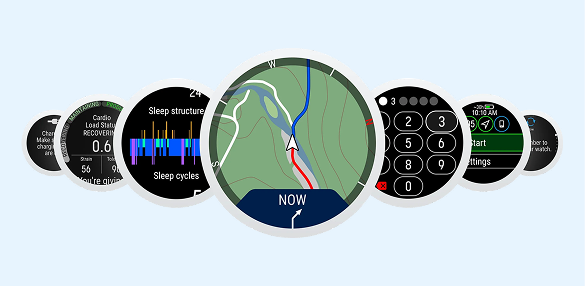
Using tools like the Polar Vantage V3 to track your long-term training load and physiological metrics across a macrocycle makes these subtle fat-adaptation and recovery patterns visible over time. Combining HR-based feedback with a deeper understanding of how your menstrual cycle and training interact allows you to build an endurance foundation explicitly optimized for your biology.
undefined

Polar Vantage V3
Premium Multisport Watch
An ensemble of biosensing instruments, AMOLED display, dual-frequency GPS, maps, and the most comprehensive suite of training and recovery tools on the market. The stage is set, and the Polar Vantage V3 smart sports watch is ready to put in the performance of a lifetime.
Designed to Endure: Trust the Long Game
The story of women in ultra-endurance isn’t about establishing an absolute athletic hierarchy or settling internet debates—it’s about a fascinating physiological convergence. As the miles stack up, the absolute power gaps that dictate shorter events dissolve, giving way to metabolic and mechanical efficiency. Superior fat oxidation, exceptional neuromuscular fatigue resistance, and disciplined pacing execution are not edge cases; they are tangible biological assets that amplify with every passing hour on the trail. For the female athlete, biology isn’t a hurdle to overcome—at distance, it is an explicit design feature engineered for the long run.
Enjoying this article? Subscribe to the Polar Newsletter and get notified when new articles are out.
Subscribe



 POLAR Street X
New
POLAR Street X
New
 Polar Vantage M3
 Polar Grit X2 Pro Titan
 Polar Grit X2 Pro
 Polar Grit X2
 Polar Vantage V3
 Polar Ignite 3
 Polar Pacer Pro
 Polar Pacer
 Polar Unite
Grit X Series
Vantage Series
Pacer Series
Ignite Series
Polar Unite
Grit X Series
Vantage Series
Pacer Series
Ignite Series