You just finished the final set of box jumps. Your legs are buzzing, your lungs are gasping for air, and you’re wiped out. You check your fitness watch expecting to see a massive cardiovascular effort—a nice, steady climb into zone 5. Instead, your screen shows an unexpected pattern: sharp, sudden spikes followed by steep drops, resulting in a surprisingly low average heart rate.
Don’t worry, your sensor isn’t broken. That erratic reading is actually the signature hallmark of plyometric training. Because explosive jump training relies on rapid, maximal force rather than steady aerobic output, your cardiovascular system reacts in short, intense bursts. Understanding this unique response is the key to tracking your effort accurately and structuring your workouts for maximum power.
Quick Take
- Spiky Heart Rate Graphs Are Normal: Plyometric heart rate spikes rapidly during explosive work bouts but drops fast during rest, making session-average heart rate a misleading indicator of true effort.
- Upper Zone Spikes: Expect work bouts to push your heart rate into zones 4 and 5 (85–100% HRmax), even though your total time spent in these high zones remains brief.
- Program by Ground Contacts: Structure sessions using total ground contacts (80–100 for beginners; 150–200 for advanced) with full recovery between sets (roughly 5–10 times the work duration), rather than relying on standard cardio metrics.
Why Does Heart Rate Spike During Plyometric Training?
To make sense of that chaotic graph, it helps to look under the hood at how your muscles actually produce explosive power. When you land from a jump and immediately spring back into the air, your muscles and tendons act like loaded rubber bands. This lightning-fast transition from lengthening to shortening is known as the stretch-shortening cycle (SSC), and it’s the exact reason why plyometric training is effective for building speed, reactivity, and power.
Naturally, executing these ultra-fast contractions requires an instant surge of energy. But unlike a tempo run—where your body relies on oxygen to fuel continuous movement—plyometrics relies almost entirely on the phosphocreatine (ATP-PC) energy system. As exercise physiologist Paul Gastin detailed in a classic 2001 review on energy system interactions, this anaerobic-alactic pathway delivers maximal energy instantly without requiring immediate oxygen delivery. Your body burns through stored energy pockets in seconds, well before your cardiovascular system has time to ramp up aerobic production. So, if your aerobic system isn’t driving the movement, why does your heart rate shoot through the roof?
The answer lies in your nervous system. The moment you initiate a maximal-effort jump, your brain triggers a powerful sympathetic response—a sudden fight-or-flight stress signal. Your heart rate isn’t rising to deliver oxygen to working muscles in real time; it’s spiking in direct reaction to extreme neuromuscular strain, rapid force development, and autonomic stress.
This creates a stark contrast between jump training and traditional endurance work. During a steady-state run, your heart rate climbs predictably and plateaus to match ongoing oxygen demand. During explosive jump work, sudden plyometrics heart rate spikes occur per rep, followed by swift drops during rest intervals. You aren’t training your heart to sustain a steady workload—you’re training your nervous system to fire maximally, leaving your heart rate to track the resulting neural stress across your anaerobic training zones.
What’s a Typical Heart Rate During Jump Training?
Now that you know your nervous system is pulling the strings, what numbers should you actually expect to see on your screen during a workout?
It might surprise you, but during an active set of explosive jumps, your peak effort will routinely push you right into a high plyometric training heart rate zone—typically zone 4 or zone 5, representing 85% to 100% of your maximum heart rate. Because exercise scientists rarely attach a single universal percentage to jump protocols, it’s best to view this zone 4–5 target as a reasoned physiological estimate. Research by Arazi and colleagues (2013, 2014) examining cardiovascular stress after depth-jump workouts confirms that intense rep volumes spark substantial, immediate heart rate elevations that linger long after the workout ends.
Here is where things get interesting—and where most athletes get tripped up by their workout summary screen.
Even though every single set sends your heart racing toward its ceiling, your average heart rate during plyometric training will often look surprisingly low—frequently hovering down in zone 2 or zone 3. This isn’t a glitch, nor does it mean you slacked off. Plyometric workouts require long, generous rest periods between sets so your nervous system can fully recover. When you average a few seconds of maximal zone 5 effort alongside two minutes of complete standing rest, the math pulls your overall session average way down.
Judging a plyometric session by its average heart rate is like judging a drag race by average speed, including time parked in the pits. If you want to accurately track session fatigue rather than relying on session-average heart rate, looking at metrics like Training Load Pro™ gives a much clearer picture of overall stress.
You’ll also notice your heart rate and breathing stay unexpectedly high even while standing still between sets. This residual burn is driven by Excess Post-Exercise Oxygen Consumption (EPOC). During your rest periods, your body works double-time behind the scenes to clear metabolic byproducts and replenish depleted phosphocreatine stores. That elevated rest-period heart rate is simply your system refilling its battery for the next set, ensuring you can hit your target heart rate zones with maximal power on every rep.
It’s worth noting that much of the direct physiological research in this area—including the studies by Arazi, Guan, and Li—was conducted on young, trained male athletic cohorts. While the underlying energy mechanisms apply universally, recreational or masters athletes may experience slightly different recovery rates and cardiovascular strain.
How Many Reps, Sets, and Rest Intervals Do You Need?
Once you realize average heart rate won’t tell you if your workout was successful, you need a far better metric to structure your training. That’s where counting total ‘ground contacts’—every time your foot hits the floor during a jump, bound, or hop—comes in. Standard strength-and-conditioning guidelines recommend that beginners start with 80 to 100 ground contacts per session, while advanced athletes can scale up toward 150 to 200.
In practice, that number builds up quickly across just a handful of exercises. A beginner session might look like three movements—say, squat jumps, lateral bounds, and ankle hops—done for 3 sets of 8–10 reps each. That’s roughly 72 to 90 ground contacts once you add it all up, landing squarely in the beginner range. An advanced athlete might add a fourth, higher-intensity movement, such as depth jumps, and push each exercise to 4 to 5 sets, bringing the session total toward 150 to 180 contacts. The exercises and rep scheme are just the delivery mechanism; it’s the cumulative contact count that reflects how much mechanical load you’ve put on your tendons and nervous system that day, which is why two athletes doing ‘3 sets of jumps’ can be taking on very different amounts of actual stress.
A 2023 meta-analysis led by Chen and colleagues underscores an essential truth here: piling on extra volume doesn’t automatically yield bigger performance gains. Because jump training places immense mechanical stress on your tendons, joints, and nervous system, capping your total contact count protects against technique breakdown and overuse injuries. Place plyometric sessions when your legs are fresh, ideally before heavy lifting or on dedicated power days.
It’s also worth noting that asking whether jump work replaces lifting misses the point—they build two different sides of athletic capacity, as explored in common myths around strength training for runners. Heavy lifting develops force, while jump work trains speed, making them ideal partners rather than competitors.
How much rest between reps?
For low-intensity exercises like light ankle hops, you can execute fluid reps back-to-back. But for high-intensity movements like depth jumps, treat each rep as its own event. Pause briefly between jumps to reset your posture and focus on maximum intent.
How much rest between sets?
How long you rest between sets depends directly on the intensity of the drill. For maximal-effort, high-impact movements like depth jumps, standard S&C practitioner guidance recommends a generous 2 to 4 minutes (or roughly 5 to 10 times your work duration) to fully clear nervous system fatigue and maintain maximum peak power.
However, shorter rest breaks can be surprisingly effective for lighter plyometric work. A 2021 study by Guan and colleagues examined basketball players performing loaded countermovement jumps at 30% 1RM and found that even 1 minute of inter-set rest was sufficient to preserve explosive power, EMG muscle activation, and tissue oxygenation compared to longer 3- or 5-minute windows. If you’re performing low-load or submaximal plyometrics, a shorter rest period won’t undermine your output; save the longer 2-to-4-minute recovery windows for your most demanding, high-intensity jump sets.
How Long Should a Plyometric Workout Last?
When you look at those long rest periods and strict contact limits, you might wonder how much actual time you need to spend on the gym floor. The simple answer? Not very long. A focused, effective session usually lasts just 15 to 30 minutes of actual work (excluding your dynamic warm-up).
Picture what that actually looks like on the clock. Say you’re working through 4 sets of depth jumps: each set might take you 15 to 20 seconds to perform, but the 2 to 4 minutes of rest you need afterward means a single set-and-recovery cycle eats up 3 to 4 minutes. Multiply that across a few exercises, and you land at a 20 to 25 minute session—even though your heart rate was only actually spiking into zone 4–5 for a combined total of maybe a minute or two of that time. That gap is the whole point: the clock keeps running during the rest periods when your heart rate is climbing back down, and your phosphocreatine stores are refilling, so a “short” session by the stopwatch is still doing real work by every other measure.
If you’re asking yourself how long should a plyometric session last, remember that quality always beats quantity. Unlike a long steady-state run where cardiovascular endurance determines your limit, jump training is capped by mechanical load and neuromuscular fatigue—not by how long your heart can sustain an elevated rate. The moment your technique slumps or your ground contact time drags, the power-building benefits evaporate, and your injury risk skyrockets. A crisp 20-minute session with high intent will always outperform an hour of tired, sluggish hopping, and pushing past the point of technique breakdown won’t buy you a bigger cardiovascular training effect—your heart rate will just keep spiking and dropping on the same sawtooth pattern while your form degrades underneath it.
This same ‘less is more’ rule applies to how often you train. A 2025 study by Li and colleagues comparing weekly frequencies in competitive athletes found that 2 sessions per week produced more consistent jump power improvements than 3 sessions over a short training block. Your tendons and connective tissues adapt far more slowly than your muscles, needing roughly 48 to 72 hours of dedicated recovery between workouts that target the same muscle groups—recovery your heart rate won’t show you, since it resets to baseline within minutes of your last rep even when your tendons are still rebuilding underneath.
So, when planning how long should a plyometric workout be across your week, aim for 2 to 3 short, sharp sessions, giving your body the space it needs to absorb the total training load and rebuild stronger.
Getting an Accurate Heart Rate Reading During Jump Training
Even with the best training plan in hand, you might still wonder why your wrist device struggles to capture those sharp effort spikes. High-impact movements like box jumps, bounds, and depth jumps create a tough environment for optical wrist sensors. Rapid wrist movement and micro-separations between the sensor and your skin introduce ‘motion artifacts,’ which often cause your watch to lag behind or miss short, intense heart rate spikes entirely.
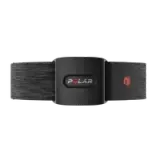
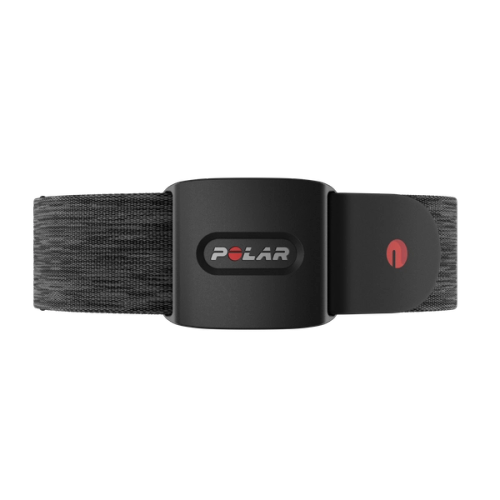
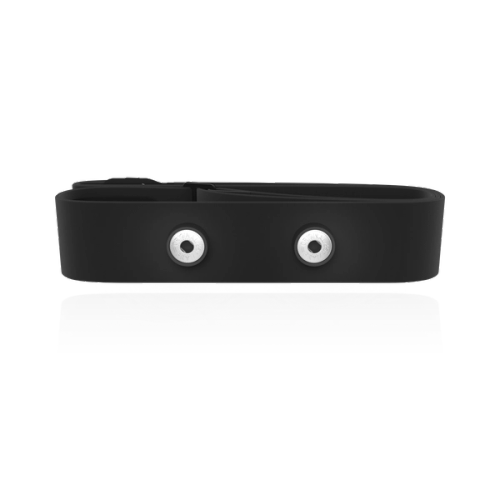
To capture those rapid cardiovascular shifts with total precision, switching to an ECG-based chest strap makes all the difference. Chest straps measure the electrical signals of your heart directly, providing real-time accuracy that holds up through high-impact movement. Pairing your workout with the Polar H10 heart rate sensor ensures every spike and recovery drop is tracked reliably, giving you actionable data to fine-tune your performance and build your strength training essentials.
undefined

Polar H10
Heart Rate Sensor
When it comes to accuracy and connectivity, Polar H10 heart rate sensor is the go-to choice. Monitor your heart rate with maximum precision and connect your heart rate to a great variety of training devices with Bluetooth® and ANT+.
FAQs
Is plyometric training cardio?
No. While it raises your heart rate, plyometrics targets maximal anaerobic power and nervous system reactivity rather than sustained aerobic endurance.
Why does my heart rate spike so much during plyometric exercises?
Your heart rate spikes from sudden sympathetic stress and high-force output, reflecting immediate neuromuscular strain rather than ongoing oxygen demand.
Do plyometrics build muscle?
Plyometrics primarily develops fast-twitch muscle power and tendon stiffness rather than muscle hypertrophy, making it a performance tool rather than a mass-builder.
How many ground contacts should a plyometric session include?
Beginners should aim for 80 to 100 ground contacts per session, while advanced athletes can structure up to 150 to 200 contacts, depending on training age, experience level, and drill intensity.
How long should a plyometric workout be?
Effective sessions last 15 to 30 minutes. Capping volume prevents fatigue-induced technique breakdown and protects your joints from excessive mechanical stress.
Is wrist-based heart rate accurate during jump training?
Optical wrist sensors often lag or miss rapid spikes due to motion artifacts and skin separation caused by rapid, high-impact movements.
Trust the Process, Not Just the Average
Seeing a jagged, spiky heart rate graph—or a session average that looks lower than your typical cardio workout—is completely normal during jump training. It simply means your nervous system and fast-twitch muscle fibers are doing their job. Instead of chasing a high average heart rate, judge your workouts by total ground contacts, execution quality, and adequate rest between sets. Focus on explosive power when you work, take full recovery when you rest, and trust that your body is absorbing the stress. Ready to build your routine? Check out these plyometric exercises to try in your next session.
Enjoying this article? Subscribe to the Polar Newsletter and get notified when new articles are out.
Subscribe



 POLAR Street X
New
 Polar Vantage M3
 Polar Grit X2 Pro Titan
 Polar Grit X2 Pro
 Polar Grit X2
 Polar Vantage V3
 Polar Ignite 3
 Polar Pacer Pro
 Polar Pacer
 Polar Unite
Grit X Series
Vantage Series
Pacer Series
Ignite Series