So, you’ve started dropping four plates on a barbell for a smooth set of back squats on Tuesday, then hitting a crisp sub-20-minute 5K on Thursday. For a few weeks, you’re going to feel indestructible. But by week six, the weight will start feeling heavy, your legs will feel like lead on the pavement, and suddenly your progress in both disciplines will grind to a halt.
Such a frustrating wall isn’t a lack of effort—it’s biology. When you train both strength and endurance at the same time, a process known as concurrent training, your body doesn’t simply add the results together. So why doesn’t combining two training modes yield a clean, linear stack of gains?
It comes down to how a hybrid athlete—someone who actively trains for multi-discipline physical capacity—manages competing cellular stress. Every workout triggers molecular signaling, the chemical messaging system inside your cells that tells your body whether to build raw muscle fiber or expand aerobic capacity.
To break through that plateau, you don’t need to train like a powerlifter or a marathoner. Instead, you need to understand the five distinct physiological traits that define hybrid capacity, and how the interference effect manages the trade-offs between them. Whether you’re training for functional fitness or gearing up for hybrid-fitness racing, mastering these traits is key to building an engine that handles both.
Quick Take: The Science of Hybrid Training
- The Five Pillars of Hybrid Capacity: Successfully balancing lifting and cardio relies on five distinct biological traits: neuromuscular force production, fiber-type balance, aerobic/mitochondrial capacity, recovery capacity, and tendon resilience alongside metabolic flexibility.
- Target Sufficiency, Not Extremes: Hybrid targets aren’t about chasing absolute maximums. Building a successful hybrid profile means developing sufficient capacity in each physiological domain to support the other, rather than chasing elite, single-discipline extremes like a powerlifter or marathoner.
- The Interference Effect Defined: The ‘interference effect’ isn’t a sixth trait you build. It’s the underlying molecular and neural trade-off—driven primarily by competing AMPK and mTORC1 signaling pathways—that arises when you ask your body to adapt to both strength and endurance workloads simultaneously.
If you search the web for concurrent training, most fitness advice frames combining lifting and running as a problem to be managed—a constant damage-control exercise to stop cardio from stealing your gains. But that perspective misses the point entirely.
Being a capable hybrid athlete isn’t about surviving a collision between two different sports. It’s about building a distinct physiological profile with its own unique balance point.
Human performance exists on a continuum, anchored by maximal strength on one end and pure aerobic endurance on the other. A specialist powerlifter or marathoner pushes to the absolute extreme of one side, intentionally sacrificing the other. A hybrid athlete, however, works to broaden their overall adaptive capacity across the entire spectrum.
Rather than chasing the maximal numbers of a single-sport athlete, true hybrid performance relies on hitting targeted thresholds across five core physiological traits:
- Neuromuscular force production
- Muscle fiber-type balance
- Aerobic and mitochondrial capacity (VO2max)
- Systemic recovery capacity
- Tendon resilience and metabolic flexibility
When you optimize these five traits for your specific sport demands—rather than trying to max them out—you stop fighting your body’s chemistry and start building an engine designed to excel at both.
What is Neuromuscular Force Production, and How Much Does a Hybrid Athlete Actually Need?
Neuromuscular force production relies on motor unit recruitment—how efficiently your central nervous system activates muscle fibers—and rate of force development (RFD), which dictates how quickly those fibers generate peak mechanical tension.
So, let’s start with raw power. For a powerlifter, force production is all about absolute maximums: recruiting every available high-threshold motor unit to move a single, maximal load (1RM) on fresh legs. A hybrid athlete, however, operates under a completely different physiological constraint. Your goal isn’t to push absolute peak tonnage once, but to retain submaximal force production under acute systemic fatigue—like maintaining a crisp stride rate on a steep incline after twenty minutes of heavy sled pushes.
To achieve this, a hybrid athlete needs a tuned central nervous system that can efficiently cycle through motor units to delay peripheral fatigue. Rather than maxing out mechanical tension on a single rep, your nervous system must learn to maintain high force output across varying metabolic states. This allows you to handle heavy structural carrying, rowing, or lifting without your movement mechanics breaking down as your heart rate spikes.
To build this baseline without overtaxing your nervous system, focus on the fundamentals outlined in our strength training essentials guide. A hybrid athlete doesn’t need to squat three times their body weight; they just need enough high-velocity force production to handle structural loads comfortably when the systemic workload accumulates.
What Fiber-type Balance Does a Hybrid Athlete Need?
Skeletal muscle contains three main fiber types: Type I (slow-twitch), which are highly oxidative and fatigue-resistant; Type IIx (fast-twitch), which deliver rapid, explosive power but fatigue quickly; and Type IIa (intermediate), which combine fast-twitch force with oxidative capacity.
That brings us to muscle fiber composition—or what your engine is actually made of under the hood. A single-discipline specialist sits at one of two biological extremes. While genetics largely dictate your natural baseline ratio of fast-to-slow twitch fibers—and while commercial genetic tests can reveal that ratio—your baseline isn’t a performance sentence, nor can you alter your genetic starting point.
A marathon runner relies heavily on a Type I-dominant profile to sustain hours of low-intensity aerobic output without failing. Conversely, a sprinter or powerlifter relies on explosive Type IIx fibers to generate maximum force in short bursts, sacrificing endurance in the process.
A hybrid athlete, however, thrives in the middle. Your engine demands a versatile muscle profile dominated by highly oxidative Type IIa fibers. These intermediate fibers give you the force output needed to lug a sandbag or power through a heavy row, alongside the metabolic capacity to clear lactate and keep moving for miles.
Training both strength and cardio actually drives this exact cellular transition. When you subject fast-twitch fibers to endurance demands, pure Type IIx fibers shift toward the more fatigue-resistant Type IIa phenotype. Crucially, combining training modes doesn’t mean you can’t build muscle. A systematic review and meta-analysis by Lundberg et al. (2022) found that whole-muscle hypertrophy isn’t compromised by concurrent training compared to strength training alone. Digging into the fiber level, the same analysis suggests concurrent training may modestly blunt Type I fiber growth specifically, while Type II fiber hypertrophy—the fibers most relevant to a hybrid athlete’s force output—stays largely intact.
This means your body can enlarge these intermediate fibers to build functional strength while simultaneously expanding their mitochondrial density. To learn how to structure your workouts to stimulate this hybrid adaptation, check out our guide on strength training for endurance athletes. You don’t need a marathoner’s pure slow-twitch engine or a sprinter’s pure fast-twitch explosiveness—just a strong, versatile Type IIa profile that can handle both heavy loads and long efforts.
undefined
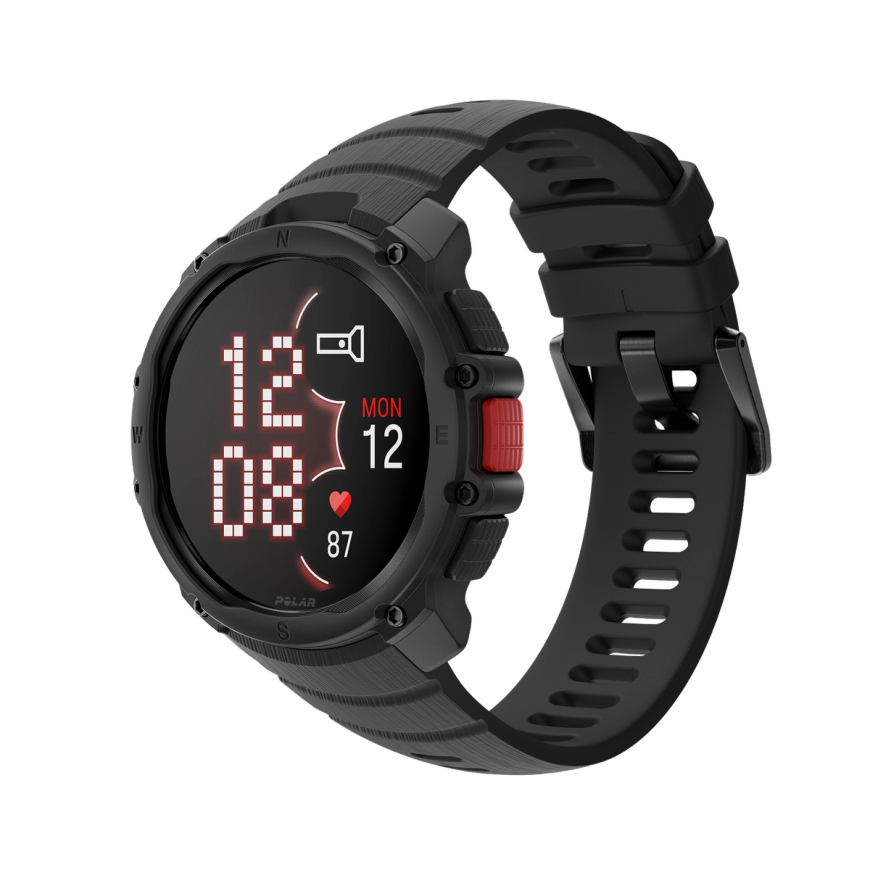
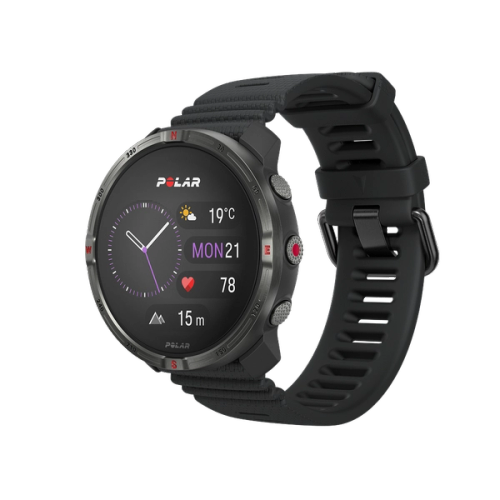
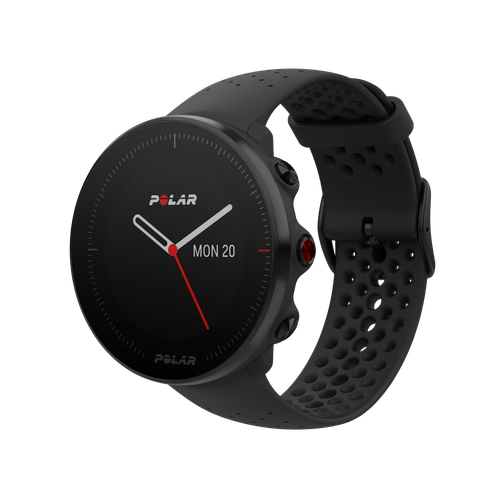
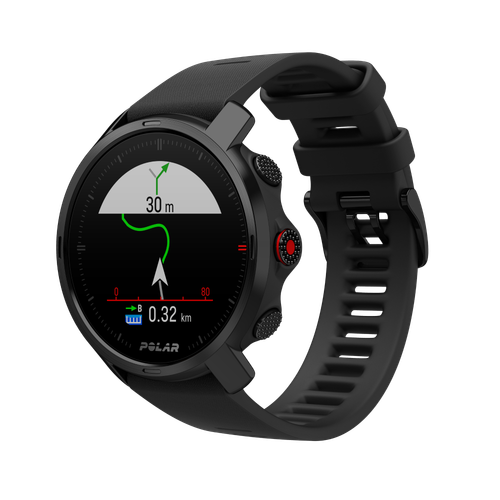
POLAR Street X
The Urban Sports Watch
POLAR Street X is the urban sports watch for those who live, work, and train in the city. Tough, lightweight, and always ready, it delivers reliable GPS, a bright AMOLED display, precision heart-rate tracking, and 24/7 shock resistance for training, commuting, and everyday wear.
What VO2max Does a Hybrid Athlete Actually Need?
VO2max (maximum oxygen uptake) measures the maximum volume of oxygen your body can utilize during intense exercise, while mitochondrial density determines how efficiently your muscle cells convert that oxygen into cellular energy.
Now, let’s talk about your aerobic tank. Together, these two biological markers set the absolute upper ceiling for your aerobic engine. For an elite marathoner, maximizing VO2max is paramount—they need a massive aerobic capacity paired with an ultra-light body frame to maximize their power-to-weight ratio over 26.2 miles.
For a hybrid athlete competing in functional fitness or obstacle races, the relationship between VO2max and performance is governed by the law of diminishing returns. You need a strong aerobic foundation, but chasing an elite runner’s VO2max score often requires shedding muscle mass and sacrificing maximal force production. Instead, a hybrid athlete needs a ‘sufficiently high’ aerobic threshold—typically a solid, well-conditioned engine that allows you to rapidly shuttle oxygen, flush metabolic byproducts like hydrogen ions, and sustain power during heavy sled pushes, rowing, or sandbag carries.
The good news? Session order doesn’t appear to matter much for your cardiovascular growth. A systematic review and meta-analysis by Gao & Yu (2023) found no significant difference in VO2max gains between training sequences—strength-then-endurance versus endurance-then-strength (SMD = 0.02, 95% CI −0.21 to 0.25, *p* = 0.859). Whether you lift first or run first in a session, your aerobic engine appears to adapt on its own timeline.
Your cardiovascular system adapts to the aerobic demand regardless of session sequencing, meaning you can build a massive tank while keeping your hard-earned muscle. To learn how to structure interval work and target your specific aerobic zones without compromising your lifts, dive into our guide to train your VO2max. You don’t need the lean, hyper-specialized frame of an elite marathoner—just enough aerobic capacity to power your engine and speed up recovery between heavy efforts.
What Recovery Capacity Does a Hybrid Athlete Need, and How Do You Know if You Have It?
Recovery capacity is measured through autonomic markers like Heart Rate Variability (HRV), endocrine metrics such as the testosterone-to-cortisol ratio, and parasympathetic sleep reactivation—the rate at which your nervous system shifts into a restorative state overnight.
Here is the hard truth: you can build all the force and cardiovascular capacity you want, but recovery is the non-negotiable ceiling that governs it all. While strength, VO2max, and fiber-type balance define your physical engine, recovery capacity dictates how hard you can run that engine without blowing it up. It represents the ultimate physiological ceiling for a hybrid athlete. Every workout—whether a heavy lower-body lifting session or a high-intensity run—draws from the exact same central recovery budget. When your combined training volume exceeds what your nervous and endocrine systems can repair, you hit a wall of systemic fatigue, stagnation, and elevated injury risk.
This dynamic becomes even more complex as you advance. A systematic review and meta-analysis by Huiberts et al. (2024) found that training status shapes the extent of interference an athlete experiences: untrained endurance athletes showed smaller VO2max gains from concurrent training, whereas trained and highly trained endurance athletes didn’t show the same penalty. The same analysis found lower-body strength gains were modestly blunted in men but not in women. In other words, your training history and sex both influence how much combined load your body can absorb before one discipline stalls—which is exactly why generic programming needs to give way to monitoring your own recovery in real time.
Knowing where you sit relative to that recovery ceiling requires objective data rather than guesswork. Subjective feelings of soreness don’t always match systemic nervous system strain. Features like Polar Nightly Recharge™ and Recovery Pro measure your ANS (autonomic nervous system) response and HRV trends during sleep, giving you a clear window into how well your body absorbed yesterday’s combined load.
By tracking these signals over time, you can see whether your autonomic balance is recovering or cumulative stress is building. A hybrid athlete doesn’t need infinite recovery capacity—they just need real-time feedback to manage their training volume so both strength and endurance can progress together.
What Tendon Resilience and Metabolic Flexibility Does a Hybrid Athlete Need?
Tendon resilience reflects structural stiffness and the rate of connective tissue adaptation, while metabolic flexibility is the enzymatic capacity to rapidly shift between fat oxidation during low-intensity efforts and glycolytic carbohydrate oxidation during high-intensity workloads.
Finally, we come to structural durability and fuel efficiency—the two unsung heroes of hybrid training. Muscle tissue is densely vascularized and recovers relatively quickly, but tendons, ligaments, and cartilage receive far less blood flow. As a result, connective tissue adapts significantly more slowly than skeletal muscle. When you combine heavy mechanical loads (like squatting) with high-volume impact forces (like running), your cardiovascular system and muscles might feel ready for more, but your tendons become the primary structural rate-limiter. Building tendon resilience through targeted isometric and eccentric loading helps protect your Achilles and patellar tendons and joints from overuse injuries under dual-discipline demands.
At the same time, your energy systems require a high degree of metabolic flexibility. A hybrid athlete cannot afford to rely solely on fast-burning glycogen stores, nor can they rely purely on slow fat oxidation. You need the enzymatic machinery to burn fats efficiently at zone 2 intensities to preserve precious muscle glycogen, while retaining the capacity to instantly ramp up glycolytic flux when you hit a hill sprint or a heavy barbell complex.
How you structure your cardio sessions matters too. Continuous, steady-state work leans heavily on glycogen use and fat oxidation, while high-intensity intervals recruit more explosive fast-twitch fibers and demand quicker shifts between fuel systems—without the same extended mechanical pounding on your joints as long, continuous runs. The format of your intervals also affects how much they clash with your lifting: an updated interference model from Vechin et al. (2021) suggests very intense, short-duration formats like sprint intervals may create less conflict with strength adaptations than the classic near-maximal HIIT protocol (bouts at 95–100% of aerobic power paired with higher-rep resistance training), which earlier interference models flagged as the highest-risk combination.
To learn how to balance these high-impact loads and protect your connective tissue, explore our guide on combining strength training with running workouts. Balancing structural durability with metabolic flexibility ensures your joints stay intact while your engine shifts seamlessly between fuel sources.
Why Don’t These Traits Simply Add Up? The Interference Effect
The interference effect is the biological phenomenon in which gains in strength, power, or muscle mass are blunted when resistance training and endurance exercise are performed concurrently in the same training program.
If human physiology worked like simple addition, stacking five miles of running onto a heavy squat session would simply yield a bigger engine and bigger legs. But your body doesn’t adapt in a vacuum; it responds to cellular priorities. When you push both ends of the fitness spectrum at once, competing signals inside your muscle cells create a biological tug-of-war.
The AMPK vs. mTORC1 Molecular Tug-of-War
At the heart of this conflict sit two key enzymes: mTORC1 and AMPK.
When you lift heavy weights, mechanical tension activates mTORC1 (mechanistic target of rapamycin complex 1), the master switch that drives muscle protein synthesis and builds strength and hypertrophy. On the flip side, endurance training depletes cellular energy, triggering AMPK (5′-adenosine monophosphate-activated protein kinase), an energy sensor that tells your cells to build mitochondria and expand oxidative capacity.
The catch? AMPK acts as a biological kill switch for mTORC1. As detailed in a seminal review by Fyfe et al. (2014), elevated AMPK directly blocks mTORC1 signaling through a process called TSC2 and Raptor phosphorylation. In plain English: when your cells are sensing the metabolic stress of cardio, they actively dial down the signals telling your body to build new muscle protein.
Chronic Crosstalk vs. Acute Fatigue: Two Competing Models
Sports scientists generally explain this interference through two main theories:
- The Chronic Hypothesis: This model suggests that repeatedly triggering conflicting molecular signals (e.g., AMPK blocking mTORC1) over weeks to months creates cumulative crosstalk that suppresses long-term muscle growth and maximal power (Fyfe et al., 2014).
- The Acute Fatigue Hypothesis: This model argues that the problem is simpler and more mechanical. Residual neuromuscular fatigue and drained glycogen stores from a prior cardio session leave your nervous system too compromised to produce max force during your lifts (Vechin et al., 2021).
Rather than settled science, researchers view these as complementary mechanisms. Acute fatigue degrades the quality of your strength sessions today, while chronic signaling crosstalk can temper structural adaptations over time.
The 3+ Hour Spacing Rule
Thankfully, you don’t have to choose between lifting and running. The interference effect isn’t an all-or-nothing wall; it’s a sliding scale you can manage with smart scheduling.
The consensus in current exercise literature points to a practical solution: session spacing. In a controlled trial by Robineau et al. (2016), amateur rugby players who trained strength and aerobic qualities back-to-back with zero recovery time saw smaller strength gains than those who left 6 or 24 hours between sessions—or than athletes doing strength training alone. Six hours of separation was enough to close most of that gap. This window likely gives elevated AMPK activity time to return toward baseline, clears out acute residual fatigue, and leaves mTORC1 free to drive muscle adaptation when you step up to the barbell.
If you’re unsure how to space your workouts or balance your weekly schedule, explore our practical guides on combining cardio and strength training and structuring cardio and strength in the same week.
To take the guesswork out of daily recovery, tools like Polar Training Load Pro independently track your Cardio Load, Muscle Load, and Perceived Load, so you can see whether one energy system is pulling too much of your bandwidth. Combined with Polar FitSpark™, which offers personalized daily workout suggestions based on your overnight recovery, you can navigate molecular interference and build a truly balanced hybrid profile.
FAQ on Hybrid Training Physiology
What physiological traits actually predict hybrid-training success?
Hybrid performance relies on five distinct traits: neuromuscular force production, a versatile Type IIa fiber-type balance, aerobic capacity (VO2max), systemic recovery capacity, and connective tissue resilience paired with metabolic flexibility.
Can you build strength and endurance at the same time?
Yes. Scientific research confirms that concurrent adaptations are completely achievable. The key is to manage your total training volume and prevent acute fatigue from compromising your resistance sessions.
How far apart should you schedule strength and endurance sessions?
Aim to separate your lifting and cardio workouts by at least 6 hours, or split them onto different days. A controlled trial testing 0-, 6-, and 24-hour recovery windows found that little to no gap between sessions blunts strength gains, while roughly 6 hours of separation preserves most of the adaptation you’d get from training each quality alone (Robineau et al., 2016).
Do hybrid athletes need a marathon-level VO2max?
No. While you need a well-developed aerobic engine to support work capacity and clear metabolic waste during intense efforts, chasing elite marathon VO2max numbers requires structural trade-offs that ultimately diminish maximal strength and power.
Balancing the Engine
Building a capable hybrid profile isn’t about choosing between raw strength and aerobic endurance, nor is it about surviving a collision between two different sports. It’s about widening your total adaptation bandwidth across five core physiological traits—and giving your body the time and signals it needs to recover from both.
When you stop treating concurrent training as a conflict and start managing it as a distinct physiological profile, you stop fighting your biology. Ready to put the science into practice? Dive into our step-by-step guides on workout programming, session structuring, and race-day prep to start building a truly balanced engine today.
Enjoying this article? Subscribe to the Polar Newsletter and get notified when new articles are out.
Subscribe



 POLAR Street X
New
POLAR Street X
New
 Polar Vantage M3
 Polar Grit X2 Pro Titan
 Polar Grit X2 Pro
 Polar Grit X2
 Polar Vantage V3
 Polar Ignite 3
 Polar Pacer Pro
 Polar Pacer
 Polar Unite
Grit X Series
Vantage Series
Pacer Series
Ignite Series
Polar Unite
Grit X Series
Vantage Series
Pacer Series
Ignite Series