Imagine a lone navigator on the edge of the Pacific Islands, thousands of years ago. Behind them lies the safety of a known shore; ahead, nothing to meet the eye except an infinite blue void. There's no map, no guarantee of land, and their every survival instinct is screaming for them to turn back. Yet, they push their outrigger into the surf.
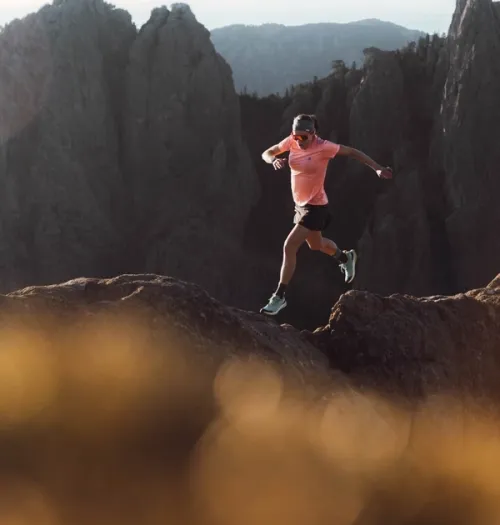
While this may sound like the premise of the Disney animated film Moana, it's actually a scene from the 2025 book The Explorer’s Gene. In it, author Alex Hutchinson posits that such an occurrence wasn't a moment of historical bravery but instead a biological manifesto. He suggests that whether you're a Polynesian voyager crossing an ocean or a trail runner choosing an unmarked ridge over a familiar trail, the impulse is the same. We're all descendants of the restless.
But why do humans explore? Why would we trade the safety of what is known for the risks of the unknown? The answer doesn't lie on the horizon but instead in our own biology. Exploration isn't a choice made by a brave few but a sophisticated survival strategy written into our DNA and powered by our brain's reward system. Let's look at the two primary scientific engines that pull us towards that blank spot on the map.
Chasing Dopamine: Curiosity Activates the Brain’s Reward System
To understand why an athlete would choose a grueling, unmapped mountain traverse over a predictable treadmill session, we have to look at the brain’s internal currency: dopamine.
For a long time, dopamine was misunderstood as the 'pleasure molecule.' We thought it was the reward you felt after reaching the summit. However, modern neuroscience has corrected this. Dopamine is actually the molecule of anticipation and pursuit. It's the chemical engine that drives wanting and seeking more.
When you stand at a trail head you've never run before, your brain’s ventral striatum—the heart of the reward system—lights up. It's this area that is responsible for processing what is called ‘Reward Prediction Errors.’ When the world offers you something unexpected or novel, your brain releases a surge of dopamine. This isn't just a happy accident; it's an evolutionary signal that reinforces that information is a resource.
In the wild, the human who investigates a strange rustle in the bushes could potentially find anything: a new fruit tree, a dangerous predator, who knows? In any case, the data that they gathered increases their chances of survival. Today, that same mechanism explains why trail runners report a mental refresh when swapping a suburban pavement route for a rugged, technical trail. Your brain is literally being rewarded for the act of updating its internal map.
The DRD4-7R Variant: The Genetic Scout
While all humans have this dopamine hardware, you probably won't be surprised to learn that we aren't all wired with the same voltage. And herein lies a core variable: the DRD4 gene.
So, what is so special about this gene? It instructs the body how to build receptors for dopamine in the brain. The 7R allele (specifically, the 7R variant of the DRD4 gene) is a genetic polymorphism often referred to as the 'explorer's gene' or 'wanderlust gene' due to its association with curiosity, risk-taking, and a drive for exploration. It's also less sensitive to dopamine.
At first, this may sound like a disadvantage, but for an explorer, it functions like a high tolerance for risk. Because the dopamine receptors are, in a sense, 'blunted', individuals with the 7R variant require higher levels of stimulation—more novelty, more movement, and more uncertainty—to feel the same reward as their 'stay-at-home' peers.
This genetic quirk has profound geographic implications. Research has shown that the further a population migrated from the 'cradle of humanity' in Africa, the higher the frequency of the 7R variant in that population. So, the people who settled the South Pacific or crossed the Bering Land Bridge (the vast, ice-age grassland connecting Siberia and Alaska some 18,000+ years ago) weren't just lucky; they were likely genetically predisposed to find the unknown more enticing than the known.
Humans Are Wired to Balance Exploration and Exploitation
In the language of evolutionary biology, your life is a series of decisions between two modes of being. They're part of your executive functioning, like a CEO who decides when it's time to stop playing it safe and get out there and take some risks. This is known as the Exploration-Exploitation Trade-off, a concept as vital to a 21st-century trail runner as it was to a Neolithic hunter-gatherer.
Exploitation is your safe bet. It's your choice to return to the same berry bush that provided food yesterday or walk the same loop you’ve done a hundred times. From an energy-efficiency standpoint, exploitation is brilliant: it requires minimal mental processing and carries a near-zero risk of getting lost or injured.
However, a species that only ever 'exploits' is doomed. If that berry bush withers or the pavement is blocked on your loop, an exploiter would be out of options. This is where exploration becomes an imperative for survival. Exploration is the risky, energy-expensive act of venturing into the unknown for the potential rewards—a better hunting ground, a shorter mountain pass, or a more resilient water source.
So, how does your brain decide when to switch from the comforts of the known to the thrill of the unknown? Recent research has identified a specific neurochemical tug-of-war. A study published in The Journal of Neuroscience (October 2024) reveals that our brains use a sophisticated chemical signaling system to manage this balance.
As we know, dopamine drives our wanting of a reward, yet another chemical—norepinephrine—acts as the alarm bell. When the rewards from your current 'exploited' environment begin to diminish (or when you simply become bored), your norepinephrine levels rise, creating a sense of restlessness. This chemical shift pushes you to abandon the 'safe' resource and engage in exploratory behavior. For the endurance athlete, this is the scientific explanation for the 'itch' you may feel on your typical weekend run; your brain is literally signaling that the current stimulus is no longer providing enough information gain to justify the effort.
Exploration as a Cognitive Boost
This trade-off isn't just about finding food; it’s about mental plasticity. When we explore, we engage the hippocampus—the brain’s navigation and memory center. Recent research from the Yale School of Medicine shows that navigating novel environments creates a "cognitive map" that physically strengthens the brain.
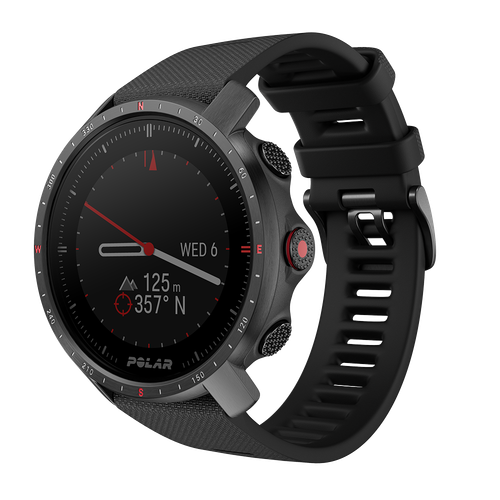
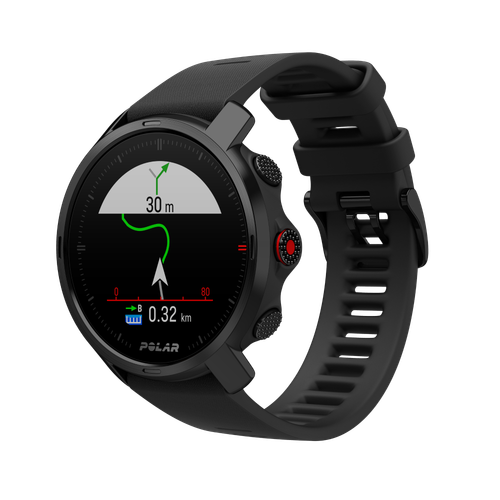
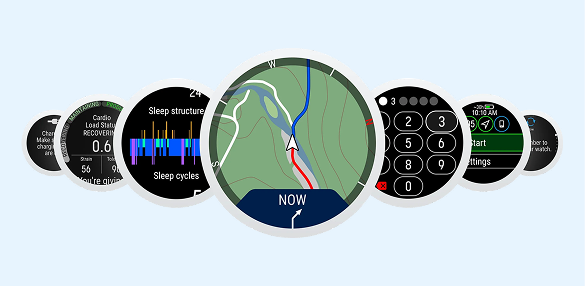
For a trail runner using Polar Grit X2 Pro, this exploration mode is where the most profound training occurs. When you're off-trail, your brain is working at a much higher frequency than when on a treadmill. You're processing topography, calculating footing, and constantly updating your spatial orientation. This is the information-rich environment that Alex Hutchinson identifies as essential for the modern human. By choosing to explore, you aren't just building aerobic capacity; you're engaging in a high-level cognitive workout that wards off mental fatigue and keeps motivation levels high.
undefined

Polar Grit X2
Outdoor Watch
Polar Grit X2 is a compact, robust outdoor watch crafted for big adventures and everyday performance. With advanced training tools, sapphire glass AMOLED display, and precision navigation with full-color maps, it’s built for life on and off the trails.
The Ultimate Training Stimulus
By constantly managing this trade-off between the known and the unknown, our ancestors ensured that if one valley stopped providing the necessary resources, they already had a map for the next. This wasn't just a strategy for survival; it was a blueprint for human resilience.
As an athlete, adopting this mindset transforms your training from a repetitive chore into a biological mission. When you venture into a new forest or scale an unfamiliar ridge, you're doing more than just logging miles. You're effectively hedging your bets against the mental stagnation of a predictable routine.
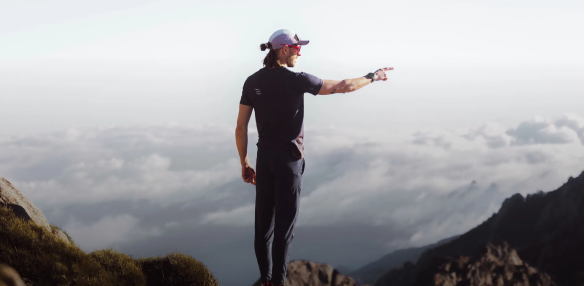
In the end, we explore because we're designed to do so. Whether it's a Polynesian voyager seeking a new horizon or a trail runner seeking a new summit, the goal is the same: to expand the boundaries of our known world.
So, next time you reach a fork in the trail, don’t just choose the path of least resistance. Choose the path that demands you acquire a fresh cognitive map. Your brain, your body, and your ancestors will thank you for it.



 POLAR Street X
New
POLAR Street X
New
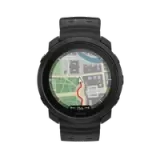 Polar Vantage M3
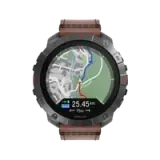 Polar Grit X2 Pro Titan
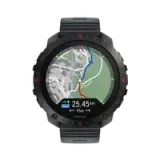 Polar Grit X2 Pro
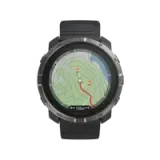 Polar Grit X2
 Polar Vantage V3
 Polar Ignite 3
 Polar Pacer Pro
 Polar Pacer
 Polar Unite
Grit X Series
Vantage Series
Pacer Series
Ignite Series
Polar Unite
Grit X Series
Vantage Series
Pacer Series
Ignite Series