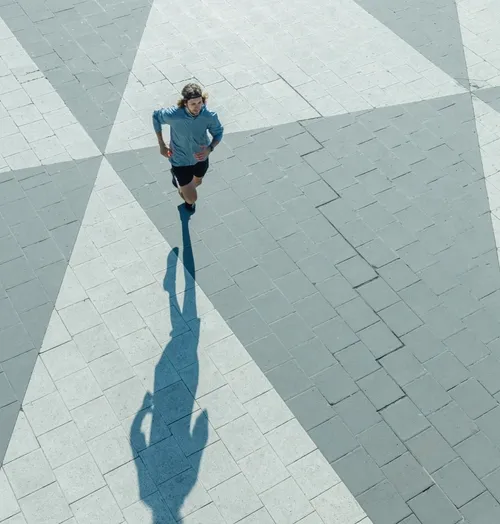
The afternoon sun is just beginning to catch the glass windows across the downtown skyline. While the rest of the city patiently waits for an elevator, you're eyeing the stairs. To most folks, they'd simply be another way of getting from A to B, but today, to you, they're the downward incline of a mountain. A challenge rather than a commute. Your attention is drawn to specific elements: the precise angle of the concrete ledge, the texture of the worn steel railings, and the vast open potential of the public plaza they lead into. And suddenly, the city is no longer a maze of traffic and noise—it’s a playground.
This shift in perspective is the heartbeat of urban athletics. By reimagining their city's architecture as a training ground, athletes are breaking free from the four walls of the traditional gym to find fitness in the world around them—respectfully and creatively. From the explosive power of stair running workouts to the fluid grace of parkour, the concrete jungle offers a vast array of stimuli that a treadmill with a TV or a windowless weight room simply cannot replicate.
But if you scratch the surface, you'll find there is a deeper method in these movements: the science of urban training. Navigating the shifting surfaces of a city park or a flight of stairs sharpens your proprioception and demands a level of functional movement training and real-world resilience that your average workout probably won't provide. Every curb and climb is an opportunity to build neuroplasticity, forcing the brain and body to solve new physical puzzles in real time.
In this article, we’re celebrating the flexible and inclusive nature of street athletics. We'll unpack the concepts mentioned above and explore some of the science-backed insights into why this type of training is so effective.
The city is calling. Are you ready to answer?
The Evolution of the Concrete Playground
Every city street holds a hidden invitation to play with urban athletics, and parkour is perhaps the most striking example. It's a discipline centered on efficient, fluid movement through obstacles—getting from A to B using jumps, vaults, climbs, and balance with maximum control and minimum wasted energy. While it represents the technical peak of urban movement, it is just one part of the broader world of urban athletics, where the city itself becomes the equipment.
Unlike many fitness trends these days, urban athletics didn’t begin in a high-tech lab or a branded gym; it began as a conversation between the body and the street. While the roots of parkour trace back to military obstacle course training in France, the movement truly caught fire when it was adopted and adapted by French teenagers in the 1990s. It was a rebellion against the static nature of modern life—a way to reclaim the city as a space for play rather than just production. Today, that grassroots energy has matured into a global culture of 'movement practitioners' who see every stairwell and retaining wall as a partner in their training.
Take Korra, a physiotherapist from Mexico City who has spent two decades blurring the lines between clinical science and street athletics. Her journey mirrors the evolution of the sport itself—from a solitary pursuit fueled by curiosity to a structured, community-driven discipline.
"I started parkour by myself 20 years ago, watching videos and trying the moves I saw," Korra recalls. "After that, I just played with movement, and three years ago, I started training with a coach and a team."
This shift from experimentation and recreation to intentional, coached training reflects the current state of urban athletics. What was once viewed as a fringe hobby (and quite an extreme one, with the most common image being teenagers jumping between high, concrete structures) is now recognized as a sophisticated way to build holistic health. For Korra, the draw isn’t just about the physical feat; it’s about the internal map she builds along the way. "I love that parkour is a discipline for the body and mind," she explains. "I love how I feel during and after training; how I learn about my limits and how to work with them."
In a city as sprawling and dense as Mexico City, many urban areas can be reimagined as athletic training grounds. While most people see the Bosque de Chapultepec (think Central Park but double the size) as a place for a quiet stroll, Korra and her team see a world of geometric possibilities. "I love doing parkour in Chapultepec. There are a lot of good spots around the area," she says, highlighting how urban athletes turn public landmarks into a training map of their favorite challenges.
undefined
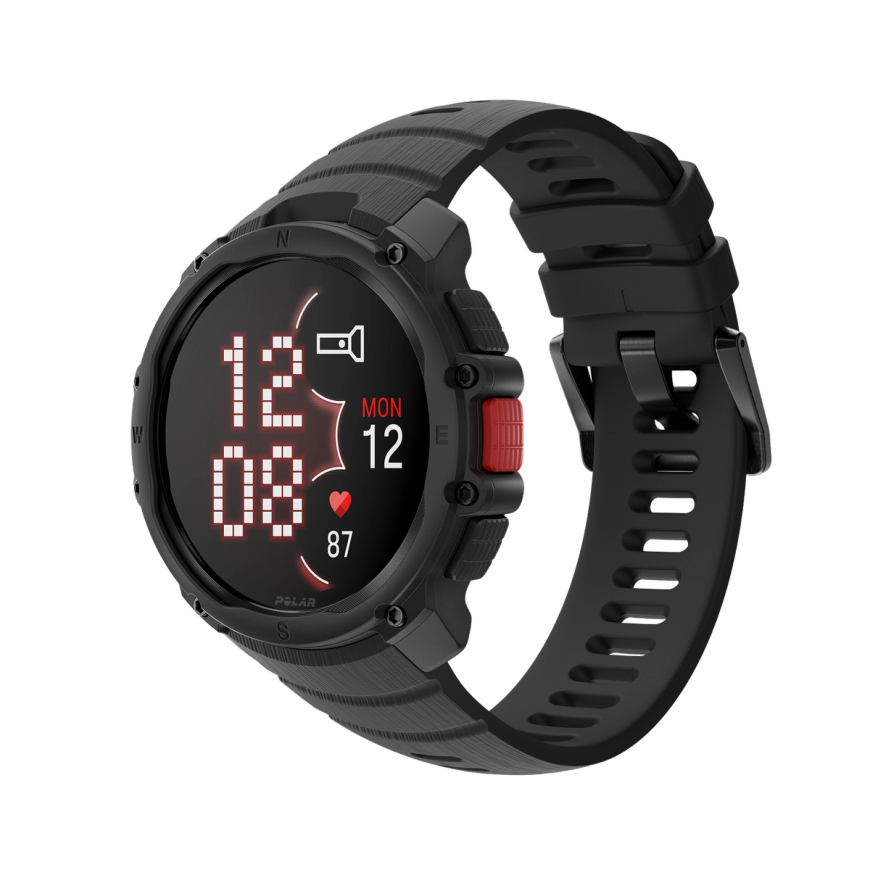
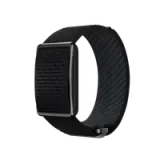
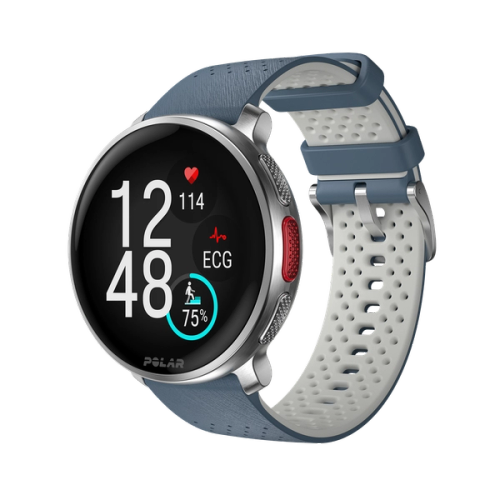
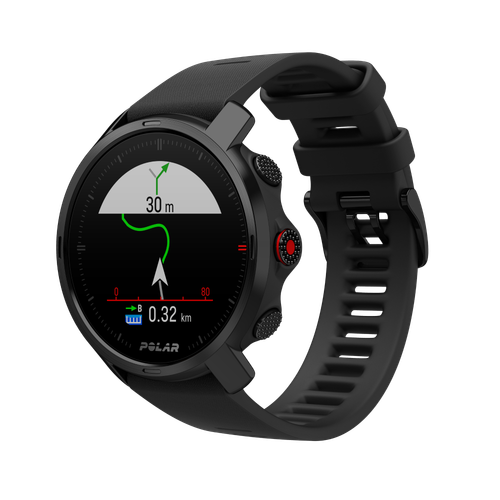
POLAR Street X
The Urban Sports Watch
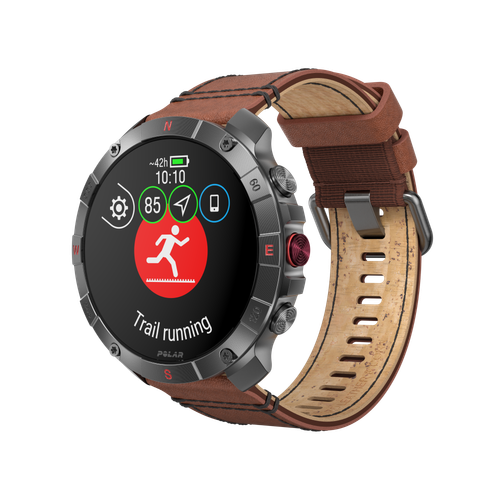
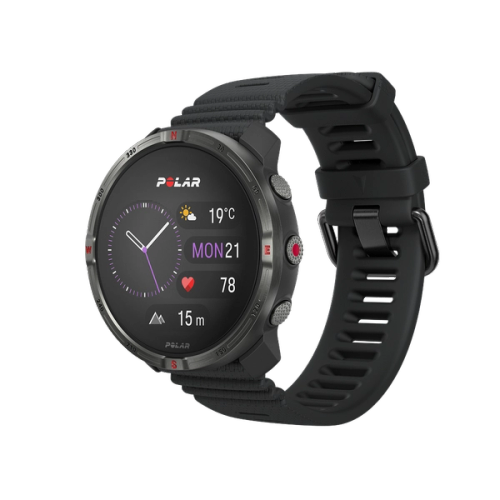
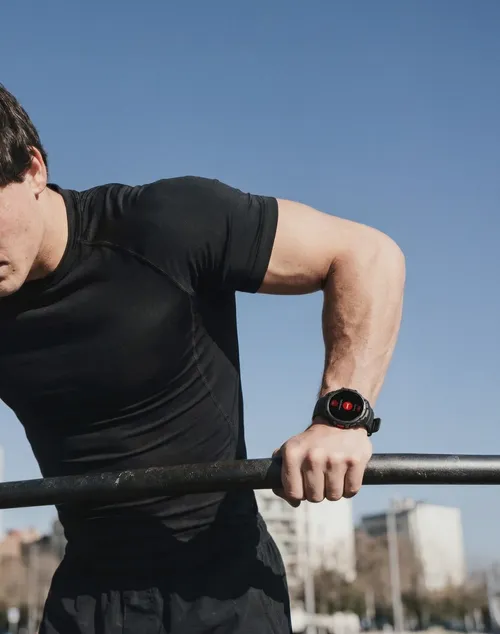
POLAR Street X is the urban sports watch for those who live, work, and train in the city. Tough, lightweight, and always ready, it delivers reliable GPS, a bright AMOLED display, precision heart-rate tracking, and 24/7 shock resistance for training, commuting, and everyday wear.
The Science of Urban Training
So, what does science have to say about this non-traditional form of exercise? At the heart of urban training is a sharp spike in proprioception—your body’s ability to sense its position in space without looking. On a treadmill, the belt is always flat, and the pace is steady; you know your brain can effectively 'tune out." But on the uneven terrain of a city park, your nervous system is on high alert. Every micro-adjustment on a jagged curb or a slick railing builds a map of spatial awareness that a static machine could never demand.
As a physiotherapist, Korra understands that this isn't just about getting fit—it’s about building a body that is truly integrated. "Parkour is a complete workout," she explains. "You need to be strong, have good mobility, and have a strong mind. In parkour, you need to face your fears. So, I think it's a good way to move your body and mind to a healthy place."
The idea of having a "complete workout" highlights the difference between functional strength and isolated gym movements. While a leg press targets a specific muscle group, a single explosive jump onto a concrete ledge requires a symphony of core stability, leg power, and landing mechanics. It’s strength with a purpose.
Enjoying this article? Subscribe to Polar Journal and get notified when a new Polar Journal issue is out.
Subscribe
Rewiring the Athletic Brain
Yet, the science goes even deeper than muscle fibers. Urban training is a masterclass in neuroplasticity and motor learning. Because no two staircases or ledges are identical, your brain is constantly forced to solve new physical puzzles. This creative problem-solving sparks the growth of new neural pathways, keeping the mind as agile as the body.
This mental engagement often leads to a flow state—that elusive 'in the zone' feeling where the city noise and stressful thoughts fade away, and you are fully immersed in the challenge of the moment. It’s here that the cardiovascular benefits of stair training and explosive movements become almost secondary. While your heart rate climbs into peak zones during a series of stair intervals, your mind is occupied with the rhythm and the reach, making high-intensity effort feel like a byproduct of play rather than a chore. "I think you work on everything," Korra says, reflecting on the holistic nature of the sport. "And in some way, the challenges and goals in parkour show you what you need to work on, in that moment."
Ultimately, the city offers a unique outdoor connection that the indoor training lacks. Navigating urban architecture requires a blend of focus and adaptability that translates into mental health benefits far beyond the session. By facing the "risks" and "learning within" that Korra mentions, athletes develop a resilient mindset that views obstacles—both on the street and in life—as things to be climbed, vaulted, or navigated with grace.

Three Urban Playground Sessions (Pick Your Level)
Whether you are planning a technical parkour session, a high-intensity calisthenics circuit, or simply looking to move your workout beyond the sterile limits of a traditional gym, the city is ready for you. Building your own urban playground doesn't require a map or membership; it just requires a change in how you see your surroundings. Whether you are taking your first tentative steps onto a concrete ledge or you’ve been playing with movement for years, the goal is to listen to what the environment is asking of your body.
As Korra wisely advises, "If you're just beginning, start slow and learn each step. Parkour is not just big, risky jumps; it's a path to learning about your present, and if you listen carefully, you can find what you need to work on and how to practice it for many years."
So, here are three ways to start listening to the city and turning your neighborhood into a high-performance training ground.
Level 1: The Foundation (Beginners)
Focus: Structural integrity and aerobic base.
This session is about acclimating your joints to the hard surfaces of the city while building a steady cardiovascular foundation.
- The Workout: Find a long, steady set of stairs or a gentle urban incline. Perform 10–15 minutes of continuous climbing at a pace where you can still hold a conversation. Use the walk back down as your active recovery.
- The Finisher: End with 5 minutes of focused mobility—think deep squats, holding onto a railing for balance, and dynamic calf stretches against a curb.
- What to track on Polar: Keep an eye on your heart rate zones. Aim to stay in Zone 2 or 3 to build that aerobic engine without overtaxing your system.
Level 2: The Urban Circuit (Intermediate)
Focus: Power output and functional strength.
Once you’re comfortable with the terrain, it’s time to add resistance and intensity by using the architecture as weight-room equipment.
- The Workout:Stair Intervals. Sprint up a flight of stairs for 30 seconds, followed by 60 seconds of recovery. Repeat 5 times.
- The Circuit: Between interval sets, find a sturdy ledge or bench for a strength circuit:
- 15 Step-ups per leg.
- 20 Calf raises on the edge of a step.
- Try a 'Farmer’s Carry' using a weighted backpack or two full water bottles, walking 50 meters along a path.
- What to track on Polar: Use Hill Splitter™ to automatically detect your uphill and downhill repetitions. Pay attention to see if your explosive power remains consistent across all intervals.
Level 3: The Flow Loop (Advanced)
Focus: Agility, precision, and metabolic conditioning.
This level is where the physical puzzle truly comes alive. You aren't just running; you’re navigating.
- The Workout: Create a Mixed Terrain Loop in a park or plaza, including such elements as:
- oA 200m sprint across open pavement.
- oA flight of stairs taken two at a time.
- oControlled Precision Work: Practice 'precision jumps'—landing softly and holding your balance on a low wall or a specific line on the ground.
- The Challenge: Repeat the loop for 20–30 minutes, maintaining a fluid flow between movements.
- What to track on Polar: Monitor your Training Load Pro, including your Weekly Load. These high-impact, high-intensity sessions demand significant recovery, and your Polar device will tell you exactly when your body is ready to go again.
Answer the Call
The next time you step out your front door, try to resist the urge to look at your phone. Instead, look at the city around you. Notice the hidden geometry of your neighborhood—the perfect height of a concrete garden wall, the steady ascent of the fire escape stairs, or the way a quiet alleyway offers a stretch of uninterrupted pavement.
Urban athletics isn't just about the sweat or the stats; it’s about reclaiming a sense of wonder in the world we inhabit every day. It’s about realizing that you don’t need to wait for a gym door to open to become a better, more resilient version of yourself. As Korra’s journey illustrates, the street is a patient teacher. It will show you your limits, but it will also show you exactly how to surpass them.
So, this week, we have a challenge for you. Leave the headphones at home for just one session. Take yourself on an 'urban exploration walk' and look at your neighborhood through an athlete’s eyes. Find one set of stairs, one curb, or one ledge, and just experiment with it. The city is your playground, the concrete is your coach, and the invitation is open.



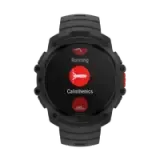 POLAR Street X
New
POLAR Street X
New
 Polar Vantage M3
 Polar Grit X2 Pro Titan
 Polar Grit X2 Pro
 Polar Grit X2
 Polar Vantage V3
 Polar Ignite 3
 Polar Pacer Pro
 Polar Pacer
 Polar Unite
Grit X Series
Vantage Series
Pacer Series
Ignite Series
Polar Unite
Grit X Series
Vantage Series
Pacer Series
Ignite Series