There's a reason the world's most grueling ultra-endurance events take place on the shifting soil of mountains and forest trails. Imagine standing at the base of a steep incline five hours into a session; at this point, the technical splits of a flat road run have long since lost their meaning. Here, in the wild, the goal shifts from chasing a peak speed to maintaining a steady, unwavering integrity against the elements. It's a transition many athletes make instinctively as they mature—moving away from the fragile pursuit of a PB on a track toward the robust, long-term power of the trails.
This shift defines the true value of outdoor training. While road running often demands a repetitive, singular output, the outdoors offers a superior laboratory for building resilience that lasts a lifetime. It's the optimal setting for endurance because it replaces monotony with a constant stream of natural stimuli. We seek these environments not because they're easier, but because they provide a 'hardening' effect that a controlled gym or a flat street simply cannot replicate.
The secret to this adaptation lies in the landscape's sheer variability. Every uneven root, sudden elevation gain, and unpredictable gust of wind acts as a microscopic stressor that forces your body to recalibrate. These environmental challenges trigger three interconnected adaptations that redefine what it means to be strong: metabolic durability, mechanical resilience, and cardiovascular stability. By training in the unknown, you aren't just exercising—you are building a body designed to stay steady under a prolonged, shifting load.
Metabolic Durability: Efficiency in the Wild
So, how does this track vs trail difference show up in our bodies? On a smooth track, your metabolism is often locked into a singular, demanding gear. The predictable surface and consistent pace mean your body tends to rely on a high glycolytic flux—essentially burning through your limited glycogen stores (sugar) to maintain a specific speed. It's an effective way to run a fast 10K, but it's a fragile strategy for the long haul.
In contrast, outdoor training over variable terrain forces a more sophisticated adaptation known as metabolic durability. When you're deep into a trail session, your body can't rely on a monotonous rhythm. Instead, it must navigate a constant dialogue between effort and recovery. The steep climbs demand power, while the technical descents and flat meadows offer natural micro-rests. This process of 'surging and settling' is precisely what trains your body to become a dual-fuel engine.
This is where aerobic efficiency becomes the true hero of the long day. By spending hours in a state of low-intensity steady state (LISS) exercise—interrupted by the natural variability of the landscape—you're teaching your mitochondria to prioritize fat oxidation. So essentially, you're widening your 'aerobic floor', allowing you to move at a respectable clip while preserving those precious glycogen stores for when the terrain truly demands them.
The outdoors is the optimal laboratory for this because it prevents metabolic 'laziness'. On the treadmill or a flat bike path, your body finds a groove and stays there. On a trail, the environment forces you to constantly recalibrate your energy systems. This constant shifting doesn't just build a bigger engine; it builds a more efficient one—one that can sustain a steady, unwavering effort long after a speed-focused athlete has reached their limit.
Cardiovascular Stability: Mastering the Drift
Have you ever found yourself in a situation like this: you're three miles into a flat, steady-state run, your pace hasn't wavered by a second, yet your heart rate is slowly, persistently creeping upward? This phenomenon is known as cardiovascular drift. In a controlled or monotonous environment (like a gym or a paved loop), the body struggles with internal heat buildup and fluid loss, forcing the heart to beat faster just to maintain the same output. It's a sign of a system under stress, losing its grip on efficiency.
Developing true cardiovascular stability requires a different kind of environment, and the outdoors provides the perfect arena for it. While an air-conditioned gym blasts you with recycled air, or a road on a sunny day offers a surface of heat-trapping asphalt, nature provides a dynamic cooling system, no matter where you are. The shifting canopy of a forest, the variable wind on a ridge, and the natural breaks in the intensity offered by the landscape allow the opportunity for the heat to dissipate and, in turn, your heart to reset periodically. This is effective because you aren't training your heart to hit a high ceiling; you're training it to maintain a steady floor.
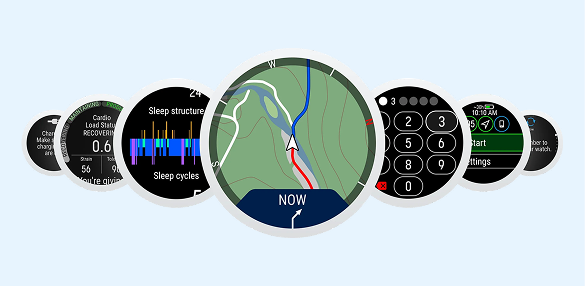
As training outdoors forces you to navigate fluctuating terrain, this variability builds a heart that is more resilient to environmental stress—one that can handle changing heat, altitude and duration without the tell-tale spike in internal strain. This is where data becomes your most valuable trail partner. By utilizing Training Load Pro on your Polar Grit X2 Pro, you can move beyond simply looking at your pace and start monitoring your stability. It functions like a dashboard for your engine’s efficiency, showing you precisely when your heart rate begins to climb even though your physical output hasn’t changed. So, when you've completed a four-hour session with a heart rate as steady as it was in the first hour, you've moved beyond mere fitness. You've achieved cardiovascular stability.
undefined

Polar Grit X2 Pro
Premium Outdoor Watch
Polar Grit X2 Pro is a rough and rugged outdoor sports watch crafted for adventure with sapphire crystal glass AMOLED display, and a hi-tech toolkit of navigation and performance features for exploring the wonders of the world, and the body.
Neuromuscular Resilience: The Mechanical Advantage
While the cardiovascular system acts as your engine, your musculoskeletal system serves as your chassis (base frame). On a track, this frame is subjected to a relentless, high-frequency repetition—the exact same foot strike, at the exact same angle, thousands of times over. This predictability is why road running often feels efficient until suddenly it doesn't. When the 'breakdown' occurs at mile 20, it rarely is because the heart has given up; it's because the mechanical structure has buckled under the weight of repetitive stress.
Outdoor training replaces the potential damage of monotony with adaptation. Every root, rock and cambered turn demands a mechanical response. This is the science of mechanical resilience. By hitting the trails, you're engaging in a constant multi-planar movement, forcing your stabilizing muscles to fire in a way a smooth sidewalk never could.
The true secret weapon of the trail, however, is the descent. Downhill running introduces heavy eccentric loading, where your muscles are forced to lengthen under tension to absorb the impact of gravity. This process effectively 'hardens' your connective tissues and muscle fibers. It builds a different kind of strength—one that isn't about explosive power but about structural integrity.
The advantage of this all-terrain durability is two-fold. First, the surface's variability naturally redistributes the load, significantly reducing the risk of repetitive-strain injuries common among track/road-only athletes. Second, it prepares the body to stay strong when fatigue kicks in. When you've trained your legs to handle the chaos of a mountain descent, a flat finish line feels less like a struggle and more like a victory lap. You aren't just moving through the environment; you're becoming part of it—built to last, not just to go.
In the wild, the mental landscape shifts from high-alert processing to what researchers call soft fascination. When you're surrounded by the shifting patterns of a forest or the expansive view from a ridge, your brain enters a state of effortless engagement.
Cognitive Endurance: The 'Soft Fascination' Effect
Endurance is often discussed as a battle of the lungs and legs, but the true finish line is usually crossed in the mind. When it comes to road running in an urban environment, staying engaged requires a high degree of directed attention. Your brain is constantly processing high-stress data: navigating traffic or avoiding distracted drivers. For those on a treadmill, a similar type of psychological friction occurs when you spend your whole session staring at a TV or digital screen. This mental 'tax' creates a heavy cognitive load that competes with your physical output, often leading to mental fatigue long before your muscles actually fail.
In the wild, the mental landscape shifts from high-alert processing to what researchers call soft fascination. When you're surrounded by the shifting patterns of a forest or the expansive view from a ridge, your brain enters a state of effortless engagement. You aren't ignoring your surroundings; you're absorbing them in a way that allows the prefrontal cortex—the part of the brain responsible for willpower—to recover.
This isn't simply about feeling good in nature; it's about building cognitive endurance. By reducing the mental noise of the modern world, the outdoors allows you to maintain the will to endure for significantly longer durations. When the brain isn't exhausted by the boredom or stress of its surroundings, it can dedicate its full resources to the task at hand: keeping you steady and strong.
The result is a psychological resilience that mirrors your physical durability. You find that at hour five, your mind is as clear and focused as it was at mile one. This mental clarity is the final piece of the stability puzzle. It's why we return from the trails not just physically tired but mentally restored—ready to face the next climb, whether it's on a mountain or in daily life.
From Peak Speed to Permanent Power
Ultimately, the shift from the track to the trail is a transition from chasing a number to building a legacy. While the road teaches you how to redline, the wild teaches you how to endure. By embracing the variability of the outdoors, you are doing more than just logging miles; you are re-engineering your baseline. You are trading the fragile efficiency of the racing engine for the unbreakable utility of the all-terrain vehicle.
This is the true definition of durability: a body that doesn’t just survive the elements but is forged by them. When you step off the well-trodden track and into the unpredictable, you stop fighting against the terrain and start using it as your greatest coach. Your metabolism becomes more flexible, your heart more stable, your frame more resilient, and your mind more focused.
So, the next time you face a choice between the predictable loop and the rugged path, remember that the harder route is actually the one that builds the stronger you. Don't just aim for a faster finish—aim for a version of yourself that is built to last. Step into the wild, find your steady, and discover what it feels like to be truly unshakeable.



 POLAR Street X
New
POLAR Street X
New
 Polar Vantage M3
 Polar Grit X2 Pro Titan
 Polar Grit X2 Pro
 Polar Grit X2
 Polar Vantage V3
 Polar Ignite 3
 Polar Pacer Pro
 Polar Pacer
 Polar Unite
Grit X Series
Vantage Series
Pacer Series
Ignite Series
Polar Unite
Grit X Series
Vantage Series
Pacer Series
Ignite Series