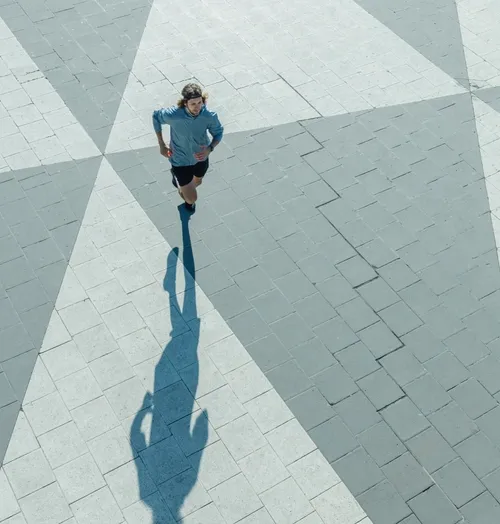
Somewhere in the last decade, silence became the hardest thing to find. Not the absence of noise—most of us can still manage that—but the absence of input. A walk to the store is a podcast. Waiting in line is a scroll. Even the in-between moments, the ones that used to belong to nobody, now belong to a screen. What’s disappeared alongside the silence is something more specific than quiet: the simple, old combination of a body in motion and a mind with nothing to do. It’s a strange thing to admit, but most of us are never actually moving and unoccupied at the same time anymore—and it turns out that exact combination might be the thing we’re missing, if you’re the kind of person who’s waiting for an idea to arrive.
Filling the well by emptying it first
Julia Cameron worked this out decades before “digital detox” was a phrase anyone needed. In The Artist’s Way—the book that’s quietly reshaped how millions of writers, painters, and otherwise blocked people think about their own creative process—she describes creativity as something that draws from a well. Every time you write, paint, or solve a problem, you take something from it. And a well that’s only ever drained will eventually run dry. Her prescription for refilling it is almost suspiciously simple: a walk, alone, without a phone in your pocket or a dog pulling at the leash to keep you tethered to the practical world. Not a walk to somewhere. Not a walk with a playlist in your ears, keeping some other voice in charge of your attention. Just you, moving, with nothing else asking for your focus.
It sounds almost too easy to be a real methodology. But Cameron’s real insight isn’t about walking, specifically—it’s about subtraction. She’d noticed that the ideas she was straining to find at her desk had a habit of showing up unannounced the moment she stopped looking for them, and that the stopping only worked if she’d actually removed the things competing for her attention. You can’t force that state by trying harder. You can really only clear the room for it.
Long before it had a name
None of this, of course, is new. It’s just been rediscovered by every generation that’s tried to make something under pressure. Long before anyone had a word for incubation or default mode networks, plenty of history’s most restless minds had already worked out the same fix by instinct—composers, novelists, philosophers, and painters who all, in their own way, walked or moved to get their ideas flowing.
Friedrich Nietzsche put it more bluntly than anyone since: “Only thoughts reached by walking have value.” He wasn’t being poetic for effect—he walked for at least two hours most days, often alone, often uphill, treating the walking and the thinking as a single, uninterruptible act rather than two separate activities that happened to overlap. Ludwig van Beethoven ran something close to the same experiment, minus the philosophy. His afternoons were built around a long walk, taken without fail, with a pencil and a couple of sheets of paper stuffed into his coat pocket—not because he expected to compose during the walk exactly, but because the melodies had a habit of arriving the moment his mind stopped chasing them at the piano. Author Mason Currey notes that Gustav Mahler and Tchaikovsky followed near-identical routines, as if the whole era of Romantic composers had quietly agreed that music needed room to breathe outside the room where it was written.
Charles Dickens took the more restless version of the same cure. Plagued by insomnia, he took to walking the London night for hours at a stretch—not toward inspiration exactly, more toward exhaustion, a way of outrunning a mind that wouldn’t switch off. But somewhere in those long, sleepless walks, London’s underside kept revealing itself to him: the destitute, the desperate, the strange half-lit lives playing out in doorways after everyone respectable had gone to bed. He wasn’t looking for material. He was just trying to get tired enough to sleep. The material found him anyway, because his mind—finally unoccupied by the day’s demands—had nowhere else to go but outward, onto the streets around him.
undefined
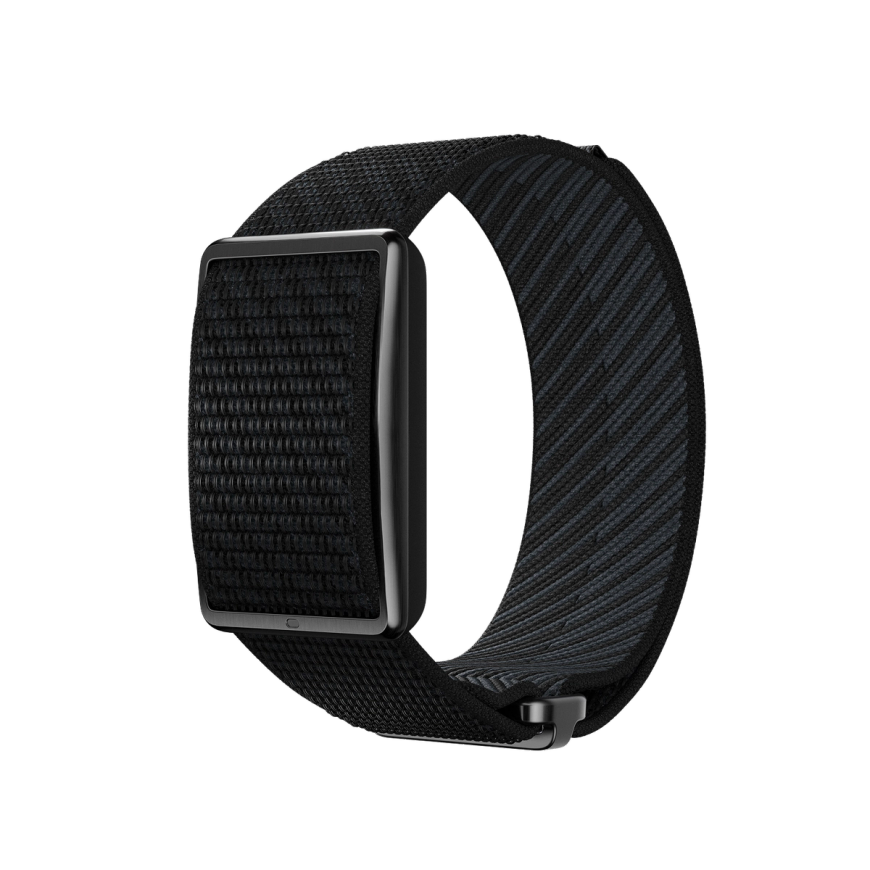
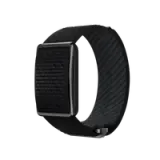
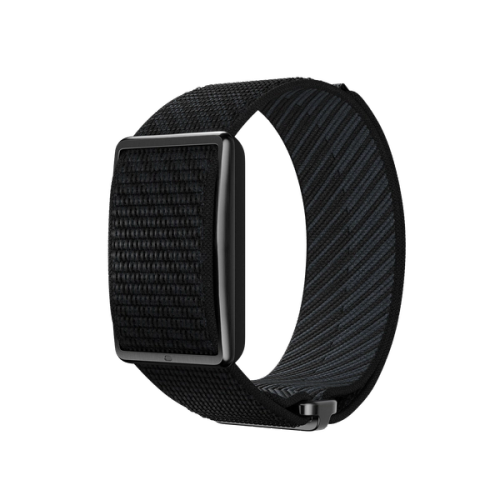
POLAR Loop
Screen-Free Wearable Health Band & Fitness Tracker
POLAR Loop is a screen-free, subscription-free fitness band that helps you sleep better, recover smarter, and stay active—without distractions.
Away from the signal, literally
If Cameron’s insight was about removing distraction, Georgia O’Keeffe took it one step further and removed the distraction of civilization altogether. From her home at Ghost Ranch in northern New Mexico, she hiked for hours into the rock formations she nicknamed the White Place and the Black Place, sometimes staying out under the stars for days. There was no phone to leave behind in the 1940s, obviously—but there was still a version of the same discipline, a deliberate walking away from the ordinary noise of life into a landscape stripped down to shape, shadow, and color. It’s no coincidence that the paintings that came out of those solo desert walks are among the most essential images she ever made. When you take away everything except the land and your own attention, what’s left is exactly what ends up on the canvas.
Haruki Murakami runs, rather than walks, into that same emptied-out state, and has written an entire memoir explaining why he needs it. In What I Talk About When I Talk About Running, he describes long-distance running and long-form writing as two versions of the same discipline—both solitary, both requiring you to keep going long after any outward reward has disappeared, both dependent on a kind of quiet endurance that can’t be faked. He’s run more marathons than he can be bothered to count, and by his own account, treats running not as a break from writing but as the thing that keeps writing possible at all.
Building the walk into the work
Not everyone treated this as philosophy. Kurt Vonnegut just built it into his schedule, almost apologetically. In a 1965 letter to his wife, written while he was teaching in Iowa, he laid out a day that went like this: write until eight, write again until ten, then walk into town, run errands, and swim thirty laps alone in an empty municipal pool before heading home to write some more. There’s no mysticism in his account of it—he mentions it the same way he mentions doing push-ups, as something his body needed in order for his mind to keep functioning. The walk and the swim weren’t inspiration. They were maintenance.
Steve Jobs, of all people, arrived at the same conclusion from the opposite direction—not as an artist trying to protect his creative reserves, but as an executive who’d noticed that his best thinking never happened at a desk. Colleagues learned that if Jobs wanted to discuss something that actually mattered, he’d suggest a walk instead of a meeting room. His biographer Walter Isaacson recalled it as Jobs’ preferred setting for any serious conversation; designer Jony Ive later wrote that much of his time with Jobs was simply spent walking together, saying very little. It’s a small irony worth sitting with: one of the people most responsible for putting a screen in every pocket seemed to understand, better than most, that his best ideas needed him to be as far from a screen as possible.
What’s different now
The walk itself hasn’t changed. What’s changed is how hard it’s become to actually take one—to leave the screens and the earbuds behind, to let a stretch of time go genuinely unfilled, to tolerate the low hum of boredom long enough for something else to surface. Cameron’s instruction to walk without a device wasn’t a technology warning written ahead of its time. It was the same instruction Nietzsche, Beethoven, and Dickens were already following, just newly necessary in a way it never used to be. The mind still needs the same thing it always did: somewhere quiet to wander, some rhythm to move to, and nothing else asking for its attention. It’s just that “somewhere quiet” now has to be defended instead of assumed.
What science says
Here’s the part that tends to get lost whenever this subject comes up: none of this requires a plan. Researchers at Stanford found a marked jump in creative output from something as modest as a slow, unhurried walk—no destination, no pace to hit, no particular scenery required, though being outside only helps. The effect wasn’t tied to intensity or duration. It didn’t matter whether people were training for something or just wandering. What mattered was that they were moving instead of sitting still. The effect didn’t switch off the moment people sat back down, either—ideas kept flowing better even once the walk had ended, which matches almost exactly what Julia Cameron, Beethoven, and Vonnegut all discovered independently, decades or centuries apart: you don’t have to solve the problem during the walk, or even think about it at all while you’re out there. You just have to have taken it, recently enough that its effects haven’t worn off yet.
This lines up with what researchers found when they asked working writers and physicists to track it directly. A 2019 study had professional writers and physicists log their most significant idea each day, along with what they were doing and thinking about when it occurred to them. About a fifth of those ideas showed up while people’s minds were somewhere else entirely—not working, not even thinking about the problem—and those ideas were rated just as strong as the ones that came from deliberate effort, more likely to feel like a genuine “aha,” and more likely to be the thing that finally cracked something they’d been stuck on.
The best ideas, in other words, don’t always wait for you to go looking for them. This isn’t a technique to perform correctly, chasing an epiphany step by step until one arrives on schedule. It’s closer to maintenance than magic—something you do because it reliably tilts the odds in your favor, not because any one walk is guaranteed to hand you anything. Which means the version of this that actually works is rarely the one that gets planned in advance—it’s the one where you just pull on your sneakers, step outside, and go, with no more ambition than getting some air and letting your legs do something rhythmic for ten minutes.
Building it back into an ordinary day
None of the people in this piece treated their walk as an event. It wasn’t a retreat, a vacation, or something that required clearing the calendar—it was stitched into an otherwise unremarkable day, often at the exact moment things got difficult. Beethoven didn’t wait for a symphony to demand a walk; he walked every afternoon on principle, and let whatever needed solving find him there. Vonnegut’s laps of the pool weren’t inspiration-seeking; it was Tuesday. That’s probably the most useful thing to take from all of them: you don’t have to be a genius, and you don’t need an occasion, for this to work. Exercise works best as a habit you already have in place before you’re stuck, not a tool you go searching for once you already are. Ten minutes around the block on a day when nothing feels blocked is doing more long-term work than a desperate hour-long walk taken in a panic the night before a deadline.
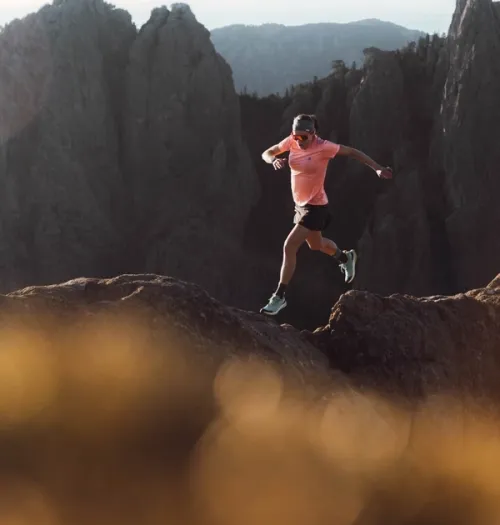
And it doesn’t need to be walking specifically, either—it needs to be that same shape of thing: repetitive, low-stakes, physically occupying enough to loosen its grip on your attention, and, crucially, distraction-free. A loop on the bike with no destination, a slow lap of the park, an easy swim, a run with no pace in mind—whatever movement already feels good to you is the right one. The point was never the discipline. It was getting out the door.
So, if the idea won’t come, no matter how long you sit with it, the oldest trick in the book is probably still the right one, and it’s a smaller ask than it sounds. Leave the phone behind. Leave the desk. Get outside and move, in whatever way you’d be doing anyway on a good day—no plan, no personal best, no destination required. You’re not walking, running, or cycling toward the answer—you’re unlikely to meet it head-on like that. You’re just putting enough distance between yourself and everything that’s been standing in its way that it finally has room to turn up on its own. So go on: get moving, and see what turns up.
Enjoying this article? Subscribe to the Polar Newsletter and get notified when new articles are out.
Subscribe



 POLAR Street X
New
 Polar Vantage M3
 Polar Grit X2 Pro Titan
 Polar Grit X2 Pro
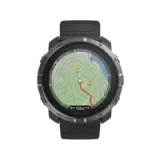 Polar Grit X2
 Polar Vantage V3
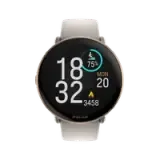 Polar Ignite 3
 Polar Pacer Pro
 Polar Pacer
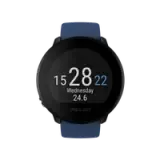 Polar Unite
Grit X Series
Vantage Series
Pacer Series
Ignite Series