"There’s no impulse in me to run a marathon," veteran actor Richard E. Grant recently shared in an interview. "Frankly, I don’t have the puff to do so." Yet, he always seems to be in motion. Following Grant on Instagram, I often see videos of his glee-filled face, familiar from such films as Withnail and I and his Oscar-nominated turn in Can You Ever Forgive Me?, zooming along the trails in London's Richmond Park. For him, running is a joyful tool of release ("It always clears my head and eases away anxiety", he notes), which has carried him through the vast majority of his 68 years. And yet, there is something very functional in his approach, referring to runs simply as "maintenance." A necessary process to simply keep him going in life.
In an age where it seems like it's not enough to just do something physical, but we should always be pushing to level up our workouts or working towards a goal, I find Grant's mindset quite refreshing. There's none of the "I AM A RUNNER" identity or attitude you would expect from someone with more than five decades of experience. He confesses to loathing Lycra, has zero interest in exercising with friends, and shows no inclination to persuade others of its merits. "For all I get out of running, I have never encouraged anyone else to take it up," he says. "I wouldn’t dream of doing so, either."
You get the sense from the way Grant talks that his everyday fitness has carried him through his life, from a restless teenager to a near septuagenarian. Through the challenge of being an actor (either with too much work and none at all), fatherhood, grief, exuberance and the drudgery of everyday life. He speaks of exercise as simply a "habit"—not a passion nor a drive. A tool that has merely "been a reliable way to burn off excess energy."
So, perhaps you can understand why I find this attitude quite novel, especially for someone who is in the public eye. Rather than optimizing ourselves for peak performance goals, fitness can be a simple yet vital accompaniment to all the seasons of life—no buying into a specific identity, enthusiasm, latest trend, or tribe mentality. Just moving your body, in some way, pretty much every day.
To be fair, this is probably the mantra that most high school physical education programmes encourage. As do the American Heart Association's guidelines, which recommend 150 minutes of moderate-intensity exercise per week. But, by their own admission, the AHA website states that "only about one in five adults and teens (in the US) get enough exercise to maintain good health." So, is there a chance that we are often missing the forest for the trees?
If we had more fluidity in the idea of fitness—that we should try to be active all the time in some way without trying to prove something—it could potentially feel more accessible too.
Zooming out to a big-picture view, where moving our bodies is simply something that carries us through life, it's easier to see the broad-stroke benefits. A tool that takes many shapes but can be used by all of us continuously through the decades, flowing with all the changes, both physical and structural. It's not about necessarily finding that one physical pursuit to dedicate our life to (as this isn't about a particular passion), but rather doing what works in the here and now to keep you moving today, to help you tomorrow, and for the next decade, for however long we get to do this.
If we had more fluidity in the idea of fitness—that we should try to be active all the time in some way without trying to prove something—it could potentially feel more accessible too. Especially in helping to lower the intimidation barrier that prevents people from giving something a try. Yes, you want to try yoga/weightlifting/skateboarding, but can't get past the fear of potentially looking like a fool in front of people you perceive as experts. Because the evangelism and bravado that Grant appears keen to avoid may entice some, but it undoubtedly puts off many more.
Then there is the progress trap, a mindset that doesn't deliver the enhancement it may lure you in with. Constantly trying to optimize how you move will inevitably lead to burnout, plateaus, and potential injuries. Plus, your body will change as you age, and there really is no way around that. While all of these natural elements could be seen as failures if you have a linear progress mindset, non-linear thinking is, in fact, more sustainable. Embracing rest, active recovery, variable intensity, and change are just par of the course throughout life, so why not roll with it instead of against it?
After all, the reality is that very few of us really need to be working towards PR, but we do need to do the maintenance work that is regular exercise. So, rather than thinking about the year that may be ahead of you, think of the whole of your life in its entirety. Where do you want to be when you reach 68 (if you haven't yet passed such a magnificent milestone)? What kind of life do you want to have, and what kind of mobility will you need to enjoy it? Rather than crushing goals in the here and now, see your fitness as habitual, planting seeds that, if watered and tended with care and consistency, can continue to bloom well into old age.
In a sense, we can move today with a grounded sense of acceptance that there will come a day when we won't be able to move in the same way—and that is part of the beauty of life. Why not embrace it? As Grant himself reflects, "I’m very grateful that my knees are still choosing to support me, but people keep warning me I’m running on borrowed time." So, take from this what you will, but perhaps you don't need new goals—just a new perspective.
Enjoying this article? Subscribe to Polar Journal and get notified when a new Polar Journal issue is out.
Subscribe



 POLAR Street X
New
POLAR Street X
New
 Polar Vantage M3
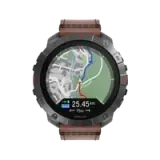 Polar Grit X2 Pro Titan
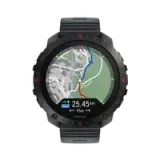 Polar Grit X2 Pro
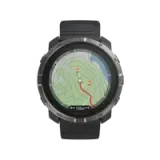 Polar Grit X2
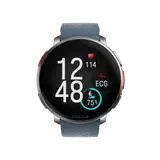 Polar Vantage V3
 Polar Ignite 3
 Polar Pacer Pro
 Polar Pacer
 Polar Unite
Grit X Series
Vantage Series
Pacer Series
Ignite Series
Polar Unite
Grit X Series
Vantage Series
Pacer Series
Ignite Series