Have you ever stared at a training plan, seen ‘tempo run,’ and thought, “Wait, is this supposed to feel easy, hard, or super hard?” Or maybe you’ve tried speed intervals and immediately questioned if you were doing it wrong? If you’ve felt confused about the exact intensity of your speed work or your threshold sessions, don’t worry, you’re definitely not alone.
It’s not uncommon to feel there’s some mystery about when and how you should do a session that improves your anaerobic engine or teaches your body to sustain harder efforts for longer. Get ready to take notes because next, we’re going to peel back the curtain and look at two of the most powerful types of focused running: speed work and tempo runs. We’ll show you exactly what each type does, how the science works, and how to use both to become a faster, more resilient runner, whether you’re aiming for a 10K personal best or tackling your first marathon.
What’s the Difference Between Speed Work and Tempo Runs?
Here’s the simplest way to think about it: speed work is about max power, while tempo runs are about sustainable, pressurized effort. Let’s unpack that a little further.
Speed Work (aka VO₂max Intervals)
Speed work focuses on short, fast intervals that push your cardiovascular system to its limit. Since we humans aren't built to sustain maximum effort for more than a few minutes (or even seconds!), we have to break the work into chunks. Here’s what these sessions look and feel like:
- The Effort: This is where you run in the red zone (your highest heart rate zone). The pace is short-race intensity—think what you could hold for 3K to 5K. You’ll be breathing heavily, completely unable to have a conversation, and counting the seconds until you can stop.
- The Structure: You run hard for a short, intense effort, such as 400m or a two-minute block. The goal is to keep the quality of these efforts high from the first rep to the very last without 'blowing up' (more on this below) early.
- The Payoff: Speed intervals improve your running form, boost your economy, and, crucially, increase your VO₂ max.
The Variable: Playing with Recovery
Once you’ve set your work distance, the recovery period becomes the next dial you can turn to change the workout's 'flavor' and the adaptations it triggers:
- Generous Recovery (Full Rest): By taking a longer walk or easy jog between intervals (often equal to or longer than the work time), you allow your heart rate to drop and your muscles to clear some byproduct. This will enable you to hit the next interval with maximum power, focusing on pure speed and running mechanics.
- Short Recovery (Incomplete Rest): If you shorten the rest, you don't give your body enough time to fully reset. This forces your system to work harder under mounting fatigue, which is fantastic for aerobic power and metabolic efficiency—essentially teaching your body to maintain high speeds even when the burn starts to set in.
undefined
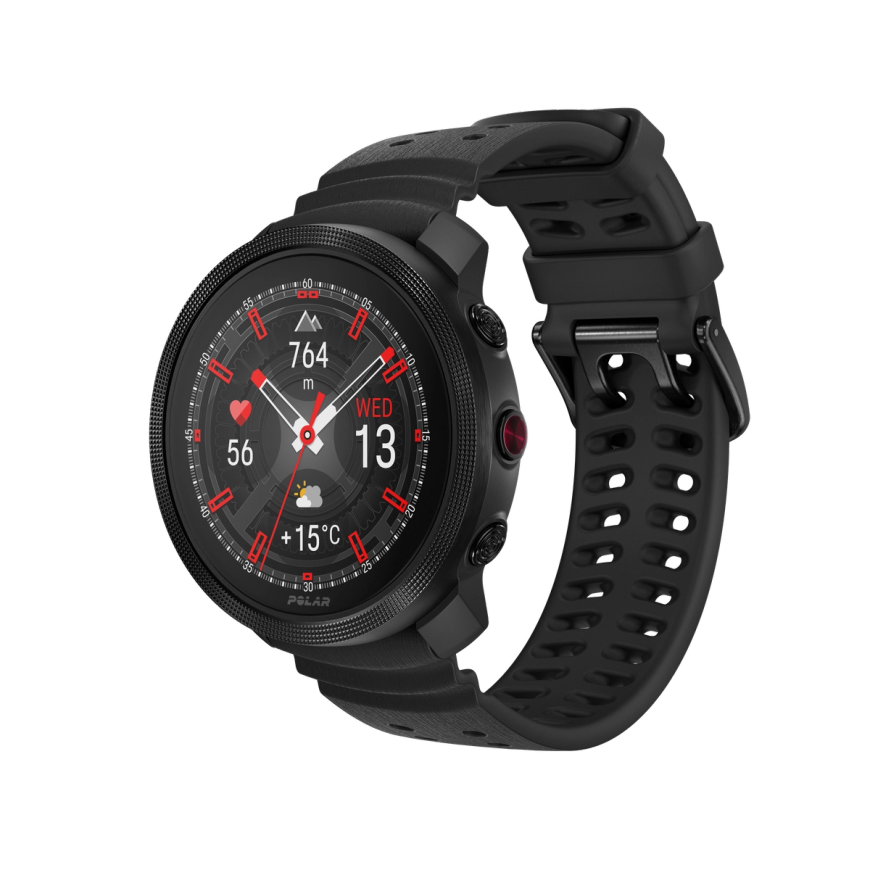
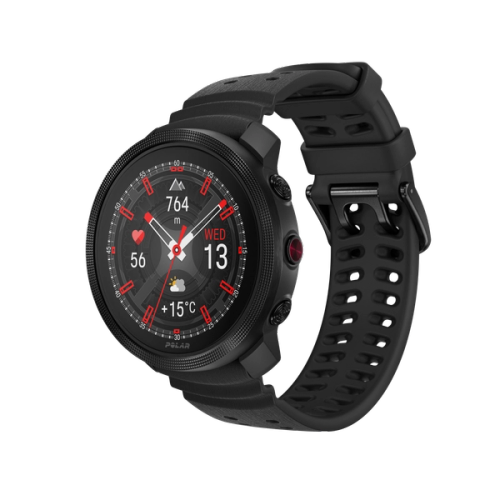
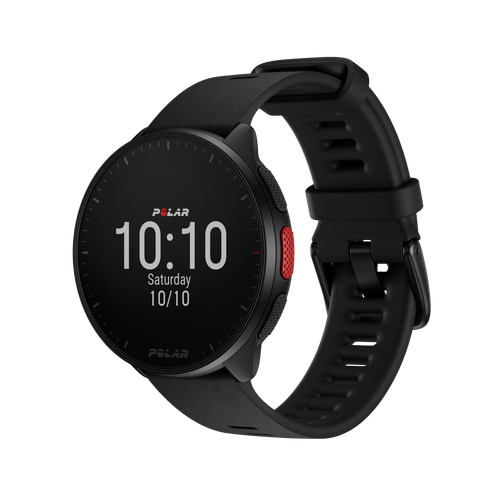
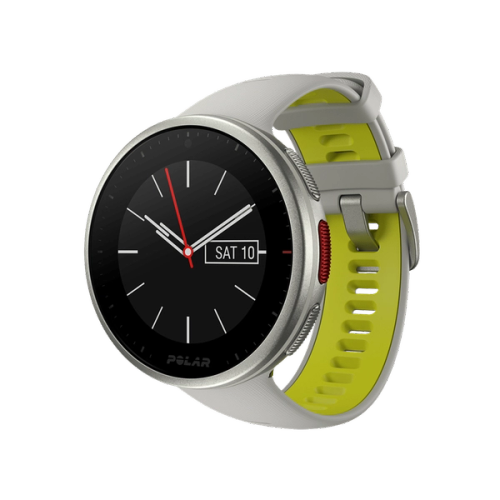
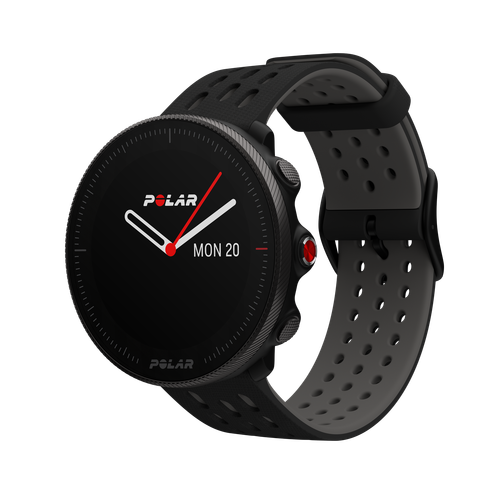
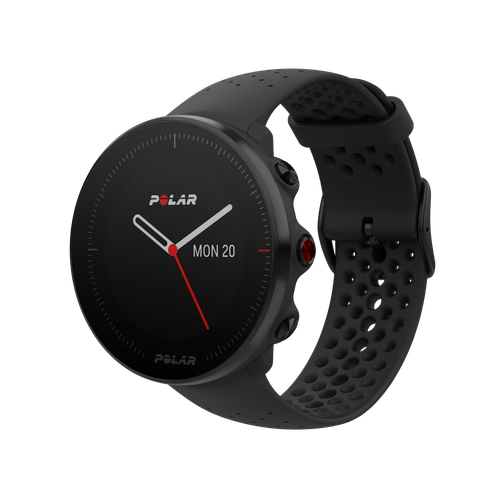
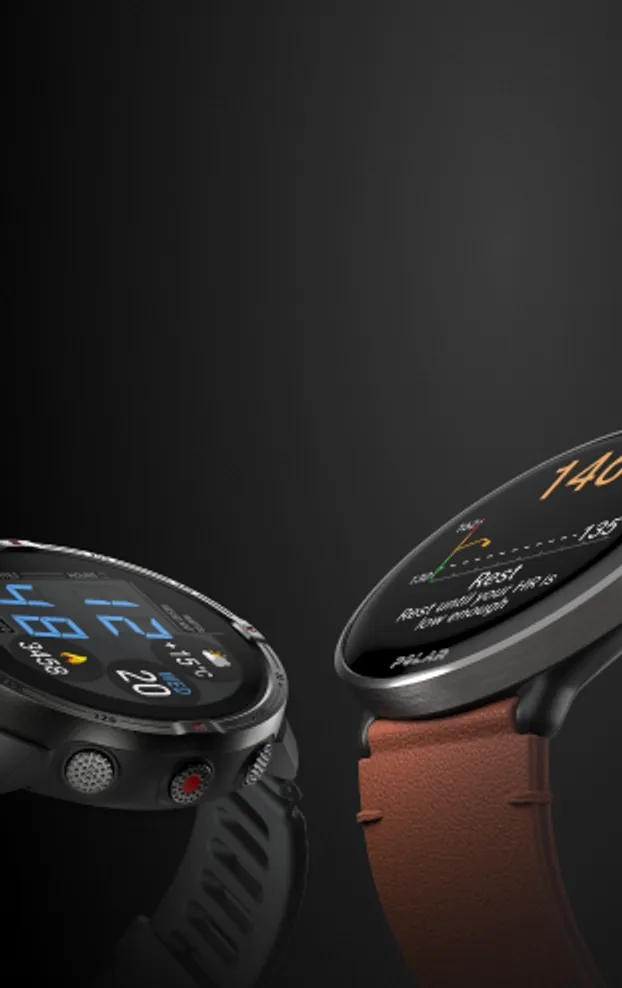
Polar Vantage M3
Smart Multi-Sport Watch
Polar Vantage M3 is a smart multi-sport watch for multi-sport athletes that’s compact yet powerful, stylish yet strong, and designed to bring extraordinary training, sleep and recovery tools into everyday life.
Tempo Runs (aka Threshold Training)
Although the term “tempo run” is not strictly defined, most coaches and training methods use it to refer to running at threshold pace. These runs are continuous blocks of effort that are at a pace that is ‘comfortably hard’ but sustainable. Here’s what they look and feel like:
- The Effort: Imagine a pace you could hold for about 40 to 60 minutes if you pushed it. This effort level is near your anaerobic threshold (the point at which your body starts working without enough oxygen). You can hear your breathing, but you are not gasping for air.
- The Structure: These runs are often like a sandwich—your warm-up and cool-down are the bread slices. The main filling is 20 to 40 minutes of continuous effort (sometimes broken into blocks when you’re first starting out).
- The Talk Test: Your ultimate guide. If you can talk easily, you’re not yet in the tempo zone. If you can’t talk at all, you’re above it. You should be able to speak only in broken words.
- The Payoff: Tempo runs are phenomenal for race simulation and for increasing your Lactate Threshold (more on that below). They teach your body to run faster with less effort, improving your focus and building the mental strength you need for a longer race.
Commonly asked question: Is a tempo run considered speed work?
The short answer is no.While both speed work and tempo runs involve running faster than your leisurely, conversational pace, as you will see, they train different energy systems and require fundamentally different levels of intensity and recovery.
The Science Behind VO₂max and Lactate Threshold
Shall we get a little nerdy for a moment? To understand why we do speed work and tempo runs, we have to look at the two primary metrics that dictate your potential as a runner.
VO₂max: Your Aerobic Ceiling
Think of VO₂max as your engine size. It’s the absolute maximum amount of oxygen your body can use during intense exercise, measured in mL/min/kg. A high VO₂max indicates a highly efficient cardiovascular system that delivers massive amounts of oxygen-rich blood to your muscles.
- The Training: To raise this ceiling, you perform VO₂max intervals—short, sharp efforts (usually 3–5 minutes) at 95% to 100% of your maximum capacity.
- The Adaptations: These intervals trigger central adaptations (such as increasing your heart’s stroke volume) and peripheral adaptations (such as increasing capillary density in your muscles).
- The Result: By increasing your Maximal Aerobic Power (MAP), you raise your theoretical top speed. This widens the gap between your maximum speed and your race pace, giving you more "room" to improve in the long run (yes, pun intended!).
Fun Fact: Swedish exercise physiologists Per-Olof Åstrand and Bengt Saltin pioneered much of the research that defines how we measure and train VO₂max today.
Lactate Threshold: Your Sustainable Speed
If you’ve ever felt that heavy burning sensation in your legs when pushing the pace, you’ve met lactate. Your Lactate Threshold (LT) is the highest intensity you can maintain where your body clears lactate as fast as it’s produced.
- The Training: You train this via tempo runs, typically 20 to 40 minutes at a comfortably hard effort. For seasoned pros, this is about 85–90% of max heart rate, but for newer runners, it might be 75% or lower (and that is perfectly okay!).
- The Adaptations: These runs focus on peripheral adaptations, specifically improving your body’s ability to handle and clear metabolic byproducts.
The Result: Training here pushes your threshold pace higher. It makes your race pace feel significantly easier because you can run at a higher percentage of your VO₂max for a long time without ‘blowing up’ (being hit by those lactate muscle pains).Fun fact: Scientifically speaking, LT is known as Maximal Lactate Steady State (MLSS).
When to Focus on Speed Work vs. Tempo Runs
Ok, now that we know the difference between building the engine (VO₂max) and raising your sustainable running speed (Lactate Threshold), the next logical question is: When do I use which one?
The short answer is you’ll use both, but the emphasis shifts depending on where you are in your training cycle and what distance you’re chasing. This is where you swap guesswork for strategy.
The Training Cycle: Periodization
The balance between speed work and tempo runs should follow a periodization pattern that aligns with your goal race. For example:
- Early/General Phase: When you are more than eight weeks out from your race, your primary focus should be on VO₂max Intervals (aka Speed Work) and basic strength to raise your maximum capacity (your ‘ceiling’). This gives you a bigger, more powerful engine to work with when you start sharpening your race speed later on.
- Race-Specific Phase: When you are closer to your race (two to six weeks out), your primary focus should be on Tempo/Threshold Runs and race-pace work to build your endurance under pressure. This helps you shift to making a faster pace feel more effortless and more automatic, ensuring you can hold your goal pace without ‘blowing up’ on race day.
Race Distance
However, the distance you’re training for dramatically changes your focus and periodization mix. Here’s what you should consider:
- For the Marathon and Half Marathon: These events are almost entirely governed by your LT. Your pace is well below your VO₂max, so the most significant gain comes from making that goal pace feel sustainable. You’ll place a higher emphasis on Tempo/Threshold Runs (and race-pace long runs) than on pure VO₂max speed.
- For the 5K and 10K: These races are run at or very close to your VO₂max pace. To crush a 5K, you need a giant engine, so you’ll place greater emphasis on VO₂max Intervals (aka Speed Work) to increase that top-end aerobic power, balancing it with threshold work for endurance.
Commonly asked question: Which is better for marathon training: intervals or tempo runs?
While both are valuable, for the marathon, Tempo Runs are the king. They offer the most specific, high-leverage adaptation for prolonged sub-maximal effort. You need the ability to maintain speed for hours, not just minutes.
How often should I do speed work vs tempo runs?
The final piece of the puzzle is fitting these power sessions into your weekly routine without leading to burnout or injury. After all, you’re training to be faster, not training to be injured.
The good news is that when it comes to hard work, less is often more. Your body needs adequate time to absorb the stress of a quality session and adapt, so use this guide to pace your training.
Commonly asked question: Can I do speed work and tempo runs in the same week?
Yes, you absolutely can. In fact, for many intermediate to experienced runners training for a 5K to a half-marathon, doing one speed session and one tempo session is the gold standard for maximizing aerobic development.
Find Your Personal Balance and Let Data Guide You
We’ve covered a lot of ground here, from ‘engine size’ to ‘comfortably hard’ efforts to ‘blowing up’ once you pass your LT. If you’re feeling like you understand your training a bit better and are ready to lace up and tackle your next quality run, that’s excellent news (it sounds like we’ve done our job).
The biggest takeaway to remember is that there is no single perfect split for all runners. The aim is a sustainable mix of easy miles, combined with one or two well-targeted quality sessions each week. Sometimes that means a speed session and a tempo-style workout; other times, it just means alternating the two while you focus on building your mileage.
Think of your training as a personalized science experiment, and you are the chief scientist. We encourage you to start experimenting with different combinations and pay close attention to how your body responds. Are you recovering quickly? Are your paces improving without feeling overly exhausted?
This is where your Polar sportwatch and the Polar Flow app become your most valuable coaches:
- Use the pace and heart rate data recorded during your tempo runs to clearly identify your threshold zone.
- Check your VO₂maxestimates on your device to ensure your speed intervals are truly hitting the high-intensity zone required for adaptation.
- Utilize Training Load Pro to make sure you’re balancing the stress of those two hard sessions with adequate recovery time.
Stop guessing your intensity and start letting the data guide your smart, sustainable progression.
Ready to build your fastest running program yet? Head over to Polar Flow now and plan your next four to six weeks of training, making sure to strategically include both a dedicated speed session and a powerful tempo workout. Happy running!
Enjoying this article? Subscribe to the Polar Newsletter and get notified when new articles are out.
Subscribe



 POLAR Street X
New
POLAR Street X
New
 Polar Vantage M3
 Polar Grit X2 Pro Titan
 Polar Grit X2 Pro
 Polar Grit X2
 Polar Vantage V3
 Polar Ignite 3
 Polar Pacer Pro
 Polar Pacer
 Polar Unite
Grit X Series
Vantage Series
Pacer Series
Ignite Series
Polar Unite
Grit X Series
Vantage Series
Pacer Series
Ignite Series