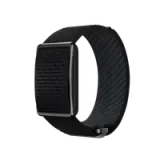
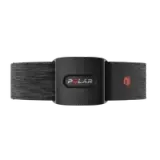
Does this sound familiar? You spend your evenings optimizing your sleep routine, dimming the lights and switching your phone off early. You drift off to sleep, knowing that all night long, your wearable will silently capture the rhythm of your heart. But did you know that while you’re cycling through various sleep stages of REM and deep sleep, your body is whispering another story to your watch — that’s linked to the pulse in your veins, but is really about the rise and fall of your chest.
Don’t be surprised if you feel like an expert at tracking your steps and your heartbeat, but have overlooked the very rhythm that sustains them: your breath. In the quest for optimal recovery, your respiratory rate (or breathing rate) is a quiet overachiever. It’s a vital sign that remains remarkably consistent, night after night, making it one of the most reliable indicators of your physical state. By understanding how and why your breathing can fluctuate, you can better interpret how your body processes stress while you rest, ensuring you have the energy to stay adventurous, balanced, and sharp — no matter your age.
What is breathing rate? The science of respiration
At its simplest level, your respiration rate is the number of breaths you can take in one minute. While you can consciously increase how much you breathe during anaerobic exercise (such as sprinting) or slow it right down during a meditation session, it’s primarily an involuntary action that doesn’t require much thought.
However, measuring your breath rate during sleep doesn’t actually have much to do with the airflow through your nose as you snore through the night. Instead, it requires a bit of biological detective work by your wearable.
The rhythm of the heart and lungs
So, how can a device on your wrist possibly know how you’re inhaling and exhaling? The answer lies in a fascinating physiological phenomenon called respiratory sinus arrhythmia (RSA).
Your RSA describes the natural, synchronized dance between your breathing and your heart:
- The Inhale: When you breathe in, your heart rate slightly speeds up.
- The Exhale: When you breathe out, your heart rate slows down.
By analyzing these microscopic beat-to-beat intervals, Nightly Recharge™ can detect and map out patterns in your breathing to calculate your respiratory rate. So, it’s not simply a random fluctuation; it’s a sophisticated communication loop between your lungs and your heart, moderated by your autonomic nervous system (ANS).
What is a normal breathing rate during sleep?
When it comes to your health, ‘normal’ is best defined as a range rather than a single fixed number. For a healthy adult at rest, a normal breathing rate is typically 12–20 breaths per minute.
While this provides a helpful general benchmark, the most important thing to remember is that your own personal ‘normal’ is unique to you. Your body has its own rhythm, and what matters most is how your nightly average compares to your established baseline.
Finding your baseline
Through the lens of Nightly Recharge™, you can see a snapshot of your respiration with a 4-hour average from the night before. For most people, this number is remarkably stable; it’s one of the most consistent vital signs we have. Unlike your heart rate, which might spike because of a stressful dream or a late-night snack, your breathing rate usually hums along at the same steady pace night after night.
That said, it’s important to note that your breathing rate varies slightly during different stages of sleep. During those deep, slow-wave, non-REM stages, your respiration becomes slightly slower and regular, supporting the metabolic needs during this part of your sleep cycle. However, during REM, your breath can occasionally become faster and more erratic, reflecting the nighttime adventures that your vivid dreams could be taking you on. Yet it tends to stay below your respiratory rate when you’re awake, which is why it usually tracks as a steady pace throughout the night.
Anyway, back to finding your baseline. To help you understand your personal range, consider these factors:
- Stability is Key: In a healthy state, your breathing shouldn’t fluctuate wildly from one night to the next.
- Any Inconsistency?: Because it’s so stable, even a small deviation from your usual 4-hour average can be a meaningful signal from your body.
- Individual Variation: Factors such as age, fitness level, and overall lung health can influence whether your baseline falls at the lower end (12 BPM) or the higher end (20 BPM) of the spectrum.
Why 12 to 20 breaths per minute?
This range is not only the average; it also represents the physiological ‘sweet spot’ where your body efficiently exchanges oxygen and carbon dioxide without overexerting the respiratory muscles. When you are within this window during sleep, it’s a strong indicator that your body is in a state of rest, allowing your systems to focus on the essential work of repair and recovery.
Knowing your typical breaths per minute gives you a powerful tool for understanding your health. Once you know what your steady state looks like, you’ll be much better equipped to spot the subtle signs that your body might be working a little harder than usual.
What your breathing rate reveals about overnight recovery
While we often think of recovery as simply ‘feeling well-rested,’ your physiology provides a much more detailed story through the relationship between your breath and your nervous system. That’s why understanding your breathing rate is like having a direct line to your body’s internal command center.
The ANS connection
Your autonomic nervous system is divided into two branches: the ‘fight or flight’ side (sympathetic) and the ‘rest and digest’ side (parasympathetic). When you move into a state of deep recovery, your parasympathetic nervous system takes the lead.
A stable, baseline breathing rate is a primary indicator that the rest-and-digest system is functioning optimally. It signals that your body isn’t under undue stress and is successfully channeling its energy into cellular repair, muscle recovery, and memory consolidation.
Respiration and heart rate variability (HRV)
Your breathing doesn’t work in a vacuum; it’s the primary teammate to your Heart Rate Variability (HRV). Together, these two metrics form the backbone of your ANS charge within the Nightly Recharge™ status.
- The HRV-Breath Connection: HRV is a measure of the variation in time between each heartbeat, and it’s heavily influenced by your breath. When you breathe slowly and deeply, you stimulate the vagus nerve, which increases your HRV. This is why deep breathing exercises feel instantly calming — you’re literally telling your nervous system to pivot from high alert to high recovery.
- The Deep Sleep Signature: When you see a sustained drop in your breathing rate paired with a high HRV reading, it’s a classic ‘green light’ signature of deep, restorative sleep. This combination indicates that your heart and lungs are in perfect sync, allowing your body to focus entirely on cellular repair and immune function.
- Precision as an Anchor: While heart rate can fluctuate due to minor disturbances — like shifting in your sleep or a brief noise — your 4-hour breathing average serves as a stabilizing anchor for your data. It provides a big-picture view of your physical readiness, ensuring that your Nightly Recharge™ status reflects your true state of recovery rather than a momentary blip.
Why this matters for your long-term health
By paying attention to what your breathing reveals, you’re not just looking at how you slept last night; you’re monitoring your overall resilience. Maintaining a consistent, healthy respiration rate is a sign of high metabolic efficiency. It means your body is meeting its oxygen needs with minimal effort, leaving you with more fuel in the tank for your daily adventures, whether that’s a morning run, a focused work session, or a weekend hike with friends. In short, a steady breath at night is the foundation for a vibrant, active day.
What a sudden change in breathing rate means
If you notice your nightly 4-hour average has nudged upward or feels inconsistent, it’s rarely a random glitch; it’s usually an indication that your system is meeting a new internal or external demand. While a single night of slightly faster breathing is probably not worth worrying about, a sustained trend usually points to one of a few common triggers, including:
- Developing Illness: Often, your breathing rate will climb before you even feel another early sign, such as a scratchy throat. An increase in breaths per minute can be an early warning sign that your immune system is fighting off a fever or a respiratory infection.
- Physical Overexertion: If you pushed particularly hard during your workout and didn’t allow enough recovery time, your body may breathe faster at night to meet the increased oxygen demand for muscle repair.
- Acute Stress or Anxiety: High levels of cortisol and adrenaline can ‘speed up’ your system. If your mind is racing, your ANS may remain in a sympathetic (‘fight or flight’) state, keeping your breathing elevated even while you sleep.
- Environmental Factors: Sometimes the cause is external. A room that is too hot, a change in altitude, or even poor air quality can force your lungs to work a bit harder to get the oxygen your body requires.
Understanding shallow breathing
In some cases, a change in rate is accompanied by shallow breathing. If your breaths become quicker but less deep, your body is essentially ‘short-cycling’ its oxygen exchange. This is often less efficient and can lead to a lower ANS charge, leaving you feeling sluggish the next morning, even if you spent many hours in bed.
By spotting these changes early, you can choose to pivot — perhaps by taking an extra rest day, focusing on hydration, or practicing some dedicated breathwork to help nudge your system back into its restorative mode.
Breathing, recovery, and the art of aging well
As we move through different stages of life, our health and fitness goals can shift from simply working out to living well. We want to maintain the freedom to explore, the stability to move with confidence, and the mental clarity to stay engaged with the world around us. Interestingly, the secret to this longevity often starts with the quiet efficiency of your breath.
The foundation of stability and coordination
Aging well is, in many ways, a masterclass in balance — both physically and physiologically. A stable, efficient breathing rate indicates that your cardiovascular and respiratory systems are working in harmony. This internal metabolic efficiency translates directly to your physical world. When your body isn’t overworking just to maintain its baseline, you have more resources available for:
- Stability and Balance: Efficient respiration supports core control and postural stability.
- Coordination: A well-regulated nervous system allows for smoother, more precise movement.
- Physical Resilience: Recovering quickly from a day of activity ensures you’re ready for the next one.
Mental clarity and stress relief
The benefits aren’t just physical. Because your breathing rate is a direct reflection of your ANS, maintaining a healthy nightly rhythm is a powerful tool for cognitive engagement. By tracking your respiration through Nightly Recharge™, you gain a deeper understanding of your stress levels.
So, focusing on lowering the ‘background noise’ of physiological stress through better recovery helps sharpen your focus and provides the emotional resilience needed to tackle new challenges. It’s the difference between feeling drained by your day and feeling adventurous enough to try something new — whether that’s a new trail, a new hobby, or a new city.
The power of small habits
You don’t need to make extreme lifestyle overhauls to see a difference in how you age. It’s about the small habits that add up over time. Taking a brisk walk in the fresh air, practicing mindful breathing for a few minutes, or simply paying attention to your nightly metrics can create a positive feedback loop.
Consistent monitoring gives you the agency to make tiny adjustments before they become big problems. By honoring the rhythm of your breath today, you are investing in a future that remains active, vibrant, and full of still-unfolding adventures.
Ready to review your sleeping metrics?
Understanding the science of your breath is the first step; the second is seeing it in action. By tuning into these nightly whispers, you transition from guessing how you feel to knowing exactly how your body is performing. Whether you are training for a personal best or simply focusing on long-term vitality, your respiration data is the roadmap that helps you get there.
Monitoring these trends is seamless with the Polar Flow app. As we’ve seen, your device quietly handles the biological detective work while you sleep, and by morning, your data is translated into easy-to-read insights.
Within the Nightly Recharge™ dashboard, you can see how your breathing rate stacks up against your usual 28-day baseline. This allows you to spot those subtle deviations early — giving you the chance to adjust your training, prioritize rest, or simply take a deep, mindful breath before your day begins.



 POLAR Street X
New
POLAR Street X
New
 Polar Vantage M3
 Polar Grit X2 Pro Titan
 Polar Grit X2 Pro
 Polar Grit X2
 Polar Vantage V3
 Polar Ignite 3
 Polar Pacer Pro
 Polar Pacer
 Polar Unite
Grit X Series
Vantage Series
Pacer Series
Ignite Series
Polar Unite
Grit X Series
Vantage Series
Pacer Series
Ignite Series